Tuesday, 21 May 2024

Could South Africa’s ANC Lose Parliamentary Majority for the First Time Since 1994?

Thirty years ago, on 27 April 1994, South Africans voted in the first demographic general election in the country’s history. The National Party of the Apartheid regime was replaced by the government of the African National Congress and Nelson Mandela became president.

Next week, South Africans return to the polls. This is the seventh post-apartheid election in South Africa, including the inaugural democratic election in 1994. For 25 years, the African National Congress (ANC) government dominated polls, obtaining a parliamentary majority in each election, but that majority has been waning since its high of 2004.

1994

1999

2004

2009

2014

2019

62.65%

66.35%

69.69%

65.90%

62.15%

57.50%

In 2024, there is such uncertainty regarding the ability of the ruling party to obtain a majority that conversations are starting to revolve around President Cyril Ramaphosa not receiving 50% of the votes and what that means:

The ANC is still expected to win the largest share of votes, but if it receives less than 50% as predicted, it will need the help of coalition partners to reelect the 71-year-old Ramaphosa

- South Africa braces for what may be a milestone election. Here is a guide to the main players [AP News]

Why Is the ANC’s Popularity Waning?

For many South Africans, the ANC and Nelson Mandela represent those who fought for and won freedom for the majority of the population. Given the damning legacy of Apartheid, that emotional connection to the ruling party has been difficult to break.

Poverty, Inequality & Unemployment

Yet South Africa repeatedly draws attention for being the most inequal country in the world in terms of income and wealth. A 2022 report by the World Bank stated:

The Southern African Customs Union (SACU), comprising Botswana, Eswatini, Lesotho, Namibia, and South Africa, is the world’s most unequal region. Based on Gini coefficients of consumption (or income) per capita, South Africa, the largest country in SACU, is the most unequal country in the world, ranking first among 164 countries in the World Bank’s global poverty database

- Inequality in Southern Africa : An Assessment of the Southern African Customs Union [World Bank]

For every gated suburb in South Africa, there are areas of extreme poverty and deprivation. This is compounded by an unemployment rate of 32.9% in Q1 2024, currently the highest in the world.

According to StatsSA, the number of unemployed South Africans surged by 330,000 to a record 8.2 million in the first quarter of 2024… In Q1 2024, the official unemployment rate rose to a dismal 32.9%…

The situation is much worse for young South Africans, with unemployment rising to 59.7% in Q1 2024. Therefore, for jobseekers aged 15-24 who are not enrolled at educational institutions and are actively looking for work, only four of every ten have jobs…

- South Africa has the Highest Unemployment Rate in the World [ActionSA]

Failure to Invest in Infrastructure

South Africa’s infrastructure can most accurately be described as crumbling. Potholes are scattered across roads in such volume that it is often a case of more sand than tarmac on roads. Clean tap water has still not been extended to the full population, with people in rural communities being most disadvantaged. Waste collection can be described as poor at best with residents in informal settlements being especially effected by non-existent or unreliable services.

Perhaps the most significant of the infrastructure challenges is the South African energy crisis, now entering its seventeenth year.

South Africa is in the middle of a deep electricity crisis. In 2023 the public, many of whom are voters, experienced the worst loadshedding to date, losing power for an average of five hours a day

- South Africa’s electricity crisis: what political parties say in their election manifestos about solving it [The Conversation]

In a sign of the increasing importance of the electricity crisis to South African voters, the ANC, Democratic Alliance and Economic Freedom Fighters now dedicate 10% of their election manifesto to the crisis, up from 2% in 2019. Indeed, Thabo Mbeki’s 2008 admission that the ANC did not listen to Eskom’s warnings is doing the rounds again, further eroding ANC confidence in an increasingly impatient population.

"When Eskom said to the government: 'We think we must invest more in terms of electricity generation', we said no, but all you will be doing is just to build excess capacity," he said in a speech.

"We said not now, later. We were wrong. Eskom was right. We were wrong."

- Thabo Mbeki, 2008; Mbeki: Eskom was right [News24]

Further reading: this is an exceptional article on many of the issues discussed above by S'thembile Cele: "Africa’s Richest City Is Crumbling Under Chaos and Corruption" [Bloomberg]
Corruption

State capture is usually a concept reserved for Gerard Butler films yet it happened in South Africa. The Zondo Commission of Inquiry Into Allegations of State Capture demonstrated that Jacob Zuma and the Gupta family began a process of state capture immediately on Zuma’s election in 2009 which resulted in widespread corruption and economic disaster for South Africa.

The evidence before the Zondo Commission demonstrates that the state capturers were able to: (i) appoint willing collaborators in all kinds of key positions; (ii) hobble the law enforcement agencies, even making some of them complicit in corruption; (iii) weaken parliamentary oversight; and (iv) capture parts of the independent media

- How and Why Did State Capture and Massive Corruption Occur in South Africa? [PFM]

The Zondo Commission resulted in the resignation of President Jacob Zuma and the promotion of Cyril Ramaphosa to the position. Ramaphosa won the election in 2019 but it was already clear then that confidence in the ANC was waning.

Contenders in the South African 2024 Elections

Jacob Zuma and the MK Party

It’s a sign of the rapid change in South Africa at present that AP News published an article, "South Africa braces for what may be a milestone election. Here is a guide to the main players" on 19 May 2024 and it is already outdated by 20 May 2024. In the article, Gerald Imray listed Former President Jacob Zuma’s MK Party as one of four main contenders in the election but yesterday the Constitutional Court of South Africa (the highest court in the country) ruled that Zuma’s 15-month prison sentence for contempt of court disqualifies him from serving in parliament.

The BBC reported that "MK secretary general Sihle Ngubane said the party was disappointed with the ruling, but it would not affect the party's campaign for the 29 May election". Given the infighting rampant in the party, it is possibly unlikely that they will do anything but dilute the ANC’s votes.

Economic Freedom Fighters

Julius Malema was a former member of the ANC Youth League and formed the EFF in 2013 following his expulsion from the ANC. The party has risen to become the third biggest party in South Africa and are inspired by Marxist ideology. They focus on workers’ rights, the nationalisation of mines and redistribution of land, noting the lasting impact of Apartheid on the economic well-being of Black South Africans.

The Democratic Alliance

Since obtaining a 22% share of the vote in 2019, the Democratic Alliance has been rocked by several scandals including pro-colonialism tweets by former leader Helen Zille and racist remarks from the increasingly conservative current leader John Steenhuisen.

The DA harps on about its track record in keeping Cape Town clean and tidy, but does so at the expense of the city’s townships and informal settlements. Now seen as the party of the privileged classes, most of which are white, the DA has entered into into the Multi-Party Charter for South Africa to try reduce support for the ANC, EFF and MK parties. The founders of the Charter represent centre, centre-right and right-wing parties including the DA, Inkatha Freedom Party, Freedom Front Plus, ActionSA and African Christian Democratic Party.


This post will serve as a time capsule, both preserving the situation in 2024 and listing the possibilities for the years ahead. Public pressure has so far not made an impact on the rampant inequality and poverty in South Africa and it may be that the only way to effect change will be for voters to make their mark. Will the ANC lose their majority? Will the next government, no matter its composition, effect real change in South Africa? Only time will tell.

SHARE:

Saturday, 19 August 2023

Graphic Novel Review: The Photographer of Mauthausen by Salva Rubio, Pedro J Colombo & Aintzane Landa ★★★★★

Most online accounts of Ernst Kaltenbrunner and Albert Speer mention that they were convicted at the Nuremberg trials but few accounts mention the testimony and evidence provided by Francisco Boix that enabled those convictions. Nor do they mention the bravery and sacrifices of the people involved in preserving and delivering that evidence to the outside world.

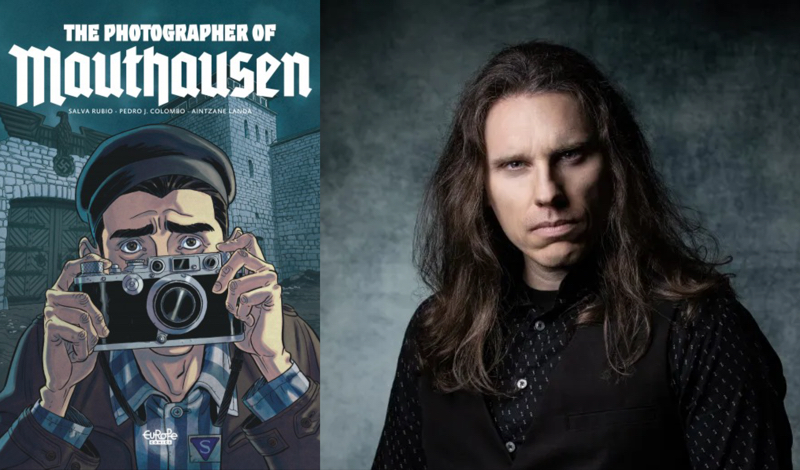
Graphic Novel Review | The Photographer of Mauthausen | cover and author photograph

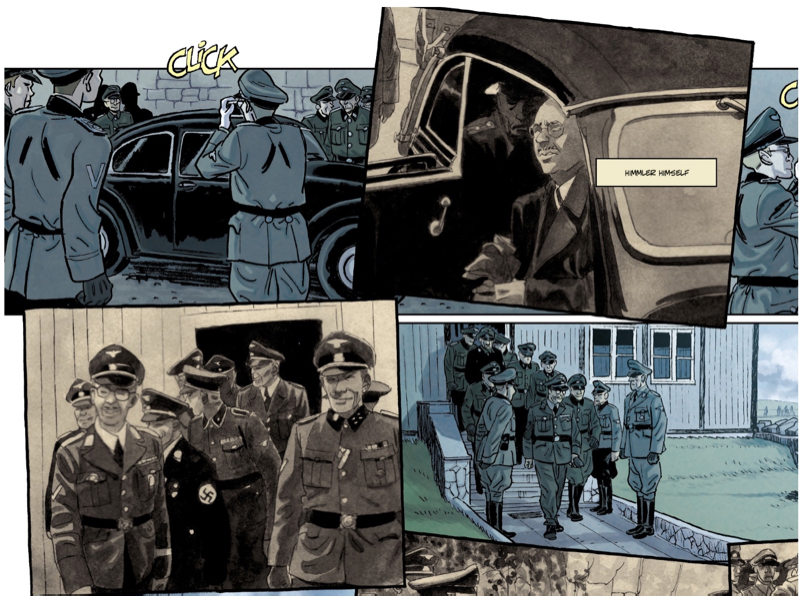
The Photographer of Mauthausen by Salva Rubio (writer), Pedro J Colombo (illustrator) and Aintzane Landa (colourist) tells the story of Boix, a Spanish photographer and veteran of the Spanish Civil War. Following his part in the civil war, Boix was exiled to France and joined the French army before being captured by the Germans. The Photographer of Mauthausen starts with Boix's arrival at Mauthausen in 1941.

Boix starts off his internment as a translator but soon finds a position in the photography lab. Somehow, inexplicably, SS-Hauptscharführer Paul Ricken takes a liking to to Boix and recruits him as assistant to his macabre photography project. In this role, Boix is exposed to the many atrocities being committed at Mauthausen (in addition to the ones he had already witnessed).

Boix realises initially that this evidence needs to be preserved and several prisoners get involved in making this happen. However, as news reaches camp of an impending Russian victory, Boix realises that he needs to get proof of the atrocities to people on the outside of the camp.

Boix was successful and both his testimony and the photographic evidence proved that Nazis such as Kaltenbrunner and Speer were not only aware of what was happening at Mauthausen but they were complicit in the atrocities too.

The value of The Photographer of Mauthausen is in the questions that it raises about justice and remembrance. At the time of the Nuremberg trials, the photos were used to obtain convictions but Boix expresses frustration on page in the graphic novel about why people weren't more concerned about what happened at Mauthausen and the atrocities committed.

Graphic Novel Review | The Photographer of Mauthausen | Page from graphic novel depicting the photographer capturing various Nazi officers

The Photographer of Mauthausen is an excellent graphic novel that tells, in an accessible format, an important story in the annals of Holocaust history while serving as an educational source on both Nazi atrocities and the trials following the war.

I give The Photographer of Mauthausen a superb five out of five stars. The graphic novel is extremely well illustrated and written and recommended for those interested in history, graphic novels and the Holocaust.

★★★★★

SHARE:

Wednesday, 9 March 2022

Film Review: Dying to Divorce (2021) | The fight to obtain justice for violence against women in Turkey ★★★★★

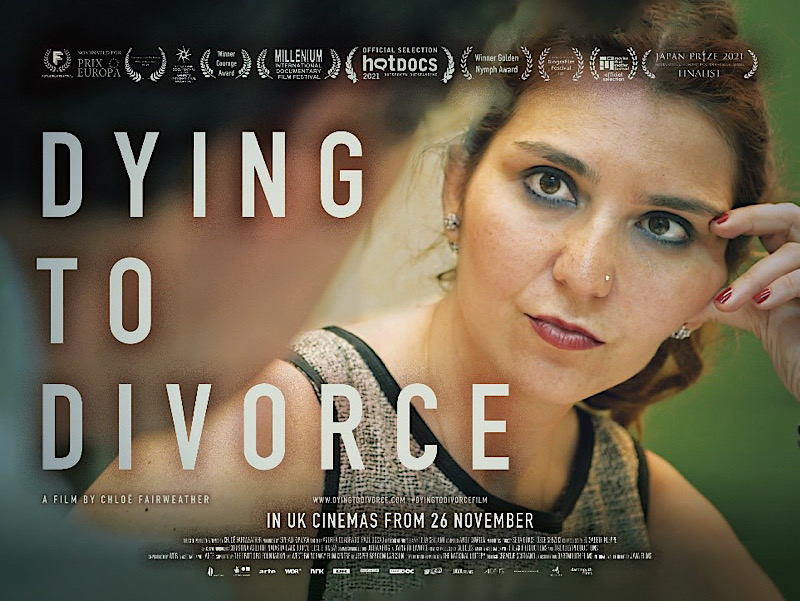
More than one in three Turkish women have been domestically abused in their lifetime. Femicides are rising and in 2020, 409 women in Turkey died as a result of domestic violence. It is rare that a woman will survive a case of extreme violence, rarer still that she will see justice. BAFTA-nominated director Chloë Fairweather and CPH:DOX F:ACT-award-winning producer Sinead Kirwan have teamed together on Dying to Divorce, a feature-length film on the fight of one courageous lawyer and two brave survivors for justice.

Dying to Divorce | Film Review | Film Poster

Kubra was a world famous television presenter known for her work on Bloomberg Turkey. She was attacked by her husband two days after she gave birth to their daughter. She lost the ability to speak and walk and required extensive speech therapy to testify against her husband in court.

Arzu was fourteen when she was married off to a farmer ten years her senior. He fired seven shot gun shells into her at close range when she asked for a divorce; she lost both her legs and the use of her arms as a result of the attack.

Both women need the help of Ipek Bozkurt to fight their cases in court and obtain custody of their children.

Filmed over five years, Dying to Divorce received recognition from the Academy Awards, BIFA Awards, Rose d’Or Awards, and received a BAFTA longlist nomination. It is a shocking film that delves into the systemic violence against women in Turkey and how their abuse is perpetuated by the court and Erdogan himself.

In one case, a husband was given a reduced sentence for killing his wife because she'd allegedly swore at him and provoked him.

As recently as March 2021, President Erdogan signed a presidential decree withdrawing Turkey from the Istanbul Convention. This Council of Europe treaty seeks to end violence against women and to set legally binding standards for the punishment of perpetrators. By withdrawing from the treaty, Erdogan signals that to men in Turkey that they may continue to abuse women with impunity.

Dying to Divorce could be framed as an edge-of-the-seat legal thriller were it not for the fact that it is devastatingly not fictional.

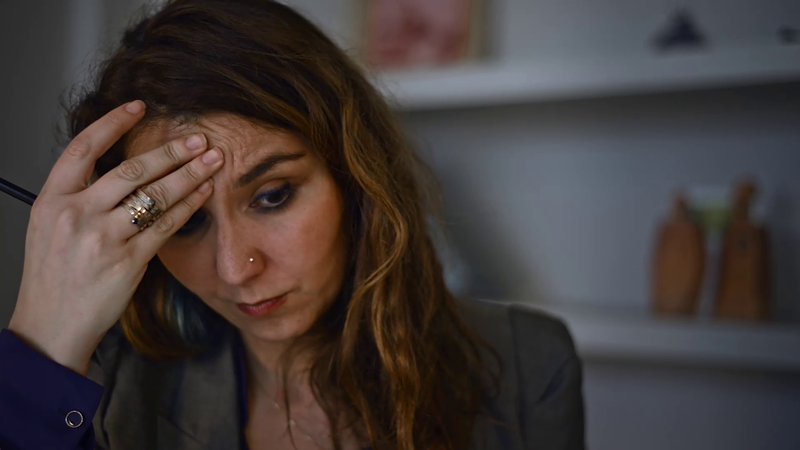
Still of Ipek Bozkurt in Dying to Divorce | Film Review
I give Dying to Divorce an excellent five out of five stars. Not only is his feature length documentary chilling and eye opening but Chloë Fairweather does an excellent job in keeping the viewer engaged in over five years of footage and developments.
★★★★★

Trailer: Dying to Divorce (2021) - directed by Chloë Fairweather

Dying to Divorce will be broadcast on Sky Documentaries on Wednesday 9 March at 9:00pm.

dyingtodivorce.com

SHARE:

Saturday, 18 September 2021

Srebrenica Genocide Survivor Nedžad Advić Speaks About His Experience

I'm reading Ann Petrila and Hasan Hasanović's Voices from Srebrenica: Survivor Narratives of the Bosnian Genocide. The book is a series of oral histories from survivors of the Srebrenica genocide in July 1995; I've only made it through the section on execution site survivors so far. It is slow-going. Each story deserves pause and consideration, a moment of reflection on the gravity of loss and the miracle of survival.

Nedžad Advić's story was particularly powerful. Advić is the same age as my 'baby' brother and thus, in the eyes of an older sister, a child when the events of Srebrenica took place. At the age of 17, he was amongst the men and boys separated from their families at Srebrenica and taken to execution sites to be massacred. He survived despite being shot four times and left to die. Advić and the man who saved his life were the only two survivors from the Petkovci Dam execution site.

So touched was I by Advić's account, I went out in search of other media relating to his story. Advić gave the interview below on the 25th anniversary of the Srebrenica genocide.

25 years on: Srebrenica massacre survivor Nedzad Avdic recalls how he escaped death in 1995

SHARE:

Friday, 28 May 2021

'Letters from Diaspora' by Arnesa Buljusmic-Kustura | Book Review

Letters from Diaspora by Arnesa Buljusmic-Kustura | Book Review

If you've ever contemplated how people 'get over' war and genocide, Arnesa Buljušmić-Kustura has the answer in her debut novel Letters from Diaspora: Stories of War and its Aftermath: they don't. The war follows them everywhere, their trauma never leaves them and it simply gets quieter.

Letters from Diaspora: Stories of War and its Aftermath reads like an oral history and it's written in a very similar voice to that used by Svetlana Alexievitch. Alexievitch's Voices From Chernobyl was one of the best non-fiction books I've ever read and I very much enjoyed both the style and content of the book, however grim.

Letters from Diaspora is not a book that is enjoyed. It's fiction, short at 98 pages and is twelve stories about twelve survivors of war and genocide in Bosnia. All of the subjects are living in the diaspora and speak about rage, loss, grief and being told to move on.

There is no moving on.

I finished Letters from Diaspora in one sitting; not surprising perhaps, given the length. It's an incredibly difficult subject matter to read but is a necessary and beautifully written book. I'd highly recommend this book, especially to teens. The short, accessible stories would be an ideal starting point for exploration and discussion.

SHARE:

Saturday, 30 January 2021

Unspeakable: The Tulsa Race Massacre by Carole Boston Weatherford and Floyd Cooper | Book Review

Greenwood District, Tulsa, Oklahoma was once home to a thriving African American community. On May 31st and June 1st 1921, a mob of armed white Tulsans attacked the community, killing as many as 300 African Americans and displacing 8,000 more. 2021 will mark the 100th anniversary of what became known as the Tulsa Race Massacre, the history of which was suppressed for seventy-five years.

Unspeakable The Tulsa Race Massacre by Carole Boston Weatherford and Floyd Cooper | Book Review

Unspeakable: The Tulsa Race Massacre is a picture book by author Carole Boston Weatherford and illustrator Floyd Cooper. It's short at 32 pages but aims to help young readers understand these terrible events so that "we can move toward a better future for all". It's aimed at the 8-12 years age group.

Reading Unspeakable: The Tulsa Race Massacre was physically painful. In the beginning, the book describes the thriving community of Greenwood District and the high street that became known as the "Black Wall Street". The descriptions of culture, fashion and community reminded me so much of what I've read about Sophiatown and District Six in South Africa, communities with vibrant cultures that were similarly razed to the ground.

Weatherford has done a fine job of simplifying the events for young readers, but presenting sufficient detail to draw older readers into healthy debate and discussion. It would be a good platform to stimulate further research and self-study too. The author's and illustrator's notes were particularly interesting, detailing their personal reasons for being involved in this work. Of particular note is the author's comment that the event was not even taught in Oklahoma schools until the twenty-first century.

Unspeakable The Tulsa Race Massacre by Carole Boston Weatherford and Floyd Cooper | Book Review

The illustrations by Floyd Cooper are exquisite, showcasing the fashions and vibrancy of Greenwood District, and ultimately the violence and devastation. The illustrations do a great job of bringing the events and people to life, ensuring that the reader relates to them and to the injustice of the events.

Unspeakable: The Tulsa Race Massacre is published by Carolrhoda Books, an imprint of Lerner Publishing Group

I would wholeheartedly recommend this book and am pleased to note that it's being released in both the US and UK (and presumably around the world).

An advance, electronic copy of this book was provided by Netgalley for the purposes of this review.

SHARE:

Sunday, 4 October 2020

Book Review: West of Jim Crow: The Fight Against California's Color Line by Lynn Hudson ★★★★☆

I know very little about American civil rights history from the late 19th to early 20th century. This is not surprising; my focus has primarily been on Africa (especially South Africa) and on genocides in the 20th century. It has been interesting to learn that anti-miscegenation laws and job-colour bars weren't the invention of Apartheid South Africa but originated in North America. Specifically, a set of so-called Jim Crow laws emerged in America from about 1880 that sought to enforce racial segregation and these laws would be a highly influential on laws adopted by South Africa.

West of Jim Crow: The Fight Against California's Color Line by Lynn M. Hudson | Book Review

In West of Jim Crow: The Fight Against California's Color Line, Lynn M Hudson focuses on the African Americans who moved to California to escape Jim Crow, expecting freedom and the benefits of full citizenship but instead realising that Jim Crow and racial segregation were all too present in the west.

This is not simply a recounting of the racism, fear-mongering and obsession with eugenics that featured so prominently in white society for the century after the Reconstruction Era (although these are mentioned in some detail throughout the book). West of Jim Crow is about the tireless efforts of Black Americans to assert their citizen rights, establish respectability, secure equal opportunities and protect their men and women from the scourge of lynching and the rise of the KKK.

It is also notably about the role of Black women, their agency and the significant roles they took in journalism, activism and other roles to secure their rights both as women and as human beings. As Lynn M Hudson remarks on many occasions, just because there is little in the written records about Black women's struggles for freedom and activism, does not mean there wasn't significant agency and activism present.

West of Jim Crow is structured around six chapters, each concentrating on a specific event in Californian history:

  • Reconstruction: the initial gains and setbacks in the period following the Civil War, with the rise of Jim Crow and associated Jim Crow entertainments and minstrelsy
  • The Panama Pacific International Exposition: a look at the systematic erasure of civil rights gains, the emergence of the NAACP, the popularity of Birth of a Nation and the rise of eugenics
  • The Rise and Fall of Allensworth: the town founded by and for African Americans, doomed to fail because of misrepresentation, geographical and environmental issues
  • On Lynching: an account of the events that divided a country into those who supported lynching and those who were appalled by it; eerily prescient of Trump, tiki-torch marches and the gun lobby
  • On the Ku Klux Klan: fighting arson and intimidation while the KKK infiltrated law enforcement and local government in California
  • The Fight to Desegregate Pasadena's Municipal Swimming Pools: how activists began to use the damages of Jim Crow to argue for civil rights, winning the Pasadena pool case and later the Brown v Board of Education case

West of Jim Crow: The Fight Against California's Color Line by Lynn M. Hudson | Book ReviewWest of Jim Crow covers an incredible wealth of information and provides an interesting, readable account of African American history in California. Initially I felt a bit exhausted by the repetitive, circular mode of writing, featuring titbits and breadcrumbs followed by elaboration and exposition. I've noticed that this form of writing is favoured by many historians and while it can be taxing to read, the truth is it is preferable to a dry, linear account and also aids significantly in the reader's retention and comprehension of historical information.

Despite this small reservation, I give West of Jim Crow an excellent four out of five stars and highly recommend to those wishing to know about this particular area of Black history.

★★★★☆

West of Jim Crow: The Fight Against California's Color Line is available to purchase from Amazon.com and Amazon.co.uk (disclosure: affiliate links. I will earn a small amount if you purchase using these links, at no additional cost to you).

My thanks to University of Illinois Press and Netgalley for advance, electronic copy of this book.

SHARE:

Thursday, 3 September 2020

Alfred Birney’s ‘The Interpreter from Java’ - Blog Tour and Guest Post

I’ve previously covered the suppressed history of Dutch atrocities in post-war Indonesia on this blog in 2012 and I was very interested to hear about Alfred Birney’s novel about a man named Alan Nolan who discovers his father’s memoirs about the atrocities he committed in the Dutch East Indies during the war with Japan – his life as an assassin, the murder of Indonesians in the service of the Dutch and his escape to the Netherlands to avoid execution. Today I’m taking part in the blog tour for the English-language release of The Interpreter from Java and thank Alfred Birney for the guest post below.


Colonial Shame by Alfred Birney

The Netherlands’ colonial past has been resurfacing regularly in the national media since 2016, spurred on in part by the success of my novel The Interpreter from Java. Slavery has also become a staple of public debate, though activists often face a barrage of criticism for asking the Dutch to take a broader look at their own history.

Colonial history has never been top of mind in the Netherlands, but things took a dramatic turn for the worse with the introduction of a new education system in the 1970s: secondary school students were allowed to pick and choose much of their own curriculum and history lost its status as a compulsory subject. And so we set about producing entire generations with the historical awareness of your average mollusc. Grist to the mill of a nation that was all too eager to sweep its own colonial history aside while pointing the finger at Germany, a country more inclined to shoulder the burden of guilt and apologise for its wartime atrocities. That same finger was pointed at Japan for having the temerity to invade the Dutch East Indies. But what about the troops – over 100,000 of them – dispatched from the Netherlands to reassert Dutch colonial rule after the war by mowing down Indonesian freedom fighters? No British-style Round Table Conferences preceded Indonesia’s independence.

Alfred Birney portrait - credit Eddo HartmannUnsurprisingly, the Dutch were happy to join in the worldwide protests against the US bombing of Vietnam. If there’s one thing we’re good at, it’s railing against abuses that occur far from our own little patch of mud. But many Americans now look back with a profound sense of what was done in their name. Countless movies and songs about that wretched Asian war have seen the light of day. A ten-part series on the Vietnam War, complete with blunders and atrocities, is now available on Netflix. And what have Dutch post-colonial sensibilities produced? Little more than small-screen adaptations of books from before 1900.

The Dutch government is spending over four million euros on an ‘independent study’ into war crimes committed during our great colonial war, a war we lost. This is a farce. Everything of note has already been recorded and filed away, nothing new will surface. These millions are earmarked for the Royal Netherlands Institute for South East Asian and Caribbean Studies, the Netherlands Institute for War, Holocaust and Genocide Studies and the Netherlands Institute for Military History.

A study conducted by three government-funded institutes – how independent is that? The men in charge say they welcome cooperation with Indonesia, yet failed to invite a single Indonesian to their obligatory kick-off event. They are eager to talk to Indonesian eyewitnesses from the colonial war of independence, all of whom are long dead.

While the stated aim of this study is to analyse the violence on both sides, the Netherlands refuses to simply translate the work of Indonesian historians. Every effort will be made to explain Dutch violence in the broader context of post-war decolonisation, a framework of international political, administrative, judicial and military justifications. International, eh? They’ll be blaming the Allies next!

But there is hope. Truly independent researchers in the United States and Flanders are sifting through the facts and taking up their pens. Free from that peculiar mix of colonial shame and arrogance that inflicts the Dutch, they will one day rap us on the knuckles as firmly as we have done with other nations.


The Interpreter from Java is translated by David Doherty, published by Head of Zeus and available in hardcover from today.

Photo credit portrait of Alfred Birney © Eddo Hartmann

SHARE:

Sunday, 14 June 2020

Survivors Speak: RLTM and the Role of the Media in the Tutsi Genocide

The media played a critical role in the Tutsi genocide in Rwanda in 1994. There is still debate about the nature of that role; while it is unlikely that the media played a direct role in influencing Hutus to kill, it certainly played a secondary role in inciting and prolonging the genocide.

Almost four years before the genocide began, the pro-Hutu, anti-Tutsi newspaper Kangura published the Hutu Ten Commandments which explicitly called for an end to inter-ethnic relationships and business partnerships between Tutsis and Hutus; an exclusion of Tutsis from public office,  the military and education sector; and an end to so-called Hutu ‘mercy’ on Tutsis.

The Rwandan radio station Radio Télévision Libre des Mille Collines (RTLM, translates as “Thousand Hills Free Radio and Television”) specifically targeted the younger Hutu generation, playing popular music from neighbouring countries and referring to Tutsis as ‘cockroaches’ during anti-Tutsi, pro-Hutu broadcasts. During the genocide, government forces used RTLM to promote violence, going so far as to broadcast specific instructions for carrying out the killings (including the names and whereabouts of Tutsis).

Link: ICTR ‘Media Case’: sentencing of Jean-Bosco Barayagwiza, Ferdinand Nahimana and Hassan Ngeze

The Hutu Ten Commandments were attributed to the editor of Kangura, Hassan Ngeze. In 2003, in a judgement pertaining to the ICTR ‘Media Case’, Ngeze was convicted of genocide and crimes against humanity along with RTLM co-founder Ferdinand Nahimana and RTLM executive Jean-Bosco Barayagwiza.


Genocide Survivors' Recollections of RTLM

Link: 'Music to kill to': Rwandan genocide survivors remember RTLM (Al Jazeera, June 2020)

RTLM office Rwanda
The office from which RTLM was broadcast during the genocide against the Tutsi [Source: Kigali Wire/Flickr]

84-year-old Félicien Kabuga was a former businessman in Rwanda and was arrested in Paris, France on 16 May in relation to his role as founder and financier of both RTLM and Kangura magazine.

"[In 2011] Kabuga was charged before the ICTR with genocide, complicity in genocide, direct and public incitement to commit genocide, attempt to commit genocide, conspiracy to commit genocide and crimes against humanity, committed in Rwanda between 6 April and 17 July 1994"

- Case File: Félicien Kabuga [IRMCT.org]

Following the arrest of Kabuga, Al Jazeera have published an excellent in-depth report on the recollections of three genocide survivors about RTLM. Read the full report by Mia Swart on Al Jazeera.

Claver Irakoze

"I remember RTLM broadcasting songs conveying hatred and demonising the Tutsi. The songs would openly call for our extermination. Political slogans were translated into song and young people were mobilised into youth movements. These youth movements were key to executing the genocide"

- 'Music to kill to': Rwandan genocide survivors remember RTLM [Al Jazeera, June 2020]

Honore Gatera

"Before April 1994, RTLM sent messages about how the Hutus must protect themselves against the "snakes" and the "cockroaches", meaning the Tutsis. There were already some killings taking place. People my family knew in another region of Rwanda were killed. "

- 'Music to kill to': Rwandan genocide survivors remember RTLM [Al Jazeera, June 2020]

Beatrice Uwera

"More than 200 people in my own family had been killed. In my mother's family, there were eight siblings. Only one survived. We had to begin again from zero. . "

- 'Music to kill to': Rwandan genocide survivors remember RTLM [Al Jazeera, June 2020]

SHARE:

Tuesday, 9 June 2020

CST Research Briefing on Jack Renshaw

CST report of Jack Renshaw

The news broke today that four members of banned far-right terrorist group National Action were convicted and sentenced to between 18 months and five-and-a-half years in prison. Typically, news reports dedicate very little time to what National Action represented and the crimes its members committed, focusing instead on the sensational aspects of the case.

"National Action, founded in 2013, was outlawed in 2016 after it celebrated the murder of Labour MP Jo Cox"

- National Action: 'Miss Hitler' hopeful among four jailed [BBC News]

It is vital that the public are made aware of the greater extent of this group's anti-Semitic leanings and their explicit calls for genocide and violence against Jews.

Link: CST.org.uk

CST is Community Security Trust, a charity that protects British Jews from antisemitism and related threats. In response to today's news, CST have shared their briefing on Jack Renshaw, the student activist and would-be terrorist who was imprisoned in 2019.

The briefing is comprehensive and eye opening, tracking Jack's far right activity from his membership of BNP Youth at age fifteen to his trial for planning to murder a policewoman and a Labour MP. Over sixteen pages the briefing details the violent rhetoric that permeates Britain’s far right, giving far more detail than news reports can usually dedicate.

Download the report at the CST website: 'White Jihad': Jack Renshaw's journey from a far right student to would-be terrorist

SHARE:

Sunday, 19 April 2020

COVID-19: State of Disaster in South Africa

I was very impressed with the South Africa response to the COVID-19 situation and the choice of President Cyril Ramaphosa to declare of a State of Disaster, not a State of Emergency as early as 15 March 2020 when there had not yet been any fatalities in South Africa. This article, written by Melodie Labuschaigne and Ciara Staunton, addresses this decision and the Constitutional ramifications thereof.

This article was first published on Verfassungsblog and is reproduced here under the Creative Commons license (CC BY NC ND) with due credit given to the original authors, Melodie Labuschaigne and Ciara Staunton.


As COVID-19 spread across the world, the first reported case in Africa was not until 27 February 2020 in Nigeria; six days later the South African National Institute of Communicable Diseases (NICD) confirmed the first case in South Africa. Since then, cases have increased steadily and the first death in South Africa was recorded on 27 March 2020. COVID-19 has shown its potential devastating impact elsewhere, but it is a particular cause for concern in South Africa.

First, while public health strategies such as social distancing and regular hand washing are encouraged, such strategies are a privilege many cannot afford in the crowded informal settlements that accounted for 13% of all households in 2016, many of which may not have access to running water. Second, the high rate of TB and HIV among the population, in addition to the number of those not on treatment for HIV, have led to concerns that this could impact the severity of COVID-19 in South Africa and make its population more susceptible to the virus. Third, while health systems in high income countries (HICs) are being stretched, most South Africans rely on the public health care system that is under-resourced and will struggle to meet the demand of the epidemic. While the virus does not discriminate on the basis of race, sex or borders, it is likely that it will disproportionately affect the poor and those suffering from other co-morbidities. Although the number of cases as of 15 March 2020 in South Africa remained relatively low in comparison to the rest of the world (61 confirmed cases; 0 deaths) President Cyril Ramaphosa stated that ‘urgent and drastic’ measures were necessary to limit the spread of the virus and address this ‘medical emergency’. As such, a State of Disaster was declared by the President on 15 March thereby giving Dr Nkosazana Dlamini Zuma, the Minister of Cooperative Governance and Traditional Affairs power to limit certain rights and freedoms within South Africa.

State of Disaster

A “State of Disaster” is distinct from a “State of Emergency” that can be declared by the President section 37 of the Constitution of South Africa and in terms of the State of Emergency Act 1997. In a State of Emergency, derogations from civil liberties protections under the Bill of Rights such as freedom of assembly are permitted, with some exceptions that include the rights to dignity, life and the right to a fair trial. The courts and parliament retain a supervisory role as the courts have the power to declare a State of Emergency invalid, and any extension of a State of Emergency beyond 21 days must be approved by parliament. A State of Disaster is a temporary measure in which certain rights (such as the rights discussed below) are limited and it may be declared invalid if the requirements for a declaration in s 27(1) of the Constitution are not met. The declaration of a State of Emergency must be necessary to restore peace and order, and as such, may not be the first step in addressing a health emergency, such as the spreading of a virus. Should the emergency escalate and lead to civil unrest, declaring a State of Emergency may be justified and it has not been ruled out.

The CEO of the South African Human Rights Commission, Tseliso Thipanyane, has argued that the measures introduced in fact amounts to a State of Emergency (a point echoed by others), but President Ramaphosa did not want to use that term due to its association with the days of apartheid. The Disaster Management Act 2002 also specifically includes a natural or human occurrence that causes or threatens to cause “death, injury or disease” within its definition of disaster, which would clearly apply to COVID-19, and this may also be why the President opted for a State of Disaster. Whatever the reason, for now the current situation has been designated a National State of Disaster.

Unlike a State of Emergency, the power to declare a State of Disaster is not expressly derived from the Constitution but rather under the Disaster Management Act 2002. Under the Act a National Disaster Management Centre must be established (in this case within the Department of Cooperative Governance and Traditional Affairs) which, amongst other duties, makes recommendations on draft legislation. The exercise of its powers and duties is subject to the direction of the Minister. It is however the national executive (i.e. the Cabinet) that is primarily responsible for coordination and management of the disaster. Regulations can only be made that assist and protect the public, provide relief to the public, protect property, prevent or combat disruption, or deal with disruptive or other effects of the disaster. Under this Act, a series of regulations restricting, amongst other things, the movement of persons, goods and the dissemination of information, were promulgated. These regulations include prohibiting foreign nationals from high risk countries (as defined by the WHO) from entering South Africa from 18 March 2020 and restricting gatherings to 100 individuals. A further series of restrictions, including a “lockdown” on the movement of its citizens from midnight on 26 March were announced on 23 March 2020.

In announcing these further restrictions, President Ramaphosa noted that COVID-19 is particularly dangerous for South Africa in light of the high levels of poverty, malnutrition and high rates of HIV and TB. At the time of the announcements South Africa had the highest number of cases in Africa albeit a low number relative to countries worldwide. The restrictions introduced were at that time the most stringent in Africa, as South Africa was then the only country on the African continent to require all of its citizens to remain at home. The measures announced on 15 March and 26 March represent the most comprehensive limitation on the freedom of movement and assembly of all South Africans since apartheid. A failure to adhere to these measures may result in a fine (unspecified), imprisonment of up to 6 months or both.

A State of Disaster lasts for 3 months (unless terminated by the Minister) and can be extended by the Minister one month at a time. There is, thus, no role for Parliament in the declaration, extension or termination of a State of Disaster. However, the Constitutional Court can set aside the declaration of a State of Disaster and it was challenged (and subsequently dismissed) on the grounds that the regulations are violating the rights of South Africans to human dignity, freedom of movement, freedom of trade, occupation and profession, and access to healthcare, food and water. Furthermore, unlike a State of Emergency, the regulations must conform to the Bill of Rights and a court can set aside any regulations that are considered to be an unjustified limitation on these rights under section 36(1) of the Constitution. Under the 2002 Act, parliament is not prohibited from meeting, but the COVID-19 regulations restricting gatherings in effect prevent parliament from meeting.

The COVID-19 regulations cover any array of measures considered to be necessary to prevent the spread of the virus, but the following are main limitations on the rights and freedoms:

1. Freedom of movement and assembly

The initial restrictions on movement pertained to entry into South Africa and the limitation of gatherings. Initially gatherings of no more than 100 individuals were permitted, but as of midnight 26 March, all gatherings including congregating for prayer is prohibited, with the exception of funerals that are restricted to 50 people. Foreign nationals from high risk countries were prevented from entering South Africa from 18 March. As of midnight on 26 March, all but essential movement is prohibited. The leaving of a residence is only permitted to buy essential goods, seek medical attention, buy medical products, collect social grants, attend a funeral of no more than 50 people, or access public transport for essential services during specified times. Leaving a house for exercise or to walk a dog is not permitted. Movement between provinces and districts is prohibited. Cumulatively, these measures go further than any restrictions on movement under the apartheid government.

Any individual who is suspected of having COVID-19 or has been in contact with a person who has tested positive for COVID-19 cannot refuse to consent to be tested. If the test is confirmed positive, they cannot refuse to submit to treatment, isolation or quarantine. Arguably, such measures are unnecessary as the Regulations Relating to the Surveillance and the Control of Notifiable Medical Conditionsgazetted in June 2017 under the National Health Act 2003 already make provision for the mandatory examination, treatment, isolation and quarantine. Under the 2017 regulations, such an application must be made to the High Court by the Head of a provincial department. The COVID-19 regulations, however, go further as a person who refuses to consent to testing or isolation can be quarantined for 48 hours while a warrant is sought. Section 36(1) of the Constitution requires a limitation of rights to be proportionate. The powers granted under the 2017 regulations appear to be suitable for COVID 19 and it is unclear why an extension of the powers was deemed necessary. Considering there have been no reported cases or indication that people will refuse testing, it is questionable whether this extension of powers is indeed a proportionate response.

2. Restrictions on movement of goods

As of midnight on 26 March, only essential goods may be sold. This includes any food and animal food products; cleaning and hygiene products; medical and hospital supplies; fuel, coal and gas, and basic goods, including airtime and electricity. The selling of alcohol and cigarettes are expressly prohibited. Price controls on certain goods have also been introduced, including toilet paper, hand sanitiser and some food products. Failure to comply can result in a fine, imprisonment of up to 6 months, or both.

3. Censorship

The South African Constitution guarantees freedom of expression and this includes “freedom of the press and other media” and “freedom to receive or impart information or ideas”, which are derogable rights. The COVID-19 regulations criminalise the intentional misrepresentation or publishing of a statement that a person or persons has/have COVID-19. The regulations also criminalise the publishing of a statement (including via social media) that intends to deceive another person about any measure taken by the government to address COVID-19. The focus is on disinformation and is aimed at preventing the spread of false cures that have been seen in the context of HIV. However, concerns have been expressed by the Committee to Protect Journalists that this may prompt other jurisdictions to adopt more oppressive press censorship. The risk of censorship that does not observe standards of necessity and proportionality in this time is that it may have the opposite effect and limit access to valuable and reliable information for public health. There is evidence within South Africa that this has already occurred as the Ministry of Health has stated that the dissemination of information is centralised to government, information requests by the press should be directed to the NICD and has it instructed other experts in South Africa not to talk to the press. Considering the NICD is currently overwhelmed, this has led to concerns that access to information has already been limited.

Enforcement of regulations

Under the 2002 Act, financial, human and other resources may be released and during his 23 March address, President Ramaphosa announced that he had directed the South African National Defence Force (SANDF) to be deployed to support the South African Police Service (SAPS). The SANDF are now patrolling the streets enforcing the lockdown. Already there have been allegations of the use of rubber bullets, as well as abuse, that have already led to calls for investigation.

Conclusion

This is the first time since the post-apartheid “New South Africa” that these basic freedoms have been limited. The limitations on rights are considerable and while recourse to the courts remains open, there is no compensation for loss or damage suffered as a results of these regulations. While these regulations apply to the COVID-19 crisis only, it is unclear when this epidemic will be deemed to have passed, and whether they may be used as a template for other public health emergencies which include the current TB and HIV epidemics. While such restrictions, particularly restrictions on movement, are harsh and can be followed in other HICs, it remains to be seen whether these restrictions will ultimately be a near impossible balance between restricting the spread of COVID-19, and depriving many in South Africa of their access to food, water and basic hygiene

SUGGESTED CITATION Labuschaigne, Melodie; Staunton, Ciara: COVID-19: State of Disaster in South Africa, VerfBlog, 2020/4/11, https://verfassungsblog.de/covid-19-state-of-disaster-in-south-africa/.

SHARE:

Sunday, 22 January 2017

The Longest Road (2016): A Journey To Help Yazidi Refugees

The Longest Road

In a world completely desensitised to images of violence and suffering, I suddenly realise that despite knowing about it, I haven’t seen much of what is actually going on in ISIS controlled territories. I’m watching The Longest Road, a documentary by Matthew Charles Hall and Jennifer Salcido, and a painter is showing his artwork to the camera. He has created incredibly detailed scenes of unimaginable horror and violence and somehow, perhaps because it has come from his memory and not a camera lens, it is all the more horrifying with the removal of that artificial barrier.

The Longest Road details the project that Matthew Charles Hall and Jennifer Salcido embarked on with a group of American veterans living on the other side of the world. Iraq War veteran Richard Campos had served in Iraq, trusting that he was working for the greater good without actually being able to see the fruits of his work. Now retired, he has committed himself to returning to Iraq and actually making a visible difference.

Gold Star father Kevin Graves joined him on his mission. Head of Some Gave All: The Joey Graves Foundation, he lost his son on a mission just outside of Baghdad. Desperate to see the land where his son paid the ultimate sacrifice, Kevin agreed to join Richard on his project.

What started as a basic mission to fund a hospital in Iraq turned into so much more when the team travelled to the frontlines and were able to witness the atrocities committed by ISIS. There they meet a Catholic nun and Dr Nemam Ghafouri, a Muslim heart surgeon, as well as scores of Kurdish and Yazidi refugees.

DSC_9486

Filmed over a period of three years, on two continents and in four languages, The Longest Road documents encounters and conversations with individuals who have stared evil in the face and the efforts of the team to make the smallest difference in their lives. We witness the transformation that the team went through and the manner in which their project grew into a major humanitarian effort.

The Longest Road is incredibly powerful. For so long, politicians have hijacked the refugee crisis for their own means and the continuing atrocities in Syria and ISIS-controlled territories somewhat distract us from the fact that human beings, men, women and children, are suffering under appalling conditions in Kurdistan, Iraq and Syria. This documentary breaks through the disaster-fatigue to remind us that why we need to continue fighting. It couldn’t have come at a better time.

SJR_9835 (2)


The Longest Road posterScreening

The Longest Road will have its UK and Europe premiere at the Dalston Rio in London on Saturday 18th February at noon. There will also be a Q&A afterwards with the directors and Dr Nemam Ghafouri, a medic who helped the American veterans in their mission to aid the two million refugees trapped in camps in Kurdistan and who is featured heavily in the film.

Facebook eventEventbriteWebsite


Trailer

SHARE:

Sunday, 1 January 2017

Book Review: Islam and Democracy After the Arab Spring by John Esposito, Tamara Sonn & John Voll

Islam and Democracy - John Esposito

In the aftermath of the Arab Spring and the descent into war in Syria, one question that arises time and again is this: is Islam compatible with democracy? It is a question that John Esposito, Tamara Sonn and John Voll promise to answer in their book Islam and Democracy After the Arab Spring

It is difficult to review a book and to rate it when it clearly doesn't do what it promises to do on the cover and while this book has a lot to do with Islam and democracy, it has little to do with the Arab Spring (with the exception of the final two chapters). One of the questions that most interests me is the events leading up to the Arab Spring, some of which I attempted to explore in the series Before the Spring

Events such as the Iraq war and the Second Intifada were pivotal in the development of a shared Arab consciousness that transcended national borders as was the rise of Al Jazeera and social media. 

In focusing on countries such as Pakistan, Turkey, Iran and Senegal, I was hoping that Islam and Democracy After the Arab Spring would continue in a similar vein - picking up those similarities and exploring whether those countries were also ripe for a Spring-like uprising. Or at least exploring similar factors in the various countries that so emboldened the Arab Spring protestors to take action and topple governments. 

Islam and Democracy After the Arab SpringIt doesn't quite manage that but what this book does do is take an in-depth look at the rise of Islamic governments in seven countries and how issues such as equality, democratic participation and the economy were shaped by world events and the relationship of each country to outside forces. 

The book includes a fascinating profile of Iran and the lasting impacts of US interference, such as in the 1953 coup. Likewise, the chapter on Turkey provides an insight into current political events and gives some background to Erdogan's political motives. 

As a series of essays on the rise of Islamic governments, it would have been more accurate had the book been titled A Political History of Islam in the 20th Century. Judging it on that basis, it's quite interesting and the difference in writing styles between the various authors keeps it so. 

As a resource further exploring the roots and enduring consequences of the Arab Spring, there are better volumes, such as Lin Noueihed and Alex Warren's The Battle for the Arab Spring.

SHARE:

Sunday, 18 December 2016

Book Review: Voices from Chernobyl by Svetlana Alexievitch

Voices from Chernobyl by Svetlana Alexievitch

I was 12 years old when the Chernobyl disaster happened and I remember being quite aware of the dangers of nuclear events - I'd learned about Hiroshima and Nagasaki and the enduring impact of the atomic bomb. Chernobyl was something else. It was a catastrophic and unprecedented disaster; we didn’t immediately know what the lasting effect would be but we knew that they were in trouble.

It was little surprise then when the years passed and we learned that Pripyat and surrounding areas had become ghost towns, areas that would be unfit for human habitation for another 10,000 years (or so estimates go).

But people do live there. They cut through fences and snuck past military patrols to resettle in their homes or to make new homes, surrounded only by the ghosts of the tens of thousands of people that once lived in those towns and the ever-present spectre of radiation.

Svetlana Alexievitch, Belarusian investigative journalist and winner of the Nobel Prize in Literature in 2015, spoke to those people and indeed, to people from all walks of life who were effected by Chernobyl. She spoke to widows and survivors, liquidators, contractors and military reservists who were called to Chernobyl in the days after the disaster. She spoke to families who had been evacuated from Pripyat and surrounding areas, to those who returned and to those who fled the war in Tajikistan to settle there because they had nowhere else to go.

Voices from Chernobyl: The Oral History of a Nuclear Disaster reads like a dystopian novel, or perhaps a post-apocalyptic survival story. First published in Russian in 1997 and expertly translated by Keith Gessen, Voices from Chernobyl is the fruit of hundreds of interviews that Alexievitch obtained over a three year period. It is an incredible and page-turning volume with accounts as fascinating as they are obscene.

It’s difficult to put into words how much of an impact this book has on the reader and any attempt will be nowhere near as eloquent as the accounts themselves. The lack of understanding of the dangers that people faced, coupled with a massive campaign of disinformation is perhaps most notable. In the aftermath of Chernobyl, they sent cranes from East Germany and robots intended for the Russian Mars exploration. Even robots from Japan made it to the site but the radiation interfered with all their workings and so they resorted to sending human beings in rubber suits instead.

There were 340,000 personnel despatched to Chernobyl but those working on the roof of the reactor got it the worst. They were wearing lead vests but the radiation came through their boots.

Voices from Chernobyl - Svetlana AlexievitchDespite the massive loss of life and how many disaster personnel succumbed to radiation poisoning or ‘Chernobyl cancer’ that took years to emerge and yet more years to eventually kill them, many of the interviewees displayed a nostalgia for the Soviet era and for the heroism of a bygone era. Time after time, interviewees would explain that they did not know the danger but they would have responded in the same way even if they had. It was their duty and they would have fulfilled it.

And then, throughout the book is the ever-present reminder that the Chernobyl disaster happened to a population less than 50 years after the Second World War.

Gulag, Auschwitz, Chernobyl. One generation saw it all.

What impressed me the most is that many of these people survived the Leningrad blockade only to suffer devastation again in Chernobyl. They spoke of the terrible winters during the blockade where people froze to death on the streets and one man mentioned, perhaps in jest, burning his belt so that the smell could stay his hunger.

Voices of Chernobyl is a study in the various shades of trauma. Some interviewees expressed that they couldn’t talk about the blockade, it was too traumatic, but Chernobyl they could talk about. Despite the catastrophic loss of life and livelihood, the events of Chernobyl still felt less traumatic to many of them than the blockade.

I cannot recommend Voices from Chernobyl enough and was so impressed that I have ordered Alexievitch’s latest book Secondhand Time: The Last of the Soviets which was shortlisted for the 2016 Bailie Gifford prize for non-fiction.

SHARE:

Sunday, 11 December 2016

Book Review: The Chibok Girls by Helon Habila

Helon Habila author of Chibok Girls

On the evening of 14-15 April 2014, Boko Haram militants kidnapped 276 female students from the Government Secondary School in Chibok, Borno State, Nigeria. The girls became known the world over as the 'Chibok Girls' yet surprisingly little is known about who they are, what their families are going through or the context in which this crime occurred. To date, in December 2016, almost 200 of the original abductees remains missing and the little that we do know is that their lives with Boko Haram are ones of untold horror, violence and sexual slavery.

Helon Habila is a Nigerian born author and professor of creative writing at George Mason University, Washington, D.C. In early 2016, he returned to Nigeria to take a road trip to Maiduguri and Chibok to speak to people not only about the events on that fateful evening in 2014, but about the long wait for the girls to return home and the present climate of war and strife in the region.

The Chibok Girls by Helon Habila - coverHabila has produced a chronicle of his time in Nigeria in the short but incredibly insightful The Chibok Girls: The Boko Haram Kidnappings and Islamist Militancy in Nigeria.

The book begins with accounts of the events of 14 April 2014 from parents and relatives of the girls who were taken and those that escaped. The residents of Chibok had received warnings that the town would be targeted that day and they had every reason to believe it. Massacres, assassinations and terrorist attacks have become ever more prevalent in what locals have begun to call the war with Boko Haram.

Just 9 months before the abduction of the girls from Chibok, Boko Haram militants entered a secondary school in Mamudo, Yobe State and killed 42 people, most of them students.

After spending time in Chibok, Habila moves on to Maiduguri and the heart of Boko Haram territory. He speaks of the effects of the civil war and how a divide was created between Christians and Muslims as successive governments misused state resources, culminating in the declaration of Sharia law in the area in 1999. Perhaps most chilling is the description of the rise of Boko Haram from a modest force to one to be reckoned with following the Boko Haram uprising in June / July 2009.

Moving back to Chibok, Habila collects yet more first-hand accounts of the fears and devastation of a community who have lost their daughters, sisters and friends.

Woven throughout the book is the story of the girls and the accounts of those who have escaped. Perhaps to be expected with the youth of the girls and the horrors that they experienced, there is very little in the book about their time with Boko Haram. Indeed, with so few escapees (and being that the book was in production at the time 21 girls were released in October 2016), we are but depending on the narratives of a handful of very traumatised girls.

Confronted with their reticence in the face on ongoing questions about their experiences, Habila notes the following:

Hauwa, Ladi, and Juliana were ordinary girls, young enough to be my daughter, who had been raised to almost mythic status by their extraordinary experience – Helon Habila, The Chibok Girls

Insightful, powerful and intimate, The Chibok Girls: The Boko Haram Kidnappings and Islamist Militancy in Nigeria is highly recommended for those interested in gaining a more in-depth perspective of the lives and people effected by Boko Haram activities.

The book is out in the States and will be released in the UK on 15 December 2016.

SHARE:

Tuesday, 29 December 2015

Review: My War Gone By, I Miss It So by Anthony Loyd (2015 edition)

Sarajevo


During the war in Bosnia and Herzegovina in the 1990s, most press correspondents huddled in the safety of the distinctive yellow Holiday Inn in Sarajevo, sending out second-hand dispatches to news outlets back home. Anthony Loyd was never going to do that. In his memoir My War Gone By, I Miss It So Loyd travelled across Bosnia and Herzegovnia during the war of 1992-1995 and spent time in Grozny at the height of the First Chechen War. Now, to mark the 20th anniversary of the signing of the Dayton Agreement, a new edition of Loyd’s memoir has been released with an updated foreword.

The prologue of My War Gone By, I Miss It So begins at the end of the Bosnian war, in the hills near Srebrenica. Withdrawing from drugs and newly clean, Loyd stumbles through a landscape peppered with corpses, witness to the aftermath of the Srebrenica genocide. It is an interesting place to begin, at the very end of the war, but by the end of the memoir we will see that this was not the most disturbing thing that Loyd saw in his time there. Moreover, by the end of the war, we will see that Loyd has come full circle in his life.

Armed with just a camera and pen, Loyd travelled over to Bosnia during the war after a stint in the military. Landing first in Sarajevo, he befriended a local family and spent his days dodging sniper bullets and trying to overcome the relentless boredom of war. Eager to see the frontlines, Loyd later travelled to various towns and villages in central and northern Bosnia where he met up with other members of the press corps and began to eke out a living as a war correspondent.

Loyd’s writing is brutally honest and in many passages he describes scenes and photographs that many of us would look away from or avoid. That is not to say that I don’t want to know, I really do, but at times his descriptions were so intimate and graphic that I felt somehow wrong reading the passages, as if I had somehow violated someone’s privacy. Such is the power of Loyd’s writing.

At many times in the memoir, Loyd mentions his eagerness to support the Bosniak cause on a moral level, to view them as the underdogs, but even this explicit bias is tested from time to time by the atrocities he sees. The saying goes that all is fair in love and war but that is utter rubbish, and what Loyd witnesses proves that all is twisted and futile in war instead.

It was the scenes in Grozny that were perhaps the most shocking. I’ve read a fair amount about the wars in the former Yugoslavia and felt somehow familiar with the subject matter when Loyd described his time in Bosnia and Herzegovnia. The chapter on the conflict on the ground in Grozny was disturbing to say the least. Loyd travels to the Chechen capital days before the fall of Grozny in February 1995 and what he witnesses is the utter meaningless and futility of war. It is especially moving in light of the way that history ultimately played out for the Chechens.

Again, my view of events in Bosnia might be influenced by all that I have read about the war and history of the region in the past but the only aspect of Loyd’s memoir that concerned me was his tendency to takes sides in the conflict. It is true that history and the subsequent trials have pretty much confirmed what he wrote almost 20 years ago but throughout the memoir I couldn’t shake the feeling that it would have been preferable if he had maintained a slightly more objective position.

In the foreword to the new edition, Loyd remarks how young and angry he was at the time of writing. It is interesting because while I might fault his objectivity, I never would have faulted his perspective which was infinitely more nuanced than anything I would have written back in the mid-90s when I was roughly the same age as him.

Nevertheless, I was riveted by the book from cover to cover and would highly recommend it to those interested in accounts of war or in the conflict in Bosnia and Herzegovina in particular. Like the timeless photographs to which Loyd refers in his memoir, his book provides a unique glimpse into one of the most disturbing conflicts of the 20th century.

SHARE:

Tuesday, 22 December 2015

Chief Prosecutor of ICC Gives Damning Statement on Darfur to UNSC

Fatou Bensouda, Chief Prosecutor of the International Criminal Court, made a statement to the United Nations Security Council on the situation in Darfur last week. In her speech she gives a damning indictment of the lack of international response to the ongoing situation in Darfur.

Link: ICC: Twenty-second Report of the Prosecutor of the International Criminal Court to the UN Security Council pursuant to the UNSC 1593 (2005) [Hague Justice Portal, 15 December 2015]

I observe with great regret that the adoption of each Resolution has, in practical terms, amounted to no more than an empty promise. Year after year, victims' hopes and aspirations for justice and a durable peace have been dashed

Despite the overall negative tone of her statement, she reiterates the determination of her office to tackle these crimes but notes that the victims require action not words.

The victims of Darfur will no longer find solace in our words. They deserve tangible justice, and they deserve to see justice is being done. What is required is concrete and joint action by this Council, the States and the Court to achieve real progress.

Bensouda noted that justice has been served in the case of Yugoslavia, Rwanda and Sierra Leone and in those situations, peace and reconciliation is only possible once perpetrators of atrocities are held accountable for their crimes. She insists that the same is true of Darfur.

In her closing, Bensouda calls for a commitment by both individual states and the United Nations Security Council to act for Darfur.

Ending impunity for the world's most destabilising and gravest crimes is not the prerogative of one single institution. It is a collective responsibility with humanity as a whole as its beneficiary.
Read the full statement on Hague Justice Portal.
SHARE:

Wednesday, 16 December 2015

#ZumaMustFall, White Privilege and the South African Spring

The 16th of December is a public holiday in South Africa. It used to be a racist Apartheid holiday marking the Day of the Vow when Afrikaners swore to God that they would forever commemorate it if He allowed them victory over the Zulus at the Battle of Blood River in 1838.

Today the 16th of December is the Day of Reconciliation, a day dedicated to healing South Africa's fractured past. Or to sitting in the sun and drinking in the hot African summer. 

Today, the 16th of December was marked by protests around the country for the #ZumaMustFall movement. It was a day that made me proud to be South African and which I thought might finally be the start of South Africa's Spring. I don't expect the crime to suddenly end but I do live in hope of an end to the poverty and corruption (which I see linked). More on that later. 

There was a very good article in the RDM today.


This is an interesting article. In many ways he is right - we expats have all had awkward moments when we've had to explain to other South Africans that we don't share their racist views. You will not believe the racism amongst South African expats and the white middle classes. Or maybe you will. 

 And he's not wrong when he observes that "[i]n focusing singly on Zuma, white South Africans expediently ignore the role of unsurpassed privilege — and their refusal to relinquish those alienable components of it — in explicitly marginalising black South Africans". 

The problem is that he is ignoring that Zuma is hugely flawed, that he laughs in the faces of his corruption. And he is ignoring that something is seriously wrong in a country that hasn't begun to tackle abject poverty twenty years after the installation of 'democracy'. Compare Britain in 1965 and South Africa in 2015 and tell me again that it's impossible to put a roof over people's heads in the aftermath of devastation. 


Mzimhlophe Hostel, Front Door
Every day South Africans of all colours land up on the streets but a vast majority of black South Africans still live in shanty towns and slums with no running water, no sanitation and communal washing facilities (if they are lucky). In December 2014, I visited Mzimhlophe Hostel in Soweto where some of the worst violence took place in the 1990s. After all this time there was no running water or sewerage and one set of latrines and washing facilities for every six to eight families. There were also no plans to improve the lives of the residents there.

In October, a friend of mine died, leaving his wife and child in utter poverty. They have nothing now that the breadwinner has gone and there is no safety net, no social security and nothing to stop them landing up on the streets. There are so many South Africans in need that there is simply no charity that will take on their case. That falls to their friends and employers. 

Compare this to a R246b upgrade on the President's private residence. Move beyond the corruption, nepotism and cronyism to the wealthy elite who drive past homeless people in cars worth more than they will earn in a lifetime. Heck, some of those cars are worth more than I'll earn in a lifetime. 
Mzimhlophe Hostel Soweto
There is something very rotten in South Africa, a seemingly insurmountable discrepancy between rich and poor and I don't see anything being done about that. 

Apartheid caused what is happening in South Africa today but South Africa today is sustaining that legacy. 

So is the #ZumaMustFall movement solely the domain of white privilege and racism? Today I didn't witness my fear-mongering, often racist Facebook pals at the #ZumaMustFall marches, but the most liberal, forward-thinking and genuine of people. I know that smacks of "not all whites" but the truth is that South Africa cannot be free until all South Africans are free and if the movement does smack of privilege then it needs to move beyond that. 

Three years ago, I was reading The Battle for the Arab Spring by Lin Noueihed and Alex Warren and I was blown away by the similarities by the situation in Egypt prior to the Spring and that in South Africa. Massive youth unemployment and poverty were paired with massive state corruption, embezzlement, cronyism, nepotism and gerrymandering. I remember remarking to myself that the only factor that set Egypt apart from South Africa was that the latter had not moved electoral borders. Yet. 

Is the time right for a South African Spring? Yes, I think it is. I think that a massively popular movement needs to be played out across social media and in the streets and that South Africans need to demand housing, education, jobs, adequate healthcare and poverty alleviation. Those were the basic promises of the ANC in 1994 after all. It's one thing to support a party that liberated the country but if the ruling party has lost their way then the population needs to guide it back on track. 
SHARE:
© A Passion to Understand

This site uses cookies from Google to deliver its services - Click here for information.

Blogger Template Created by pipdig