Saturday, 18 September 2021

Srebrenica Genocide Survivor Nedžad Advić Speaks About His Experience

I'm reading Ann Petrila and Hasan Hasanović's Voices from Srebrenica: Survivor Narratives of the Bosnian Genocide. The book is a series of oral histories from survivors of the Srebrenica genocide in July 1995; I've only made it through the section on execution site survivors so far. It is slow-going. Each story deserves pause and consideration, a moment of reflection on the gravity of loss and the miracle of survival.

Nedžad Advić's story was particularly powerful. Advić is the same age as my 'baby' brother and thus, in the eyes of an older sister, a child when the events of Srebrenica took place. At the age of 17, he was amongst the men and boys separated from their families at Srebrenica and taken to execution sites to be massacred. He survived despite being shot four times and left to die. Advić and the man who saved his life were the only two survivors from the Petkovci Dam execution site.

So touched was I by Advić's account, I went out in search of other media relating to his story. Advić gave the interview below on the 25th anniversary of the Srebrenica genocide.

25 years on: Srebrenica massacre survivor Nedzad Avdic recalls how he escaped death in 1995

SHARE:

Friday, 28 May 2021

'Letters from Diaspora' by Arnesa Buljusmic-Kustura | Book Review

Letters from Diaspora by Arnesa Buljusmic-Kustura | Book Review

If you've ever contemplated how people 'get over' war and genocide, Arnesa Buljušmić-Kustura has the answer in her debut novel Letters from Diaspora: Stories of War and its Aftermath: they don't. The war follows them everywhere, their trauma never leaves them and it simply gets quieter.

Letters from Diaspora: Stories of War and its Aftermath reads like an oral history and it's written in a very similar voice to that used by Svetlana Alexievitch. Alexievitch's Voices From Chernobyl was one of the best non-fiction books I've ever read and I very much enjoyed both the style and content of the book, however grim.

Letters from Diaspora is not a book that is enjoyed. It's fiction, short at 98 pages and is twelve stories about twelve survivors of war and genocide in Bosnia. All of the subjects are living in the diaspora and speak about rage, loss, grief and being told to move on.

There is no moving on.

I finished Letters from Diaspora in one sitting; not surprising perhaps, given the length. It's an incredibly difficult subject matter to read but is a necessary and beautifully written book. I'd highly recommend this book, especially to teens. The short, accessible stories would be an ideal starting point for exploration and discussion.

SHARE:

Tuesday, 29 December 2015

Review: My War Gone By, I Miss It So by Anthony Loyd (2015 edition)

Sarajevo


During the war in Bosnia and Herzegovina in the 1990s, most press correspondents huddled in the safety of the distinctive yellow Holiday Inn in Sarajevo, sending out second-hand dispatches to news outlets back home. Anthony Loyd was never going to do that. In his memoir My War Gone By, I Miss It So Loyd travelled across Bosnia and Herzegovnia during the war of 1992-1995 and spent time in Grozny at the height of the First Chechen War. Now, to mark the 20th anniversary of the signing of the Dayton Agreement, a new edition of Loyd’s memoir has been released with an updated foreword.

The prologue of My War Gone By, I Miss It So begins at the end of the Bosnian war, in the hills near Srebrenica. Withdrawing from drugs and newly clean, Loyd stumbles through a landscape peppered with corpses, witness to the aftermath of the Srebrenica genocide. It is an interesting place to begin, at the very end of the war, but by the end of the memoir we will see that this was not the most disturbing thing that Loyd saw in his time there. Moreover, by the end of the war, we will see that Loyd has come full circle in his life.

Armed with just a camera and pen, Loyd travelled over to Bosnia during the war after a stint in the military. Landing first in Sarajevo, he befriended a local family and spent his days dodging sniper bullets and trying to overcome the relentless boredom of war. Eager to see the frontlines, Loyd later travelled to various towns and villages in central and northern Bosnia where he met up with other members of the press corps and began to eke out a living as a war correspondent.

Loyd’s writing is brutally honest and in many passages he describes scenes and photographs that many of us would look away from or avoid. That is not to say that I don’t want to know, I really do, but at times his descriptions were so intimate and graphic that I felt somehow wrong reading the passages, as if I had somehow violated someone’s privacy. Such is the power of Loyd’s writing.

At many times in the memoir, Loyd mentions his eagerness to support the Bosniak cause on a moral level, to view them as the underdogs, but even this explicit bias is tested from time to time by the atrocities he sees. The saying goes that all is fair in love and war but that is utter rubbish, and what Loyd witnesses proves that all is twisted and futile in war instead.

It was the scenes in Grozny that were perhaps the most shocking. I’ve read a fair amount about the wars in the former Yugoslavia and felt somehow familiar with the subject matter when Loyd described his time in Bosnia and Herzegovnia. The chapter on the conflict on the ground in Grozny was disturbing to say the least. Loyd travels to the Chechen capital days before the fall of Grozny in February 1995 and what he witnesses is the utter meaningless and futility of war. It is especially moving in light of the way that history ultimately played out for the Chechens.

Again, my view of events in Bosnia might be influenced by all that I have read about the war and history of the region in the past but the only aspect of Loyd’s memoir that concerned me was his tendency to takes sides in the conflict. It is true that history and the subsequent trials have pretty much confirmed what he wrote almost 20 years ago but throughout the memoir I couldn’t shake the feeling that it would have been preferable if he had maintained a slightly more objective position.

In the foreword to the new edition, Loyd remarks how young and angry he was at the time of writing. It is interesting because while I might fault his objectivity, I never would have faulted his perspective which was infinitely more nuanced than anything I would have written back in the mid-90s when I was roughly the same age as him.

Nevertheless, I was riveted by the book from cover to cover and would highly recommend it to those interested in accounts of war or in the conflict in Bosnia and Herzegovina in particular. Like the timeless photographs to which Loyd refers in his memoir, his book provides a unique glimpse into one of the most disturbing conflicts of the 20th century.

SHARE:

Tuesday, 7 July 2015

Living the Lessons of Srebrenica (Event at Wiener Library)

Tonight we attended the "Living the Lessons of Srebrenica" event at the Wiener Library for the Study of the Holocaust & Genocide in London. It was one of hundreds of events taking place across the UK this week to commemorate the Srebrenica genocide in July 1995. 

Munira Subasic

We first heard from Munira Subasic, president of Mothers of Srebrenica. Ms Subasic spoke through a translator but I'd like to record some of what she said. 

On the continuing struggle to locate, identify and bury the remains of the victims of the Srebrenica genocide: 

If a human being doesn't have a place to show where they lived, it doesn't show that they existed. 

Ms Subasic talked about reaching out to other mothers' organisations but those who did it won't admit it, won't admit there was a genocide. Without admission, there can be no reconciliation. 

"Many women who were abused are not able to have their own children or have relationships with men. A whole generation is disappearing". 

Ms Subasic mentioned that the people who committed the crimes are still there, still abusing them. 

"People say things are moving forward but Mothers of Srebrenica wish they had two lives: one for waiting and one for enjoying our lives". 

When asked whether it would help if lower level perpetrators admitted their guilt, Ms Subasic explained that after the Holocaust, it was accepted that it happened. With Srebrenica, they are dealing with such total denial that no one is admitting it happened. 

"They found only two bones of my son. It is very difficult to move on not knowing how he died. They dragged him from my arms". 

"Those who committed genocide think they are national heroes. I am very happy with who I am today. I'd rather be a victim than a war criminal".  

The next speaker was Dr Gill Wigglesworth who spoke about the lessons from the International Criminal Tribunal for the former Yugoslavia. She gave a fascinating overview of the legal situation and the different levels of proof required by the ICTY and ICJ when hearing genocide cases. 

Dr Wigglesworth mentioned a different level of justice, restorative justice if you will, whereby Serbia or Croatia issues an apology for the crimes. Serbia has done so but that was only because they want EU membership whereas Republika Srpska have no such impetus and therefore there is very little chance of an acknowledgement or apology. 

Alex Buskie

Alex Buskie of the United Nations Association UK spoke next on the responsibility to protect.

She examined how the United Nations learned from their mistakes in the 90s and 00s and how the Responsibility to Protect doctrine came to be adopted in 2005. 

She mentioned that failures in the past stemmed from inattention, indifference and misjudgment or a perceived contradiction between the desire to protect a population vs the desire to protect a group of individuals. One concept that Ms Buskie reiterated several times was that the UN is a meeting of nation states, that they have no specific power as an organisation and they can only go so far as their members allow them. 

Ms Buskie then took us through the three pillars of responsibility to protect and what we are protecting against (ethnic cleaning, genocide, war crimes and crimes against humanity)

Finally, Ms Buskie admitted that the UN is struggling and that the R2P has only recently been adopted. Having watched the UN reaction to Syria and the continued yet fruitless motions, I found this especially frustrating. Ms Buskie dis highlight how the security council should have briefings earlier on in future and how the organisation needs to adopt a company-wide commitment to upholding human rights but they have a long way to go. 

Finally, Jasvir Singh of City Sikhs UK spoke about his own visit to Sarajevo and Srebrenica and how moving the experience was for him. 

He spoke of the parallels to be drawn with the Sikh genocide and how friends and neighbours turned on each other. Mr Singh had an important message about how easily a situation can deteriorate and he hinted that such a situation is not impossible even in the UK. He highlighted the role of interfaith organisations in establishing commonality and ensuring that communities can maintain their faith while living in peace with those of other faiths. 

The event was then wound up with a very interesting discussion. I was most impressed with how we tackled some controversial topics with respect and consideration.

This event was organised by Remembering Srebrenica, City Sikhs and the Wiener Library. We received a copy of the excellent “Remembering Srebrenica” publication which I was very pleased about.


Remembering Srebrenica

SHARE:

Thursday, 27 September 2012

Book Launch: Genocide Since 1945 by Philip Spencer

Tonight Philip Spencer talked at the Wiener Library in London about his book Genocide Since 1945. He gave an impassioned speech about what had made him become a scholar of genocide and why he wrote this book. He discussed Raphael Lemkin's struggle to comprehend why it was so difficult to bring the perpetrators of the Armenian genocide to justice, how this lead him to the naming and creation of the concept of genocide and how he lobbied the newly formed United Nations to make this act a crime under international law. Spencer noted how far we have come in such a short time from defining genocide to the International Criminal Tribunals and the establishment of the International Criminal Court.

What moved me the most about Spencer's talk was his focus on despair. I have often talked about my own despair, how the task of learning about genocide can seem so great, so unmanageable especially in the face of moral relativists, genocide deniers and others who seek to twist and rewrite history.

Spencer spoke of his own despair and the difficulty of drafting a book like this when the temptation is there to put it down as human nature and let the perpetrators get on with it.

He spoke of his obligation to the victims, those who can no longer speak for themselves or those who survived the vicious attacks. We need to speak up for them, to tell the world that it is not acceptable. We also need to speak up on behalf of the rescuers, those noble men and women who risk their lives to save others, who show that there is a choice and it is a crime to commit these acts. These are the people who show that there is hope for the future, and they are the ones who remain after the genocide to support the survivors and become their fellow citizens.

We need to continue learning about genocide causes and prevention in order to support and validate both victims and rescuers.

I spoke to Philip Spencer about Genocide Since 1945 and who his target market was with the novel. He explained that he had made the book as accessible as possible and it is certainly intended that his own university students would read it. The book contains an introduction to the concept of genocide and explains the differences between victims, perpetrators, bystanders and rescuers. Two full chapters are dedicated to case studies divided between the 'hidden' genocides of the Cold War era and those after. Each of the case studies carefully identifies victims and perpetrators with an important focus on intent. These chapters will be invaluable in understanding those genocides which have not formally been recognised or prosecuted.

Genocide Since 1945 is published by Routledge and available to purchase on www.routledge.com. For a limited time, you can use the discount code GEN45 to receive a discount of 20%.

SHARE:

Wednesday, 30 May 2012

Prijedor: An Anatomy of A Genocide

prijedor-genocide-kozarac-massacre-1 Kozarac memorial [Source: Ranko Cukovic/Reuters]

If there were a guidebook for preparing for a genocide, it is likely that it would include several fundamental steps.  The budding genocidaire would be advised to seek out a society characterised by increasing socio-political tensions, preferably in the grips of a war or economic collapse.  The media would be used to conduct a campaign of propaganda, vilifying one ethnic group and blaming them for the ill fortunes of another. Radio and news stations would need to be taken over, newspapers controlled.

The enemy would need to be identified, dehumanised.  The coup de grace would be getting the enemy to participate in identifying themselves, making them carry passbooks and identity cards, wear arm bands or paint their doors.  And then you kill them.

If this reads as flippant, it is certainly not meant to be but it underlines the precise reason why genocide education is so important.  After the horrors of the Holocaust, there is no way that the painstakingly well-planned and systematic genocides in Rwanda and Bosnia should have gone unnoticed before it was too late, but they did.  And they followed a frighteningly similar pattern to that described above.

Prijedor is a town in north western Bosnia and Herzegovina.  According to the 1991 census, prior to the war in 1992-1995, Bosniaks formed 43.9% of the town’s inhabitants, 42.3% were Serbs while the rest were Roma, Ukrainians, Croats and Serbs.  In the aftermath of the war, 94% of the Bosniaks and Bosnian Croats had been removed from the area in a brutal campaign of ethnic cleansing that saw Bosniaks and Bosnian Croats murdered, raped and interred in concentration camps.

It began shortly after Slovenia and Croatia declared independence in 1991.  A local Serbian newspaper Kozarski Vjesnik began to print propaganda, instilling fear of local Bosniak and Croatian populations and imploring Serbs to arms themselves against these perceived threats.  The statements were inflammatory and emotive, using historically loaded terms such as Ustaše and Mudžahedini to refer to Bosnian Croats and Bosniaks respectively.  The local radio station Radio Prijedor was taken over, as was the television transmitter station.

There were rumours abounding of a document known as the “Silent Night”, a list of Serbian intellectuals, political leaders and community figures that were supposedly being targeted by Bosniak militants.  Such propaganda paved the way for the the next phase of identification and removal.

It is reported that on 31 May 1992, the Bosnian Serb authorities in Prijedor issued a decree that all non-Serb civilians should mark their houses with white sheets or flags and that they should wear white armbands when out of their homes.  This was witnessed by European Commission Monitoring Mission observers in August 1992 and is exactly what the Nazis did to Jews during the Holocaust, yet nothing was done to stop the upcoming extermination.

Thousands of Bosniaks and Bosnian Croats died in Prijedor and the surrounding villages and thousands more still were forcibly removed from their homes, raped, executed and arrested and sent to nearby Keraterm, Omarska and Trnoplje camps.  Inhabitants in camps were subjected to further regimes of torture and beatings, many to the point of death, and widespread rape and sexual assault of both male and female prisoners occurred. 

It could be said that a blueprint of the Nazi atrocities against the Jews was taken and applied precisely against the local non-Serb population in Bosnia and just as entire regions of Poland and Europe remain cleansed of Jews, so have regions of Bosnia been cleansed of non-Serbs.  It beggars belief that this happened in 1992.


Tomorrow marks 20 years since Bosnian Serb authorities decreed that non-Serbs should identify their homes and persons with white sheets, flags and armbands.  To this day, and in spite of ICTY judgements, local authorities have not apologised for or acknowledged these atrocities. 

To this end, 31 May is marked as White Armband Day Worldwide and you are invited to show your solidarity with victims of mass atrocities committed in Prijedor and around the world by wearing a white armband or placing a white sheet or flag on your window.

Visited the Stop Genocide Denial website for more details.

Further reading:

Bridging the Gap in Prijedor, Bosnia and Herzegovina [ICTY]
31 May – White Armband Day Worldwide [Stop Genocide Denial]
Milomir Stakić case information sheet (PDF) [ICTY]
Milomir Stakić judgement (PDF) [ICTY]
Duško Tadić judgement (PDF) [ICTY]
Prijedor Massacre [Wikipedia]
Aftermath of the Bosnian Genocide: In the Land of War Criminals [Bosnia Genocide]

SHARE:

Wednesday, 25 January 2012

Interview With Dr Ajaz Khan of Lendwithcare.org

It is one of the great paradoxes of the developing world. Those individuals in most need of banking services and credit are the most likely to lack sufficient collateral to support it.  In the past decade, there has been increasing focus on microfinance as a tool to alleviate poverty and sustain business models.

Microfinance is not charity.  There is an increasing perception that charity perpetuates poverty whereas it is believed that microfinance can enable an individual to build on their skills and provide a sustainable method of improvement.

AAKhan photoLendwithcare.org recently launched in the United Kingdom.  It is an initiative from Care International UK in association with The Co-operative.  We speak to Dr. Ajaz Khan, CARE’s Microfinance Advisor, about microfinance, Lendwithcare.org and what you can do to get involved.

You lived and worked in Bosnia-Herzegovina between 2000 and 2006. Could you please tell us about the work that you did there? What motivated you to make the move to BiH?

Although I spent most of my time in Bosnia & Herzegovina, I was also working in Kosovo from 2002 onwards. Initially, much of the work involved the physical reconstruction of homes, schools, health facilities and water supply systems, that is the infrastructure that had been damaged or destroyed during the conflicts. However, after the reconstruction phase most of my work revolved around creating employment and income earning opportunities. My particular area of expertise is microfinance and I helped to create two microfinance institutions, one in each country that provided thousands of loans to microentrepreneurs, mainly women, to develop their businesses.

Prior to working in the Balkans I had spent around nine years working in Latin America, largely with small scale farmers, and was looking for a new challenge. I had during the 1990s followed the Balkans conflicts very closely. There was a particular resonance for Muslims such as myself who had been born and brought up in Europe – at the back of our minds there was always a feeling that if this could happen in Eastern Europe could it happen in Western Europe as well? I was grateful when the opportunity arose for me to work in the Balkans and make a small difference to improving the lives of those affected by the conflicts. I left the Balkans to go on to work in Pakistan following the Kashmir Earthquake and then Sudan.
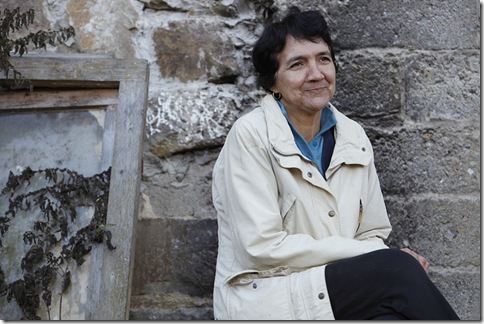
SrebrenicaPhoto credit: CARE/Jon Spaull

Microfinance is a relatively new concept but one that uniquely puts members of the public in a position where they can achieve a great social good. It is different from and more sustainable than giving charity. Could you please describe microfinance in simple terms?

Microfinance is the provision of financial services to those who traditionally have been socially or economically excluded from the formal financial sector. Microfinance includes a number of different financial services such as savings, remittances and insurance but has become synonymous with the provision of small loans or microcredit. The concept of microfinance has in fact been around for a long time but it is really only in the last 30-40 years that it has started to be seen by the international community as an effective tool in alleviating poverty amongst the working poor.

Improving access to financial services allows poor and low-income people to finance income-generating activities, build assets, stabilise consumption and protect against risks. It is in this regard that microfinance can be seen as a dignified and sustainable approach to the fight against poverty.

Lend With Care logo

Can you tell us a bit about Lendwithcare.org?

Lendwithcare.org is a micro-lending initiative from CARE International UK and in association with The co-operative. Lendwithcare allows people in the UK to lend from as little as £15 to an entrepreneur in the developing world. We work with local MFIs (microfinance institutions) from a number of developing countries to provide small loans to entrepreneurs working to lift themselves, and their families, out of poverty. By providing a platform through which entrepreneurs seeking microloans can be linked to people in the developed world who can provide capital, Lendwithcare not only enables low-income and poor families from around the world to work their way out of poverty but also gives lenders the satisfaction of seeing the direct impact their money can have on the lives of those they are helping. The money that is lent through Lendwithcare.org goes directly, and interest free, to the MFIs who administer the loans locally and once the entrepreneur starts repaying their loan this money goes back to the lenders who supported the loan request, where they can decide to re-lend their money to another entrepreneur or withdraw it.

Which countries does Lendwithcare.org currently operate in? Why were those countries chosen?

Lendwithcare currently works in five countries. It began in Togo and Benin in West Africa and then expanded to the Philippines, Cambodia and since late 2011 Bosnia & Herzegovina. There are several reasons why we selected these particular countries. Firstly, they are all countries where CARE has worked in the past in the field of microfinance - indeed some of the MFIs we now work with were established and developed by CARE in the past, although all are now independent entities so they are somewhat of a known quantity to us. Secondly, we feel we have identified the ‘right’ MFI partners, that is organisations that have a strong social development mission. There are also other factors which we need to consider such as the ease of transferring funds back and forth and whether we can develop links with the fair trade supply chains of our sponsor The co-operative.

Yawa Dotse, 49, grains food stall,  ApaktamE, Togo. Care International trip 13/02/11 to 16/02/11
Photo credit: CARE/Emilie Bailey

Is there a plan to expand into further countries this year?

Yes, from February 2012 we hope to include Ecuador and we are also currently exploring the feasibility of working with MFIs in South Africa, Indonesia and Pakistan.

Do you have any statistics on the numbers of individuals that Lendwithcare.org has assisted in the past?

Since Lendwithcare’s launch in September 2010, 1,249 entrepreneurs have been fully funded and just under half a million pounds lent. December 2011 has been our most successful month with over £109,000 being lent and 229 entrepreneurs fully funded.

Is there a single case or success story that stands out for you amongst the people that Lendwithcare.org has assisted?

Yes, a recent one actually from Bosnia & Herzegovina. Mrs Djerdji Merdjanovic and her husband both lost their jobs as the company where they were working ceased to operate after the Bosnian War. They decided to start raising livestock, growing vegetables and raising and selling earthworms to specialist fishing shops in the capital Sarajevo. Djerdji applied for a loan to buy a second hand van and was featured on Lendwithcare. One of our lenders who incidentally manages a business called Worms Direct UK and is a major supplier of worms for fishing bait saw her story. Because the particular type of worm she raises is quite rare he contacted us to see whether it is possible for Djerdji or indeed other suppliers in Bosnia and Herzegovina to export and sell the worms through his company in the UK.

What are the biggest hurdles that entrepreneurs face and what can be learned from mistakes made in the past?

Lack of affordable, accessible and timely capital is certainly one of the major hurdles that small businessmen and women the world over face. We feel that Lendwithcare, in a very small way, is helping microentrepreneurs overcome this hurdle. However, lack of markets, physical infrastructure such as roads and crop storage facilities, information, technical assistance and support and women’s mobility are all hurdles and their importance varies from one context to the next.

If you could give a message to prospective lenders out there, ones that might be hesitant or apprehensive about lending money through your organisation, what would that message be?

Not only can you help someone but you can also see where your money goes, we do not take anything from your loan to cover our costs, and you invariably get your money back!

I believe that borrowers are in fact charged interest on their loans. Is this consistent with Islamic finance or are special arrangements made for those borrowers (for example, those within BiH)?

Although Lendwithcare provides interest free capital to our MFI partners, the MFIs do charge interest (or other fees in the case of Shari’ah compliant institutions) to entrepreneurs. However, we do check to ensure that their interest rates are ‘reasonable and fair’ according to the local context.

If they are to survive then MFIs must of course cover their operational costs. And the costs associated with providing very small loans, on occasions supported with training and other services, to often geographically isolated borrowers, especially when they visit them at their homes to disburse loans and also collect repayments, can be considerable. Indeed if they wish to grow and develop MFIs will need to make a profit.

However, while there is an obvious need to ensure financial security for themselves so that they can continue operations, they are rarely under pressure from shareholders so do not need nor desire to make ‘excessive’ profits. What the interest free capital allows the MFIs to do is extend their operations and lend to poorer clients than they might otherwise, or to move into more remote areas - this has been the case with our MFI partner in Togo for example which is now lending in more isolated rural areas.  In other cases, such as the Philippines and Bosnia & Herzegovina the MFIs have actually passed on the benefits of receiving interest free capital from Lendwithcare to their clients through much lower interest rates. At present we do not have any Shari’ah compliant MFI partners, but this is likely to change during 2012 with potential partners in both Indonesia and Pakistan.

Care International trip to Cambodia with Deborah Meaden 14/03/11 to 20/03/11
Photo credit: CARE/Emilie Bailey

There are other microfinance organisations out there. What differentiates Lendwithcare.org from those others and who is your target market?

There are a number of government bodies, NGOs and development agencies working in the field of microfinance. However, Lendwithcare.org is the first person-to-person platform to be backed by a leading international aid and development organisation. Moreover, Lendwithcare is able to combine CARE International’s decades of expertise and innovation in the field of microfinance with this revolutionary initiative to provide the highest quality products and services to the working poor.

Do you have advice on what young people can study if they would like to become involved in international agencies such as yourselves?

I think more important than what they study is that they must have a passion to work in international development. It is useful though to have formal qualifications in technical subjects such as agriculture, health, and engineering as the first job is often at the grassroots level working directly in the field. Also, foreign languages are always useful.

Apart from becoming a lender, what can people do to support your organisation?

Since 100% of the loans made through Lendwithcare go to the entrepreneurs we have very little marketing budget and therefore need to find a way of telling people about Lendwithcare.org through word of mouth. We encourage all of our lenders to talk about Lendwithcare with friends and family and if they use Facebook or Twitter to visit and like our Facebook page www.facebook.com/lendwithcare or tweet using our @lendwithcare address.

As an organisation, CARE International UK has a number of ‘How you can help’ options, which can be found on our website http://www.careinternational.org.uk/how-you-can-help and regular Challenge activities that raise funds and awareness through enjoyable and often exhilarating events. In March this year for example, the CARE team are challenging people to walk 10,000 steps a day for one week as part of their Walk in her Shoes campaign for more information.


Thank you very much to Dr Khan for taking the time to speak to me and to answer my questions. I feel like I have a much wider appreciation and understanding of microfinance and feel confident in becoming involved in this great initiative..

SHARE:

Wednesday, 21 December 2011

Srebrenica: Rebuilding Lives With Microfinance

Alastair Stewart OBE is an English journalist and newscaster.  He recently retuned from a trip to Srebrenica, Bosnia-Herzegovina which he visited in his capacity as an Ambassador for CARE International UK. 

During his time in Srebrenica, he visited several micro-entrepreneurs who are improving their lives with small loans organised through the microfinance company, lendwithcare.org.  Watch the video below to see the moving account of how people are rebuilding their lives with microloans and what you can do to help this Christmas.

What is microfinance?

lendwithcare.org is an initiative from Care International UK in association with The Co-operative.  The website operates through the principle of microfinance, which is essentially the delivering of credit and financial services to individuals who are too poor to be serviced by regular banks. 

Lendwithcare.org microloans from CARE International - Banner Ad

In his 2004 paper Microcredit: Sound Business or Development Instrument, Gert van Maanen noted that “banks are for people with money, not for people without”, that the people who need credit most are those without the sufficient collateral to support it.  Microfinance is not charity.  Charity perpetuates poverty whereas microfinance can enable an individual to build on their skills and deliver them from poverty.

So how does it work?

It all begins when the entrepreneur has an idea.  The microfinance institution knows that they have to act quickly to ease the burden of poverty and ensure the success of the project.  Therefore, if the idea is good, the loan is granted.  The entrepreneur is then assisted in setting up a lendwithcare.org profile and members of the public can then lend their support to the project by making a contribution in increments of £15 or more.

This money can then go back to the microfinance institution to repay the initial loan and free the institution to back another project.  The entrepreneur is then able to grow their business and eventually repay the loan. 

There is always a risk with microfinance and you may not receive all of your money back from the entrepreneur. Despite the delays and setbacks, most microloans are repaid in full and on time, a sure indication that this system works.


Read about Alastair Stewart's experiences on his blog Bosnia and Microfinance. This short film shown above was shot & edited by Jon Spaull.

SHARE:
© A Passion to Understand

This site uses cookies from Google to deliver its services - Click here for information.

Blogger Template Created by pipdig