Wednesday, 9 March 2022

Film Review: Dying to Divorce (2021) | The fight to obtain justice for violence against women in Turkey ★★★★★

More than one in three Turkish women have been domestically abused in their lifetime. Femicides are rising and in 2020, 409 women in Turkey died as a result of domestic violence. It is rare that a woman will survive a case of extreme violence, rarer still that she will see justice. BAFTA-nominated director Chloë Fairweather and CPH:DOX F:ACT-award-winning producer Sinead Kirwan have teamed together on Dying to Divorce, a feature-length film on the fight of one courageous lawyer and two brave survivors for justice.

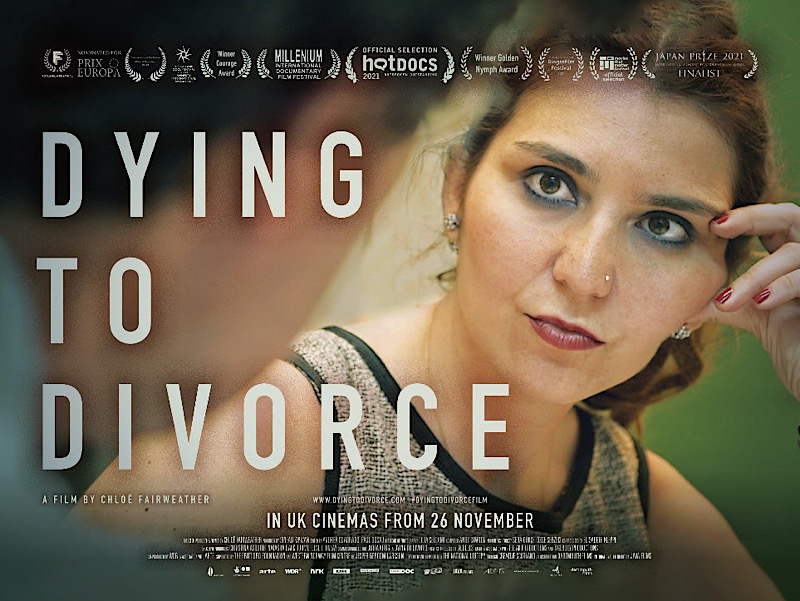
Dying to Divorce | Film Review | Film Poster

Kubra was a world famous television presenter known for her work on Bloomberg Turkey. She was attacked by her husband two days after she gave birth to their daughter. She lost the ability to speak and walk and required extensive speech therapy to testify against her husband in court.

Arzu was fourteen when she was married off to a farmer ten years her senior. He fired seven shot gun shells into her at close range when she asked for a divorce; she lost both her legs and the use of her arms as a result of the attack.

Both women need the help of Ipek Bozkurt to fight their cases in court and obtain custody of their children.

Filmed over five years, Dying to Divorce received recognition from the Academy Awards, BIFA Awards, Rose d’Or Awards, and received a BAFTA longlist nomination. It is a shocking film that delves into the systemic violence against women in Turkey and how their abuse is perpetuated by the court and Erdogan himself.

In one case, a husband was given a reduced sentence for killing his wife because she'd allegedly swore at him and provoked him.

As recently as March 2021, President Erdogan signed a presidential decree withdrawing Turkey from the Istanbul Convention. This Council of Europe treaty seeks to end violence against women and to set legally binding standards for the punishment of perpetrators. By withdrawing from the treaty, Erdogan signals that to men in Turkey that they may continue to abuse women with impunity.

Dying to Divorce could be framed as an edge-of-the-seat legal thriller were it not for the fact that it is devastatingly not fictional.

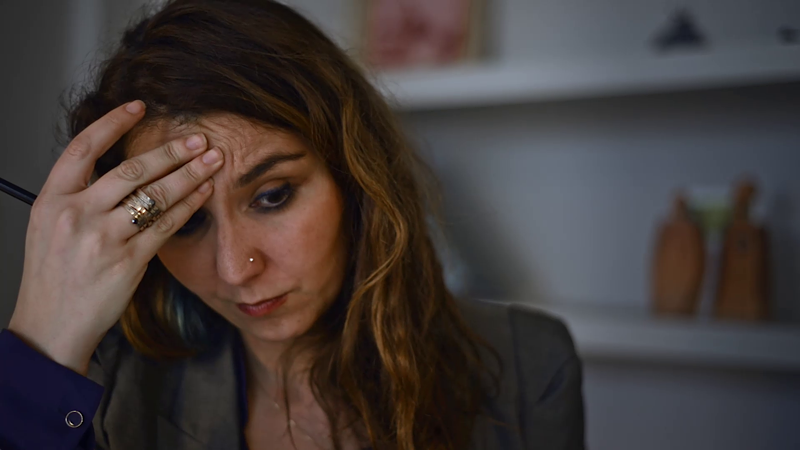
Still of Ipek Bozkurt in Dying to Divorce | Film Review
I give Dying to Divorce an excellent five out of five stars. Not only is his feature length documentary chilling and eye opening but Chloë Fairweather does an excellent job in keeping the viewer engaged in over five years of footage and developments.
★★★★★

Trailer: Dying to Divorce (2021) - directed by Chloë Fairweather

Dying to Divorce will be broadcast on Sky Documentaries on Wednesday 9 March at 9:00pm.

dyingtodivorce.com

SHARE:

Saturday, 10 October 2015

Malala Retells Her Story in New Teen Edition

I Am Malala - Teen

It was a story that resonated around the world. In October 2012, 15-year-old Pakistani blogger and activist Malala Yousafzai was targeted for assassination by the Taliban for her work in re-opening local schools for girls. She was flown to Birmingham, England for treatment and on recovery, went on to work tirelessly for the rights of women and girls. She worked with Christina Lamb on her memoir I Am Malala: The Story of the Girl Who Stood Up for Education and was Shot by the Taliban, notable for its rich insight into the Taliban and Pakistani treatment of women and girls. In 2014, Malala was joint recipient of the Nobel Peace Prize for her work in defending the right of all children to an education.

What people often forget is that Malala is still just a teenager and now she has retold her story for her peers. I Am Malala: The Girl Who Stood Up for Education and Changed the World begins with those fateful words:

After 15 January, no girl, whether big or little, shall go to school. Otherwise, you know what we can do. And the parents and the school principal will be responsible. 

I Am Malala (Teen Edition)Working with National Book Award finalist Patricia McCormick, Malala takes us from the very first Taliban announcement regarding girls’ schooling, through to her activism, assassination attempt and recovery in the United Kingdom. Targeted at young people Malala’s own age, this retelling is less rich in detail and background but gives the reader more insight into the events as they unfolded, from the public’s initial disbelief at the Taliban’s pronouncement to the dawning realisation of their deadly intentions.

Malala talks about girls being banned from school, of seeing explosions, fear and repression in her homeland and she speaks about it in a format that will be more easily accessible by middle-graders and early teens. We learn that Malala is a teen just like any other. She loves cricket and gossiping with her friends. On the day of the shooting, Malala notes how normal everything seemed.

I was late, as usual, because I’d slept in, as usual. I’d stayed up extra late after talking to Moniba, studying for my year-end exam in Pakistani studies.

The last thing Malala remembered that was was thinking about her exams then darkness.

I Am Malala: The Girl Who Stood Up for Education and Changed the World is available to buy on paperback in the UK from Amazon.co.uk from October 2015. The book is currently available on hardcover in the US but will be released in paperback on Amazon.com in March 2016. i would highly recommend this edition to younger readers who might have found the initial memoir too advanced to read.

SHARE:

Friday, 22 May 2015

Joanna Lipper interviewed in The Atlantic, "The Feminist Who Could Change Nigeria"

Filmmaker_JoannaLipper_Kudirat

Link: The Feminist Who Could Change Nigeria [The Atlantic, 8 October 2014]

In a discussion about her documentary The Supreme Price, director Joanna Lipper talks to Chris Heller about her relationship with Hafsat Abiola, daughter of late Nigerian president MKO Abiola, and the reasons for making her award-winning film.


When I set out to make the film, I had a very broad audience in mind. I wanted, first and foremost, to make a film that honored Nigerian history for Nigerians who knew the characters and knew their political history well. I also had in mind younger generations of Nigerians, who maybe had heard this story from their parents or grandparents, but did not know all the details. And then, a huge target was an international audience that did not know a lot about Nigeria. They needed some context to understand how a leader like M.K.O. Abiola emerged, what made him unique, what his objectives were, and what the opposition to his leadership was. How did a female leader like Kudirat Abiola emerge after her husband was incarcerated? How did she transition from being a wife and a mother to a leader?

Read the full interview in the Atlantic or read my review of The Supreme Price.

SHARE:

Sunday, 17 May 2015

Film Review: The Supreme Price (2014)

Hafsat Abiola-Lagos-Nigeria 01

The mourners are bewildered, suspicious and angry

It is a uniquely African situation: mourners gather at a funeral to commemorate yet another suspicious, unexpected and fathomless loss. The quote above describes the situation at the funeral of Chief Moshood Abiola, the democratically elected yet uninaugurated president of Nigeria who died in suspicious circumstances in 1998. Two decades later, the killings continue and it is estimated that there have been at least 160 political assassinations in Nigeria since the end of military rule in 1998.

Directed by Joanna Lipper, The Supreme Price is a film about the pro-democracy movement in Nigeria and the struggle to end military rule. It focuses primarily on Hafsat Abiola, the daughter of Chief Abiola (known as MKO Abiola) and his second wife Kudirat Abiola.

mko_abiola

Expertly combining historical footage and present-day interviews, the film follows the rise of MKO Abiola to power and his bid for the 1993 presidency of election. Though elected in a democratic election, the presidency was stolen from Abiola when the election was annulled. Following a successful campaign overseas, Abiola returned to Nigeria to fight for his mandate but was subsequently charged with treason and put into solitary detention. He later died in suspicious circumstances days after meeting with UN officials.

Kudirat for Web

During his detention, his wife Kudirat Abiola began to fight for his freedom and became a tireless campaigner for the pro-democracy movement in Nigeria. Once she realised that the West was not willing to sanction or boycott Nigerian oil, she convinced Nigerian oil workers to go on strike for 12 weeks. Kudirat was assassinated in 1996 and her killers were later acquitted of all charges.

Hafsat Abiola - Lagos - Nigeria 02

Any society that is silencing its women has no future

Hafsat Abiola was a student at Harvard when her mother was assassinated. In fact, Kudirat had been scheduled to fly to the US for Hafsat’s graduation on the day that she was killed. Hafsat realised that when confronted with a society that was silencing its women, there was no other option than for her to continue her mother’s work. And so from the exile, corruption and poverty in Nigeria, Hafsat works to unite women and give them a voice. Through her organisation KIND, she connects women across the numerous regional, religious and language barriers in Nigeria and teaches them the power of collaboration.

The Supreme Price is superb and Joanna Lipper has done an incredible job in weaving together a film that tells the modern history of Nigeria in 75 minutes. This is no dry documentary, the film has an almost feature film-like quality in its use of haunting music, dramatic editing and heart-rending reveals.

I would highly recommend The Supreme Price to anybody who would like to gain an understanding of the recent history in Nigeria and the effects of years of military rule and corruption. This is an important film and especially relevant today. It provides a vital backdrop to the recent Nigerian election and an understanding of the relief of a nation in finally voting out Goodluck Jonathan. It describes the poverty and injustice of a society that produced Boko Haram and how that society will struggle to overcome these extremists unless real social change is brought about.

The film was featured in several film festivals in 2014 including the Human Rights Watch film festival and the 2014 Raindance festival. The Supreme Price directed by Joanna Lipper is screening internationally and in cinemas from Friday 22 May 2015.


The Supreme Price - Extended Trailer from Joanna Lipper on Vimeo.


About the Director

Filmmaker_Joanna_Lipper_colorJoanna Lipper is an award-winning filmmaker and Lecturer at Harvard University where she teaches Using Film for Social Change in the Department of African and African-American Studies. Her work as a documentary filmmaker has been supported by the MacArthur Foundation, Ford Foundation, ITVS, Britdoc Foundation, the Gucci Tribeca Documentary Fund, Women Make Movies and Chicken & Egg Pictures. Her latest documentary, The Supreme Price, received the Gucci Tribeca Spotlighting Women Documentary Award and won Best Documentary at Africa International Film Festival.   An extended trailer from the film was commissioned to launch Gucci’s Chime for Change Women’s Empowerment Campaign at TED 2013. Previous films Lipper has produced and directed include Inside Out: Portraits of Children (1996), Growing Up Fast (1999) and Little Fugitive (2006). Lipper is the author of the nationally acclaimed book Growing Up Fast. Her photography has been published and exhibited in the US and overseas.

SHARE:

Saturday, 15 December 2012

The 12 Days of Misogyny

It seems that media and advertising agencies worldwide have really gone out of their way this year to contrive the most sexist, misogynistic advertising campaigns. Laura Bates writes for the Independent and explains precisely why it is neither funny nor harmless and above all, why this matters:

"It matters because we are reaching the end of a year in which we have seen what can only be described as a torrent of reports of sexual assaults, paedophilia and abuse going back decades, many of them excused or ignored precisely because of a culture that made light of and normalized such incidents" - The Independent, "FHM, Virgin and Zoo Australia: The 12 Days of Misogyny"

FHM [Photo source: Huff Post UK]


Virgin [Photo source: Telegraph]


Zoo [Photo source: The Independent]
SHARE:

Saturday, 8 October 2011

Seeking Justice for Nepalese Victims of Rape

Nepalese Woman by David Orgel
Nepalese Woman uploaded by David Orgel on Flickr

Nepal was torn apart by a decade of violence and civil war that ended with the Comprehensive Peace Agreement signed on 21 November 2006.  Gender-based violence was a key feature of this conflict and women were raped and brutalised by both the government forces and the Maoist rebels. 

In October 2011, it was widely reported that Justice still eludes Nepal's civil war rape victims.  Five years after the peace agreement was reached, hundreds of women who suffered rape and torture at the hands of armed forces are yet to receive justice.  Rape was viewed by the government’s Royal Nepal Army to be a legitimate form of torture and many women were arrested, detained and tortured on charges of aiding or supporting the Maoist insurgents.

In her book Sexual Violence and Armed Conflict, Jane Leatherman estimates that 40,000 Nepalese children were illegally detained by Maoist insurgents during the conflict and tortured, sexually violated and recruited for military activity.

Victims face multiple hurdles when seeking justice for these attacks.  Despite widespread reporting of the atrocities by organisations such as Amnesty and in reports that appeared in the mainstream media (see: “Children suffer in Nepal conflict”, BBC, 2005), the majority of Nepalese women remain silent about their ordeals.  Rape victims are stigmatised and rejected, especially if the rapes result in pregnancies.

Nepalese human right rights activists have received constant threats of violence which has further contributed to the silence of victims in the country.  In January 2009, Nepalese radio journalist and activist Uma Singh was hacked to death by 12 to 20 men in her room.  Her only crime was to raise awareness of the levels of violence against women in Nepal (see: “Nepal radio journalist murdered”, BBC, 2009).

It is important to note that the sexual violence against women and children that occurred during the armed conflict did not occur in a vacuum but against the backdrop of a patriarchal society where men’s status is elevated and women are forced to remain in subordinate positions. 

The United Nations Population Fund in Asia (UNFPA) has uploaded a video titled “Silent Tears: Gender based Violence in Nepal”.  In the video, they note that:

“Gender-based violence is widespread in Nepal.  Male dominance and female subservience is at the root of violence against women.  95% of the women and girls surveyed reported that they had personally experience violence, 77% of them from their own family members (SAATHI).  nearly 58% reported that such violence was a daily occurrence.”

You can view the video at the end of this post.

Despite these hurdles, a survivor of violence during the armed conflict has come forward but local police are refusing to register her complaint.  The Advocacy Forum Nepal reports that the police invoked a law which states that rapes had to be reported within 35 days of the incident.  International law prohibits such limitations on rape and, in fact, the Nepal Supreme Court issued a directive to the Nepalese government in 2006 to amend the law and remove all conflicts and limitations in serious crimes such as rape.

There has been no progress on this case since the beginning of October 2011.  Despite the many incidents of sexual violence during the conflict, this is the first case to be lodged with the District Police Office.  Human rights organisations continue to lobby the government in this case and it will no doubt have serious consequences for other women seeking justice across Nepal.

Silent Tears: Gender based Violence in Nepal

SHARE:

Monday, 18 July 2011

10th Anniversary Screening of ‘Hardcore’

Object

Tonight I went to see the documentary film Hardcore at Amnesty International Human Rights Action Centre, London.  Hardcore is a controversial documentary, as is the screening of the film in a feminist forum (the screening was arranged jointly by UK Feminista and Object). You can follow the arguments both against and supporting the screening.

My own reasons for wanting to see this film were simple. I had always intrinsically been against pornography. In extremely simplistic terms, that impression was reinforced when one of the boys I knew growing up, a nice chap with an unhealthy appetite for porn, went on to become a rapist and murderer.

My own views on porn were somewhat softened over time, not least of which was due to a seriously incompetent, negligent therapist recommending that I, a victim of childhood sexual abuse, watch porn with my husband.  In time I came to realise just how mistaken and deluded that therapist was but I thought it time to permanently disabuse myself of the notion that the adult film industry is anything but harmful, dangerous and exploitative.

Hardcore was not initially meant to be a feminist film. It was not filmed with the intention of exposing the abuse and exploitation in the pornographic industry. The filmmakers wanted to know what made women go into porn and they wanted to know what happens in the industry.

What we see is Felicity, a 25-year-old single mother from Essex, England who goes to LA to meet agent Richard and see if she can make it in the adult film industry.   It seems to be all fun and games at first, if we are to believe Felicity's nervous assertions that he is enjoying herself. Slowly, Felicity gets pressurised into doing things she is not comfortable with and, to put it bluntly, this culminates in her being raped, on screen, in front of the rolling cameras of the documentary makers.

After that experience, Felicity’s will is crushed and she works to distance herself emotionally from the reality of her circumstances and 'consents' to more and more degrading scenes involving acts which she had previously refused to do. I use the term ‘consent’ extremely loosely as, by this time, I do not feel that Felicity could properly consent to anything that was happening to her.

If it sounds like Felicity was a push-over, she most certainly was not. She fights with her agent (pimp) Richard and tells him to keep his hands off her; she screams at Max Hardcore, the sadist monster who raped her; and she tells Max's cameraman, quite plainly, that what they are doing amounts to exploitation and abuse. 

On more than one occasion, she says that she feels safe because the documentary makers are there and that it is giving her the courage to say no to certain acts.  We have to wonder what level of exploitation and violation she would have encountered had those cameras not been rolling.

What we witness is not unique and it happens to thousands of women every year in the porn industry.  At some level though, the producers of the documentary have to accept responsibility for what happened to this woman, to Felicity.  There has to be some level at which Felicity became aware of the documentary makers and became further restricted and controlled by their presence.  Whether she felt that she played a role in exposing the exploitation to viewers or whether she judged certain events to be acceptable based on the crew’s failure to step in and protect her, there is no doubt that they are responsible for what happened to her.

Am I glad that I saw this film?  Not really. I feel sick, angry and upset.  The problem is without the existence of films like this and people working to bring attention to them, we might accept the propaganda that it is all just professional, consenting adults and that no one gets hurt.  In a sense, we needed Felicity to tell us this story, to show us the horror first hand, in a way that carefully designed feminist anti-porn slideshows would not have conveyed.

As panellist Dr Rebecca Whisnant from the University of Dayton stated, Hardcore is rare in that we get to identify and sympathise with Felicity whereas usually the objectification and subjugation of women in porn is so complete that this is not usually possible.

Rebecca noted that Max Hardcore is a sociopath.  He pegs her, realises her sense of self, her strength and essentially calls on her to “pull yourself together, be a winner, come back here and let me rape you some more”.  Not only that, all of the key players in this documentary (documentary crew included) repeatedly appeal to her feminist socialisation.  “Be a good girl, don't be a bitch, don’t let us down”.

Rebecca stated that she reject term ‘sex work’ not because it isn't work but because great evil comes from defining sex as work, as just another job. Felicity was not allowed to dislike certain parts (anal) because it is part of the job. She is ultimately forced to be raped and violated because it is part of the job. Her reputation, her professional standing depends in her doing what they ask.

Finally, Rebecca noted that we must focus on the massive consumer base of men who want to see women being hurt, abused, violated and raped.  Not all men want to see that but they do want to see compliant women, women who do what they are told and who thank the men for it no matter what they do to them.  But to get that, to film even non-violent, non-abusive porn films, women like Felicity will be hurt and abused.  We need to break the back of this industry.

Producer Richard Sattin described how the idea for the film began with article he saw in an LA paper about a therapy group for retiring porn stars.  He was interested in how they were re-assimilated into normal life. There he met Felicity’s agent Richard and thus, Felicity. 

He stated that Felicity saw the finished film before it was aired and said it was fine.  It has been noted repeatedly that Felicity gave her “blessing” for the film to be aired and screened but Richard admitted that the filmmakers lost contact with her five years ago and I have to wonder, once again, just how real her consent really is.  Do we even have a right to see this film?

I appreciated that Richard had made an attempt during the filming, and in the years since, to understand Felicity’s actions.  He placed a premium in her own understanding of her circumstances and the fact that she seemed to emphasise her father’s abandonment of her as a child.  We might not want to focus on that but he said her experiences are relevant and that she draws the connection.  A member of the audience noted, however, that she was tired, shattered and not given any time to rest and that by that time she would have been clutching at anything, especially painful memories, to try explain what was happening to her.

What happened to Felicity is not unique and we have to look at the massive sub-set of consumers, primarily men, who seek materials that depicts the exploitation, rape, abuse and degradation of women.  Not all men watch or enjoy this material but those that do are most likely unreachable through campaigning or education.  The only answer provided by the panel seems to be the removal of this industry through legislation and reform but censorship is certainly the topic for another post.

SHARE:

Sunday, 13 March 2011

Bosnia: Rape a Legacy of War

“The war in Bosnia-Herzegovina may have ended fifteen years ago, but for so many of the nation's women, the legacy of wartime rape lives on.”

The use of rape in the war in Bosnia was so systematic and pervasive that the Geneva Convention was modified to include rape.  When rape is widespread and systematic, it is now recognised under the Geneva Convention to be a crime against humanity or war crime.  When it is committed alongside the intent to destroy, in part or whole, a targeted group, rape is now considered to be an element of the crime of genocide.  (See: Rape as a War Crime)

At least 20,000 women were raped in the war in Bosnia between 1992 and 1995.  They were often raped repeatedly or by gangs and rape camps were set up in towns around Bosnia.  Mass rapes also took place during the Rwandan genocide, in Kosovo in 1996 to 1999, in Darfur, and currently in the Democratic Republic of Congo.

“Their problems haven’t gone away because time has passed. They relive their traumas every day,” says Faris Hadrovic, head of UNFPA, the United Nations Population Fund, in Bosnia and Herzegovina.

The video above follows the journey of Enisa, a survivor of the campaign of rape during the Bosnian war.  It is powerful in that it puts a human face to the suffering that was endured by thousands of women in the region.  Enisa is president of the Association of Concentration Camp Torture Survivors which is a Bosnia organisation which seeks to provide support to the surviving inmates of concentration camps.  The provide physical and psychosocial support to survivors.  Of the more than 2,000 members of the association, a quarter were raped. 

Two things struck me about this video:

  • Enisa was about the same age I am now when the war broke out.  We have similar interests (she worked as a social worker) and similar pursuits.  We are the same, we are both women, we are both just living our lives.
  • The men that committed these rapes are, for the most part, walking free and living their lives.  The organisers have been prosecuted in some cases but the perpetrators have not significantly been pursued or identified.

(If you struggle to follow the video in parts because of the simultaneous interpretation, you can read the script or view the shorter news piece entitled Bosnia: Rape a Legacy of War).

SHARE:

Saturday, 12 March 2011

Video: Sound of Silence Bosnia: Rape, Legacy of War

Photographer Armin Smailovic's photographic portraits of survivors of sexual violence during the 1992- 1995 war.

“No one may ever be able to determine how many women in Bosnia and Herzegovina were sexually abused during the 1992 – 1995 war…

… or how many children were born of sexual violence”

More on this tomorrow.

SHARE:

Monday, 21 February 2011

The Triangle Project responds to Anti-Corrective Rape Petitions

The Triangle Project is a South African organisation that seeks to challenge homophobia and to eradicate discrimination against and within the lesbian, gay, bisexual, transgender, and intersex community.  In their mission statement, they state their aim to educate, lobby and advocate against harmful stereotypes, attitudes and behaviours towards LGBTI people and to provide services, build confidence and strive for better understanding of the community.

The Triangle Project

Since the beginning of the year, several online petitions have been circulating the Internet, highlighting what was labelled the “corrective rape” of lesbian women in South Africa.  The Triangle Project was notably silent in response to the petitions and did not sign or endorse them. 

On Friday 18 February, the Triangle Project issued a statement in which they condemned several aspects of the petitions and explained their reluctance to associate the organisation with these petitions.  The absence of survivors’ voices and testimonies in the petitions is noted and it is stated that “once again black women in Africa are being cast as voiceless victims, as voiceless faces”.  The false division between “corrective rape” and rape perpetrated against women in general is questioned, as is the call for rape to be declared a hate crime and a minimum sentence of 25 years imposed.  Specifically, the statement states that the petitions seem silent on other forms of violence experienced by lesbians, including harassment, assault and murder as well as violence targeted against transgendered persons, gay men and other marginalised groups.

Finally, the petition questions the inflated figures and statistics in the petitions and notes that there is no specific hate crime legislation in South Africa.  It is noted that “a context such as South Africa, where progressive legislation and extreme levels of gender violence co-exist, poses particular challenges and hard questions to LGBTI and gender activists”.

I must admit that when I first noticed the petitions in question, I did feel that they were specifically sensationalist but I wonder about this statement too.  I saw the petition on the Change.org website which has reported success in various petitions in the past.  It must be considered that anyone can post a petition about any issue they feel strongly about.  Many of these people are not directors of organisations such as The Triangle Project and they are often neither educated or educators.  They are simply lay people like myself who want to make a difference.  Many websites for organisations such as The Triangle Project encourage people to volunteer but beyond that, few give concrete advice as to how one can make a real difference by spreading knowledge, adopting certain practices and beliefs and being an ambassador for social responsibility in general. 

I will say just one final thing though.  I went to university in Johannesburg, South Africa.  I will never forget sitting in the courtyard of our residence when a black man approached a black, lesbian woman and stated, in front of about fifty onlookers, that he would like to “rape the lezzie out of” her.  I’m not being specifically naive or privileged, nor am I trying to portray that woman as a voiceless victim but the one thing these petitions did do in the past couple of months is to illustrate that these types of attitudes are alive and well in South Africa years after I witnessed them.

SHARE:

Sunday, 28 November 2010

SAVE’s “Don’t Be That Guy” Campaign

Campaigns against sexual assault and violence often focus on telling women how to stay safe.  “Don’t wear this”, “don’t drink too much”, “don’t take unlicensed taxi cabs”.  This represents an unacceptable level of victim-blaming where the spotlight is always placed on what a women was doing at the time of an unprovoked and violent attack.  Sexual Assault Voices of Edmonton (SAVE) is a coalition of educators, NGO's, sexual assault counsellors, the Edmonton Police Service, and interested business and individuals who aim to change the way in which sexual assault campaigns are presented.  Their common goal is to reduce the number of alcohol facilitated sexual assaults by targeting not the individuals who are victims of these assaults but those who commit them.  The coalition seeks to raise awareness about alcohol facilitated sexual violence, challenge myths and stereotypes, stand in solidarity with survivors and most of all, fight victim-blaming.

On November 22, 2010 SAVE launched their brand new Don’t Be That Guy campaign.  The message is simple: don’t be that guy, don’t be the one to take advantage of an intoxicated woman and the byline of the campaign is “sex without consent = sexual assault”.

The coalition are aware of the daunting task that lies ahead of them and they have a five-year timeframe in which they plan to launch several campaigns.  As they say on their website, “We're looking for a shift in society that's about respecting each other. Smoking used to be cool, drunk driving was once a joke - well, the way that we think about and respond to sexual assault is evolving. And it's time”.  One thing is for sure, this campaign is leagues ahead of the Transport for London Cabwise campaign run in London, England which features a woman being assaulted and the words “Stop, no.  Stop please, no, please. Please stop taking unbooked minicabs”.  It is time indeed to stop blaming the victim. 

The SAVE website also includes several resources including a fact sheet detailing the myths about sexual assault and rape as well as documents entitled Defining Sexual Assault & Consent, Acquaintance Sexual Assault, Drug & Alcohol Facilitated Sexual Assault and Male Survivors of Sexual Assault.

SAVE campaign Don't Be That Guy help-her-home

SAVE campaign Don't Be That Guy just-because-she's-drunk

SAVE campaign Don't Be That Guy couch-saying-no

SHARE:

Thursday, 28 October 2010

My Dangerous Loverboy: Stop Sex Trafficking - The Official Music Video

I mentioned the My Dangerous Loverboy project yesterday in my post on the Feminism in London 2010 conference: Women in Public Life.  The My Dangerous Loverboy campaign is a cross-platform film project to raise awareness about sex trafficking and more specifically, the phenomenon of “internal trafficking”.  Many young girls are targeted by older teenage boys or men who then sell them into prostitution and exploit them. 

This song is really catchy and I urge people to share the video to help raise awareness of a crime that is happening in modern, urban and often prosperous cities.

As you can see from the snapshot below, there is lots to see on the My Dangerous Loverboy website and many ways in which to get involved.

My Dangerous Loverboy

SHARE:

Wednesday, 27 October 2010

Feminism in London 2010: Women in Public Life

On 23 October 2010, I attended the Feminism in London 2010 conference.  The notes below are from the introductory panel entitled “Women in Public Life”.  Please let me know of any errors or omissions.

Chitra Nagarajan (Organising committee of Feminism in London)

Chitra Nagarajan - Feminism in London 2010Chitra gave a brief welcome form the organising committee of the Feminism in London 2010.  In referring to the current political climate and government cuts, she mentioned the old adage “If you’re not at the table, you’re the meal”.

 
Ceri Goddard (Chief Executive of the Fawcett Society)

Ceri was going to discuss how women are represented in the public and media.  The Fawcett Society is a leading campaigner for women’s rights and has been doing so since the 1860s when women were fighting for their right to vote.  Ceri discussed the consistent failure of governments to enable feminism and economic policy to meet.  These were dealt with as to separate entities and at no time did economic policies take into account what was best for women.  The new government will hit women the hardest as they are making cuts as opposed to using taxes to derive their income.  Sixty percent of public sector jobs are held by women and these are the jobs that are going to be cut.  One-fifth of women’s income comes from benefits and this is what is going to be cut (as opposed to 10% of men’s income). 

Ceri Goddard - Feminism in London 2010 The Fawcett Society is non-partisan.  When the elections were taking place, the Fawcett Society offered Gender Impact Assessments of the parties’ budget plans.  Only the Labour and Green Parties committed to this.   Now, Fawcett have filed papers with the High Court seeking a Judicial Review of the government’s recent emergency budget.  This legal action came about because Fawcett believe that the government did not pay due regard to women’s issues with the emergency budget.  The law does state that the government should collect data on men and women and how policies impact them yet despite numerous requests, the government has not been able (or willing?) to prove that they have collected this data at all.

Ceri said that it hits all women and it hits the poorest.  Child benefit has been cut yet somehow tax benefits to married couples have been increased.  The recession is simply a cover for a wider, backwards ideological shift.  Feminism is not just about equality in the status quo; it is about changing the status quo and about equality for all.  We need to value human beings over cash and these discussions should become part of our everyday life.

Baroness Helena Kennedy QC

Baroness Helena Kennedy QC - Feminism in London 2010 Baroness Kennedy is an expert in human rights law, a member of the House of Lords and author of the book Eve Was Framed: Women and British Justice.

Baroness Kennedy started off by saying that women are doubly disadvantaged and it all comes down to two words: power and money and how “every single bit of exploitation… can be traced back to these two things”.  It is important to understand the struggles of the past in order to understand our present.  Half of the students in law school are women and yet there is one woman in the Supreme Court.  A lot has happened but not a lot has changed.  We realised in the 1970s that you have to shine light into institutions if you want to change anything.  We talk about women in public life but what about the poor women?  Well, the reality is that if we don’t take on those institutions then we can’t make a difference.

Baroness Kennedy mentioned Polly Toynbee who is endlessly ridiculed because she analyses the small print of policies and how they affect people.  We need to stop these attacks on women who are paying attention!  [My note - This is so important because we do tend to turn on women who are ‘making a nuisance of themselves’ when we should be sitting up and listening to them and most of all, supporting them].

We were told that it was just a matter of time.  We’ve been told it now and we were told it in the 1970s.  We’ve been lead to believe that over time, women will grow to become equal with men but it is still not happening to such an extent that some have come to believe in positive discrimination.  Women are still not seeing themselves in these roles; we are waiting to be asked.  We have to keep fighting for women  Legal Aid is being cut and most of the lawyers are women fighting for the rights of the most disadvantaged.  We are all advocates for other women.

Lindsey Hills (25-year-old mother, member of YWCA and mentor to young people)

Lindsey came to talk about the perceptions of young motherhood in public life.  She was a teenage mother and was lucky to have the support hat she did.  She started at the YWCA when her child as 8 months old and they gave her the support to move on from a negative relationship.  She became aware of the stereotypes and how there are no positive perceptions of younger mothers even though it can be a positive experience that encourages women to succeed.  As a young mother, she was gossiped about, ridiculed and judged and told by others that she had let her own mother down.  The perception is that young mothers have no drive to succeed and yet Lindsey continued her studies in tourism whilst looking after her child.  The perception is that young mothers are either irresponsible for getting pregnant or they are deliberately getting pregnant for the benefits but this has no bearing on reality. 

Lindsey described how unhelpful the local council was when she tried to get a place of her own.  They basically fobbed her off for a whole day and she sat at the council offices for hours until the emergency housing team came onto duty that evening.  They first put her into a B&B and then a hostel and finally a flat that was in another neighbourhood, away from her family and friends.  She was told that she had to accept it or lose it.  The rent was £1,600 a month and so Lindsey could not afford to work, otherwise she would lose her housing benefits. 

Thanks to support from her family and the YWCA, she now works part-time for a children’s centre and the Scouts and she does volunteer work for several organisations.  That is not a lazy mum!  Lindsey has worked with the YWCA to set up the Respect Young Mums and More Than One Rung campaigns and seeks better careers advice, skills and training for young women.

Rahila Gupta (Author of Enslaved and Provoked)

Rahila Gupta - Feminism in London 2010 Rahila focused on journalism and writing and how it affects women.  She spoke of visibility and fields of vision and asked how do you qualify for the description of women in public life?  The media turns people into spokespersons for entire communities but on whose behalf do we speak, should we speak?  Despite wanting to believe the opposite, there is still great racism and sexism in the most liberal of spheres (women of colour are only ever called upon to speak about the issues facing women of colour).  Rahila questioned to what extent our narratives are diluted by the rules of engagement.  We have to ask police for permission before we protest about police brutality.  Rahila raised so many questions and said so much and closed by asking if women can ever get really comfortable in public space.

Virginia Heath (Film maker and cross-platform producer)

Virginia’s address was really inspiring as she said that there were far more women in film today than when she had started out.  She described how there had been no film courses in New Zealand and how she had landed up coming through to London to study film.  Jane Campion was the first woman ever to win the prestigious Palme D'Or at Cannes award for her 1993 film The Piano and Kathryn Bigelow won the Best Director Oscar in 2010 for her film The Hurt Locker.  Women have made lots of achievements but we’ve still got a hell of a long way to go.  Virginia talked about her new project My Dangerous Loverboy.  This is a cross platform film project to raise awareness of sex trafficking and I will post more about it later this week. 

Virginia told us that she began studying film during the miners’ strikes in 1985 and she filmed a documentary about the event of the strikes on the miners’ wives.  She mentioned that if there are interesting things happening when you’re studying, it really makes an impact.  I can really relate to that as I was at university when Apartheid was dismantled in South Africa.

SHARE:

Tuesday, 26 October 2010

Feminism in London Conference 2010

Feminism in London

I attended the Feminism in London conference on Saturday and it was an incredible day of inspiring speeches and motivation.  It was attended by over 1,000 people this year which makes it the biggest Feminist gathering in England for over a decade.  I was fortunate enough to attend four sessions including the opening session on Women in Public Life, workshops on Violence Against Women as a Hate Crime and Reports from the Global Women's Movement and the incredible rousing closing address.

Over the course of the next week, I’ll be uploading the notes and photographs I took as well as some relevant links and a video.  Of course, that is my intention but I am right in the middle of preparing for upcoming exams and have suffered a family bereavement too so bear with me while I try to get all of this up.

I think it is really valuable to post thoughts and lessons learned from conferences like these as the whole reason I looked up a feminist conference in London was that I read my friend Sophy’s accounts of Wiscon (the Feminist Science Fiction conference held in Madison, Wisconsin each year) over the past couple of years.  Please let me know if there are any errors or omissions in my posts as I found that listening and taking notes was not as easy as it had been in university 15 years ago.

SHARE:

Sunday, 1 August 2010

New HBO Documentary: 12th & Delaware

12th and Delaware posterThe seemingly sleepy intersection of Delaware Ave. and 12th St. in Fort Pierce, Fla. is ground zero for the ferocious abortion rights battle raging in America. On one corner stands the abortion clinic A Woman’s World; across the street is the Pregnancy Care Center, an ambiguously named pro-life outpost dedicated to heading off abortion seekers at the pass.

12TH & DELAWARE provides a compelling, fly-on-the-wall view of the ideological trench warfare that takes place daily at this crossroads, where women struggle to deal with unwanted pregnancy. Directed by Oscar® nominees Heidi Ewing and Rachel Grady’s (“Jesus Camp”), the intimate documentary debuts MONDAY, AUG. 2 (9:00-10:30 p.m. ET/PT), exclusively on HBO

According to recent Gallup polls, more people currently identify themselves as pro-life than pro-choice for the first time since the Roe v. Wade decision in 1973, and the Guttmacher Institute estimates there are more than 4,000 pro-life crisis pregnancy centers in America today, versus about 850 abortion clinics.

Two years in the making, 12TH & DELAWARE puts viewers in the middle of this intractable conflict. Heidi Ewing and Rachel Grady received unprecedented access to both an abortion clinic and a crisis pregnancy center, contacting more than 100 crisis pregnancy centers before settling on the one in Fort Pierce.

As pro-life volunteers offer a terrifying portrayal of abortion to their clients, staff members at the clinic fear for their doctors’ lives and fiercely protect their clients’ right to choose. Pregnant women arriving at the abortion clinic often encounter people toting signs with anti-abortion slogans and pictures of bloody fetuses, claiming to speak for their unborn children.

Many crisis pregnancy centers, like the Pregnancy Care Center, set up directly across the street from abortion clinics.  Anne, the Pregnancy Care Center director, uses her limited time with each woman to discourage abortion, from buying lunch and sharing anti-abortion literature, to encouraging the viewing of graphic videos. The center also offers free ultrasounds, something many clients cannot otherwise afford.

12th and Delaware

The owners of A Woman’s World see the tactics used by the crisis pregnancy center as harming women’s lives and infringing on their right to choose. “I just want to go over there and shake those people,” says Candace, who runs the clinic with her husband Arnold, after learning one of her clients was misinformed about how many weeks pregnant she actually was. “Why are you messing up these girls’ lives?” she asks.

While most run-ins between the two camps are not violent, the two sides are equally passionate about their beliefs. An elderly pro-life activist waves a tiny model of a baby fetus, yelling, “See these little babies here…This is like your granddaughter you love so much.”

Arnold drives the abortion doctor – known to pro-life activists as “the killer” – to and from the clinic hidden under a white sheet as a precaution aimed at protecting his identity. When a muscular pro-lifer tracks down the doctor’s car miles from the clinic and stakes it out, the doctor has no idea his cover is blown. These scenes, coupled with the fact that 12TH & DELAWARE was shot in the same year abortion provider Dr. George Tiller was murdered in his church, underscore the very real safety fears of many abortion doctors. Meanwhile, women in need become pawns in a fierce ideological war with no end in sight.

“Crisis pregnancy centers represent the primary and most powerful strategy in today’s pro-life movement,” says co-director Heidi Ewing. “We always felt it was necessary to show both sides of this decades-old but increasingly hot-button issue.”

12th and Delaware1

Co-director Rachel Grady adds, “The film became a chronicle of the raging battle occurring between two neighbors locked in a bitter personal and ideological struggle. We had to confront the very difficult task of cutting through the personal gripes of the protagonists and portraying as fairly as possible the daily realities of both sides of the street.”

An official selection of the 2010 Sundance Film Festival, 12TH & DELAWARE is the latest documentary from Heidi Ewing and Rachel Grady, who also directed 2006’s “Jesus Camp,” which was nominated for an Academy Award® for Best Documentary Feature. Their other credits include “Rehab for Terrorists,” “Freakonomics: The Movie” and the award-winning “The Boys of Baraka.”

SHARE:

Tuesday, 27 July 2010

What Is Feminism?

I've had quite a few visits to this blog lately from people typing “what is feminism” or “how can I become a feminist” into Google.  There aren’t any real answers to those questions except to suggest that it is a choice.  At a certain point in your life you have to decide that racism is not okay.  Homophobia is not okay.  Discrimination and stereotyping based on a person’s race, gender, religion, nationality, sexuality or creed is not okay.  Exploitation of vulnerable people is not okay.  Forcing people into slavery or prostitution is not okay.  When you begin to think about the issues that matter, you come to realise that providing different opportunities and rewards to men and women is not okay.  Two thirds of the 776 million illiterate adults in the world are women.  One in two women living in South Africa will be raped in her lifetime.  Men are paid more than women for the same jobs worldwide.  It is about asking questions and not being satisfied until you know that women are not being exploited, that they have the same rights as men and that they should be given the same opportunities.  The video below is very useful in explaining what feminism is but also in pointing out that feminism will mean different things to different people.

“Feminism is about asking questions and taking a moment and thinking ‘well, why? Why does our society work like this? Why are women treated in this way? Why are women expected to look like this? Why are women expected to act like this? It’s al about questioning the role of women and understanding the role of women”

If you are thinking of becoming a feminist (or any other kind of activist) then I would suggest buying a notebook or starting a blog and jotting down what you believe.  Write down what you think about issues like rape, human trafficking, gender inequality, education, literacy, equal opportunities, abortion or marriage and then seek out people who think the same things as you.  You don’t have to hold the most radical idea to be an activist but part of the process is developing the backbone to tell people when their words or actions are not okay.  That is why it is important to have friends who think like you do, whether you can find them in your neighbourhood or online.

SHARE:

Thursday, 24 June 2010

Interview with Julia Lalla-Maharajh of the Orchid Project

The practice of female genital cutting or mutilation is currently topical as The Girls Protection Act (H.R. 5137) awaits congressional committee review.  Introduced by Congresswoman Mary Bono Mack (R-CA) and Congressman Joseph Crowley (D-NY) the legislation would make it a federal crime to transport a minor outside of the USA for the purposes of female genital mutilation.  I caught up with the Orchid Project's Julia Lalla-Maharajh to discuss the work that she does in campaigning against this practice and the challenges facing their organisation.  We also discussed their move towards talking about "female genital cutting" (FGC) rather than the more widely used term "female genital mutilation".

The Orchid Project

Could you please tell us a little bit about yourself?
I'm a Londoner, born and bred. I spent a number of years in the corporate sector, but then decided that I wanted to do something more meaningful with my life, that was more congruent with my values. I was lucky enough to win the “Davos Debates” earlier in the year, which was a YouTube/World Economic Forum competition. It asked for an individual human rights campaigner to make a 3 minute film about why their issue should have a dedicated discussion at Davos. To my great surprise, I won the competition, was flown to Davos, networked with many world leaders and my life changed completely.

Where do you live now?
Currently, I'm back in London, staying with friends in Waterloo, but looking already for my next trip. 

What lead up to you volunteering in Ethiopia?
I spent about 15 years working in communications and PR. I had a wonderful career, but towards the end, wanted to explore more in my life.  I was pleasantly surprised that there was a need for people to volunteer overseas with VSO, that matched my skill set. I firstly went to Cambodia for 6 months, then to Ethiopia.

What work did you do there?
I worked as an advocacy adviser on a project, that looked at how to improve the motivation and value of teachers in society.

Could you tell us a bit about how you first became aware of FGC?
I was firstly very shocked at how women were treated in Ethiopian society. I often saw men walking along a road, carrying a stick slung across their shoulders and leading a donkey, with nothing on its back. Behind the man and donkey would be a woman, bent double under the weight of sticks. She literally took the place as lower than a beast of burden.  I started asking questions about the role of women in society and it slowly unfolded. I remember vividly an Ethiopian woman took me to one side and said "No one will tell you about the cut" - to me it was just a euphemism. I slowly uncovered what that meant. I found a passage in the Lonely Planet that said "these women are holding back a scream so strong, it would shake the earth..."

Could you elaborate on the various personalities involved?  I imagine that there are supporters and detractors of the practice and then the girls caught up in the middle.
Yes, you are right. One of the hardest issues about FGC is that it happens to children before the age of consent. However, it is so deeply culturally part of society's tradition. As such, it is held in place because societies believe that girls will not be married unless they go through FGC. It is not carried out to torture little girls - it is carried out because NOT going through FGC would leave girls unmarried, which is considered worse.

Most parents and community members feel it is important to keep FGC in place; there are various charities working to end it. But there are also individuals who want it ended - these can be the most important change agents, particularly when they are former circumcisers, or mothers who have lost daughters, or have somehow been affected themselves.  Sometimes there is a split on the basis of rural or urban, other times the split is about education or not.

Julia with Lalibela a young advocate

Was the practice of FGC in Ethiopia religious, cultural or both?
It's mainly cultural, but religion can serve to falsely hold it in place. Sometimes you have imams and preachers who are strongly against it; other times you have these religious leaders who are strongly for it. 

Can you tell us a bit about your organisation?
The Orchid Project has a simple vision: a world free from female genital cutting. This is possible within the next generation. We want to work with local, national and international organisations, who together can end FGC.
We want to raise awareness, gain support and ensure there are more resources to allow us to end FGC by 2025.

You’ve recently rebranded from End FGM Now to the Orchid Project.  Could you tell us a bit about that?
We wanted something aspirational, something that expressed growth and the potential of the young girls who go through FGC. The colour purple is the universal colour of FGC. We also wanted to avoid controversy in the communities that we want to work with, who practise FGC. The more involved you get in this debate, the more you understand that to start from a position of judgement and blame with the communities involved means that you are unlikely to get change where it matters – at the community level.

We can think what we like in the Western world, but unless we are willing to work with and be really sensitive to change on the ground, very little will happen where it matters. This is also why you might have noticed that we’ve stopped using female genital mutilation and started using the phrase female genital cutting. This is also in recognition that we want to work with affected communities and be sensitive to their needs. If we label something as “mutilation” before we’ve even started to discuss the issues with these communities, we’ve already passed a value judgement. This is not an apologist’s stance, it is one of respect and pragmatism.

How long have you been in business?
We only set up very recently. There are so many NGOs and charities in the world and I wanted to make sure that there was a definite need for what we wanted to do and how we wanted to do it.

Can you tell us a bit about the work that you do?  What work do you do with the UN?
The Orchid Project asks for female genital cutting to be ended within the next generation.  It aims to:

  • raise global awareness
  • get decision makers to increase resources and funding
  • get this money to communities on the ground 
     

Many organisations have worked for years to end FGC. The aim of the Orchid Project is not to duplicate or undermine this work, but to use it to raise further awareness and ensure that local voices are empowered to allow change to happen at the community level.  It’s also vital that this issue is not left in the margins, but taken more mainstream, so that the social, community, economic and health impacts are more widely known.

Why 2025? Because the world’s agencies, such as the United Nations have stated that their wish is to end FGC “within the next generation.”  Unfortunately, there is no end date nor timescale for a generation. We think that there has to be an end in sight and will campaign accordingly. 15 years should be entirely achievable.

Have you been able to make any headway?
I've been invited to give a lunchtime talk at the World Health Organization about the Orchid Project’s work. Sometimes it's small things that make a difference. I bumped into a well known actress yesterday and was able to talk more to her about FGC - who knows whom she might connect with - even in a year or two's time and be able to talk more?  We need action at all levels and a growing raising of consciousness around this issue. 

Two girls in Ethiopia

What are your biggest obstacles (to your business and to combating FGC in general)?
The main obstacles are simply that FGC is a taboo area and that women's issues are in general massively underfunded. Thus FGC could become the lowest of the low issues, if we let it. It is also difficult to really educate people in the complexity of the issue and the need for respect for the communities who practice it. That's not to be apologetic about it, but unless we approach with respect and understanding, we will not be able to work with those communities.

In terms of my NGO, the biggest obstacle is that we are looking to campaign and undertake advocacy. That is not popular with funders because it is hard to monitor and evaluate - yet I believe it is hugely necessary in terms of bringing this issue to the attention of those who hold the power.

Halte l'excision picYou mentioned to me previously that FGC is greatly underreported.  What is the reality of the situation?
Well, as a quick example, we all quote that 3 million girls are at risk of FGC every year. In fact, that figure comes from only 21 out of 28 countries in Africa where it is practised.  This doesn't include the girls in Indonesia, Yemen, Oman, UAE, Kurdistan nor indeed in Europe (in the UK alone there are 20,000 girls at risk every year).

People think this is a third world or African problem.  Could you explain how this impacts on women in communities in the so-called first world countries?
FGC is a global problem.  It exists primarily in 28 countries in Africa but also in Indonesia, Malaysia, Oman, Yemen and Kurdistan. It also affects women and girls in Europe, America, Canada, Australia and other countries with Diaspora communities. As such, we know that 66,000 women in the UK are living with the repercussions of FGC and that 20,000 girls in the UK are at risk every year.  Part of the issues in the developed world is that there is no continuum of care for those women who are affected.

Julia on the Trafalgar Square plinth How can people get involved and is there anything people can do to help?
There is a host of information on how you can help ranging from the simple sharing of information to learning more about the issue in your community. Have a look at Help page on our website.

Julia, thank you very much for taking part in the interview today.  How can we get hold of you?
For now, the best way is to use the Contact page on our website.

SHARE:

Tuesday, 8 June 2010

Video: Comparing Male Circumcision and Female Genital Mutilation

This video was one among several links that Jen left on my first FGM post.  It is a great video that I found helpful in formulating my own growing opinion on FGM which, simply, is that any form of genital mutilation is barbaric and no child should be subjected to any form of tampering whatsoever in their genital regions.  That is not the most eloquent sentence I have ever uttered but I am somewhat hampered by the chilling notion of letting a trained clinician take a “nick” out of my own clitoris never mind a small baby.  Hell no. 

Jen, who runs the blog European Politics and Minority Integration, also left some more great links.  Thank you Jen for always asking me the hard questions.

Following on from Jen’s comments, I have done some research and am happy to say that the AAP retracted their statement:  United States: AAP withdraws statement on FGM.

New York - International human rights organization Equality Now welcomes the AAP’s decision to withdraw its ill-conceived revised policy statement on female genital mutilation (FGM) issued on April 26, 2010. The new policy statement essentially promoted Type IV FGM, as categorized by the World Health Organization (WHO), and suggested that federal and state laws might be more effective if they “enabled pediatricians to reach out to families by offering a ‘ritual nick’.” In a release issued today, the AAP stated that it has “retired” its 2010 revised statement on FGM, is opposed to “all forms of female genital cutting” and “does not endorse the practice of offering a 'clitoral nick.'” - EqualityNow.org

I think it is good news that the AAP retracted their statement because as I mentioned above, I agreed with their statement that pandering to the practice only serves to perpetuate it.

SHARE:

Sunday, 6 June 2010

Female Genital Mutilation: The Girls Protection Act


Link: Immigrant girls at risk of genital mutilation during vacation at parent country [ShetizenJournalist.com]

Link: Equality Now Media Advisory June 3 2010 [Equality Now]

Although FGM was banned in the US by federal law in 1996, many girls have remained at risk during visits home to their parent countries.  Now, a significant bipartisan initiative hopes to close this loophole and “would make it a federal crime to transport a minor outside the United States for the purpose of female genital mutilation”.  Democratic congressman for New York Joseph Crowley and Republican congresswoman for California Mary Bono Mack have introduced “The Girls Protection Act” (H.R. 5137) and will hold a press conference at the New York Women’s Foundation tomorrow morning to highlight this new legislative effort to combat the practice of FGM.  They will be joined by representatives from Equality Now and Sanctuary for Families.
SHARE:

Monday, 31 May 2010

The Truth About Female Genital Mutilation

The other day I was chatting to a friend online and we were discussing the interesting online visual map Because Everything Is Best At Something.  My friend queried the Djibouti entry for female circumcision.  She did not know what it was and also did not know why it would be considered a crime.  We spoke about it briefly and it occurred to me that many people do not know about this most heinous of traditional practices.

female-genital-mutilation

The practice known as female circumcision or female genital mutilation (FGM) is a cultural and religious practice that takes place mainly in many African countries, the Middle East and southern and western Asia.  Whereas many proponents of male circumcision claim the practice to have health benefits, there are very few such claims about FGM.  This is an overtly oppressive practice that is designed to maintain the submission of women.  There are three main types of FGM and various cultural or religious excuses given for the practice.  Whatever the type or reason, what results is that women’s genital are mutilated, their ability to experience sexual pleasure is drastically reduced or removed and there are often very serious consequences of the practice.

Female Genital Mutilation map of Africa
Image source: Wikipedia

Types of Female Genital Mutilation

The World Health Organization identifies four main types of female genital mutilation:

  • Clitoridectomy: This involves the partial or full removal of the clitoris or in rare cases, only the prepuce (which is the fold of skin that surrounds the clitoris).  Sometimes the prepuce or hood of the clitoris can be too tight and there are possible medical reasons to remove or snip it but that is a rare procedure.
  • Excision: This is where the clitoris and major or minor labia are removed.  These are the lips that surround the vagina and they protect the vaginal opening so there is no possible medical benefits to be derived from removing them.
  • Infibulation: This most heinous form of FGM usually involves sewing together of the labia and leaving only a tiny whole through which a women can urinate and pass menstrual blood.  In the area presented in dark brown in the illustration above, the whole of the external genitalia including the clitoris, labia minora and the inside of the labia majora are removed and then the labia majora are held together by thorns.  The girl’s legs are held together for two to six weeks to allow healing.
Victims of Female Genital Mutilation

The World Health Organization notes that the procedure is usually carried out on girls between infancy and fifteen years of age.  Three million girls are at risk of FGM each year and between 100 and 140 million worldwide are living with the effects of FGM.  The practice is spreading to countries such as the United States and United Kingdom through immigrant populations who will undergo procedures in these countries are undertake them during visits home.

Cultural and Religious Reasons for Female Genital Mutilation

Unicef details five reasons for practicing FGM.  These reasons are based in religion and culture and as such are subject to conjecture, myth, tradition and ritual.  In other words, the reasons for practicing FGM are not legitimate and the act of doing so on an underage girl not only constitutes extreme abuse but it is an international crime against children too.  The reasons for the practice of FGM are:

  • Sexual: to control or reduce female sexuality.  It is very difficult, if not impossible for a woman to experience sexual arousal and orgasm once she has undergone any of the procedures listed above.  The whole idea is that sex should not be pleasurable for females and that only dirty or mentally ill women experience arousal and do such things as masturbate.  In addition to a loss of pleasure and arousal, women often experience massive pain and discomfort following any form of FGM but especially infibulation.  The process of infibulation is often reversed to allow for procreation and childbirth and then redone.
  • Sociological: FGM is a ritual that is performed as a rite of passage in many cultures, initiating women into womanhood and integrating them into the community.  Kurdish advocates of FGM state that the practice makes a woman spiritually clean so that she can serve food to men. 
  • Hygiene and aesthetic reasons:  Some cultures believe that female genitalia are unsightly, unhygienic and dirty.  They believe the healthy and self-cleaning mechanism of vaginal secretion to be dirty and something that can be prevented by infibulation.  They believe that FGM can preserve and maintain virginity and that it prevents the desire for masturbation.  They also believe that it can cure hysteria and depression.
  • Health: many advocates of FGM believe that it increases fertility rates and child survival.  Just so there is no confusion about this, I can state categorically that the opposite effect occurs and both fertility and child survival rates are dramatically reduced due to FGM.
  • Religious reasons: many people mistakenly believe that there is a religious requirement to perform female circumcision or cutting but there are in fact no basis in any of the holy Christian, Jewish or Muslim texts.  This is in contrast to male circumcision which is strictly required in both Judaism and Islam.  The practice does appear to be accepted by Sunni Muslims and there is differing opinions within the faith as to whether this has been passed down in their narrations.  There are some interpretations on Sunni law that state it is obligatory.
SHARE:
© A Passion to Understand

This site uses cookies from Google to deliver its services - Click here for information.

Blogger Template Created by pipdig