Sunday, 30 March 2014

Film Review: Fire in the Blood

Fire in the Blood DVD packshot

In the summer of 1991, at the end of my first year in university, I went on a course on HIV / AIDS so that I could learn to educate young children about the disease. We talked about prevention, transmission and the lack of a cure. It never fails to confound me that 20 years later we were still preaching the same lessons when ARVs were found to be successful in the treatment of the disease in 1996.

Narrated by Academy Award-winner William Hurt and an official selection in the 2013 Sundance Festival, documentary Fire in the Blood is the story of how Western pharmaceutical companies and governments aggressively blocked access to low-cost AIDS drugs and generics across the developing world at a cost of an estimated ten million deaths.

Shot on four continents and featuring archived footage, Fire in the Blood exposes the fight for people in developing countries to access HIV / AIDS treatment which cost $15,000 a year or an average of $40 per dose. As a point of perspective, the average weekly wage in South Africa, the richest country on the African continent, is $68.

The film covers the patents which prevent the sale, production or import of generic drugs; the pressure on governments to uphold such patents at the threat of trade sanctions; and the propaganda machine that cultivated fear of counterfeit drugs, viral mutations and non-conformity to treatment should drugs be made available in the developing world.

Fire in the Blood still

All of this is discussed against the backdrop of the profiteering of pharmaceutical companies and the actual cost of the active ingredients in anti-retroviral drugs and the cost of producing them.

The film discusses the eventual victory that resulted in the President's Emergency Plan For AIDS Relief (PEPFAR/Emergency Plan) and the resulting backlash and extension of the TRIPS agreement which will make it very difficult for such victories in the future.

Pharmaceutical companies might have lost the battle with respect to the treatment of HIV and AIDS but Fire in the Blood concludes that everyday people might lose the war. With more and more Americans reporting an inability to afford medications, will we be able to sweep drug company monopolies under the carpet like we did when it was just third-worlders?

Fire in the Blood DVD packshotFire in the Blood is directed by Dylan Mohan Gray and is feature-length at 84 minutes. The pace is fast and the narrative features contributions from Zackie Achmat, co-founder of the Treatment Action Campaign in South Africa, Bill Clinton, Desmond Tutu, Joseph Stiglitz and Yusuf Hamied, chairman of Cipla, an Indian socially conscious generic pharmaceuticals company. The film includes powerful scenes showing the improvements in the lives of individuals in Uganda, India and South Africa once access to anti-retroviral drugs was improved.

Fire in the Blood is a powerful, important film that will be released on DVD in the UK on 24 March 2014. I highly recommend the film and give it five out of five stars. The film has only seen a limited release in the USA despite being prominent in film festivals in 2013.

You can purchase Fire in the Blood from Amazon.co.uk.

SHARE:

Wednesday, 25 January 2012

Interview With Dr Ajaz Khan of Lendwithcare.org

It is one of the great paradoxes of the developing world. Those individuals in most need of banking services and credit are the most likely to lack sufficient collateral to support it.  In the past decade, there has been increasing focus on microfinance as a tool to alleviate poverty and sustain business models.

Microfinance is not charity.  There is an increasing perception that charity perpetuates poverty whereas it is believed that microfinance can enable an individual to build on their skills and provide a sustainable method of improvement.

AAKhan photoLendwithcare.org recently launched in the United Kingdom.  It is an initiative from Care International UK in association with The Co-operative.  We speak to Dr. Ajaz Khan, CARE’s Microfinance Advisor, about microfinance, Lendwithcare.org and what you can do to get involved.

You lived and worked in Bosnia-Herzegovina between 2000 and 2006. Could you please tell us about the work that you did there? What motivated you to make the move to BiH?

Although I spent most of my time in Bosnia & Herzegovina, I was also working in Kosovo from 2002 onwards. Initially, much of the work involved the physical reconstruction of homes, schools, health facilities and water supply systems, that is the infrastructure that had been damaged or destroyed during the conflicts. However, after the reconstruction phase most of my work revolved around creating employment and income earning opportunities. My particular area of expertise is microfinance and I helped to create two microfinance institutions, one in each country that provided thousands of loans to microentrepreneurs, mainly women, to develop their businesses.

Prior to working in the Balkans I had spent around nine years working in Latin America, largely with small scale farmers, and was looking for a new challenge. I had during the 1990s followed the Balkans conflicts very closely. There was a particular resonance for Muslims such as myself who had been born and brought up in Europe – at the back of our minds there was always a feeling that if this could happen in Eastern Europe could it happen in Western Europe as well? I was grateful when the opportunity arose for me to work in the Balkans and make a small difference to improving the lives of those affected by the conflicts. I left the Balkans to go on to work in Pakistan following the Kashmir Earthquake and then Sudan.
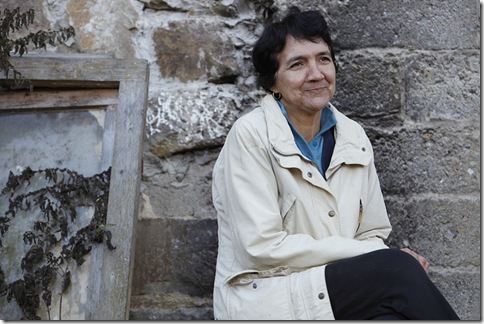
SrebrenicaPhoto credit: CARE/Jon Spaull

Microfinance is a relatively new concept but one that uniquely puts members of the public in a position where they can achieve a great social good. It is different from and more sustainable than giving charity. Could you please describe microfinance in simple terms?

Microfinance is the provision of financial services to those who traditionally have been socially or economically excluded from the formal financial sector. Microfinance includes a number of different financial services such as savings, remittances and insurance but has become synonymous with the provision of small loans or microcredit. The concept of microfinance has in fact been around for a long time but it is really only in the last 30-40 years that it has started to be seen by the international community as an effective tool in alleviating poverty amongst the working poor.

Improving access to financial services allows poor and low-income people to finance income-generating activities, build assets, stabilise consumption and protect against risks. It is in this regard that microfinance can be seen as a dignified and sustainable approach to the fight against poverty.

Lend With Care logo

Can you tell us a bit about Lendwithcare.org?

Lendwithcare.org is a micro-lending initiative from CARE International UK and in association with The co-operative. Lendwithcare allows people in the UK to lend from as little as £15 to an entrepreneur in the developing world. We work with local MFIs (microfinance institutions) from a number of developing countries to provide small loans to entrepreneurs working to lift themselves, and their families, out of poverty. By providing a platform through which entrepreneurs seeking microloans can be linked to people in the developed world who can provide capital, Lendwithcare not only enables low-income and poor families from around the world to work their way out of poverty but also gives lenders the satisfaction of seeing the direct impact their money can have on the lives of those they are helping. The money that is lent through Lendwithcare.org goes directly, and interest free, to the MFIs who administer the loans locally and once the entrepreneur starts repaying their loan this money goes back to the lenders who supported the loan request, where they can decide to re-lend their money to another entrepreneur or withdraw it.

Which countries does Lendwithcare.org currently operate in? Why were those countries chosen?

Lendwithcare currently works in five countries. It began in Togo and Benin in West Africa and then expanded to the Philippines, Cambodia and since late 2011 Bosnia & Herzegovina. There are several reasons why we selected these particular countries. Firstly, they are all countries where CARE has worked in the past in the field of microfinance - indeed some of the MFIs we now work with were established and developed by CARE in the past, although all are now independent entities so they are somewhat of a known quantity to us. Secondly, we feel we have identified the ‘right’ MFI partners, that is organisations that have a strong social development mission. There are also other factors which we need to consider such as the ease of transferring funds back and forth and whether we can develop links with the fair trade supply chains of our sponsor The co-operative.

Yawa Dotse, 49, grains food stall,  ApaktamE, Togo. Care International trip 13/02/11 to 16/02/11
Photo credit: CARE/Emilie Bailey

Is there a plan to expand into further countries this year?

Yes, from February 2012 we hope to include Ecuador and we are also currently exploring the feasibility of working with MFIs in South Africa, Indonesia and Pakistan.

Do you have any statistics on the numbers of individuals that Lendwithcare.org has assisted in the past?

Since Lendwithcare’s launch in September 2010, 1,249 entrepreneurs have been fully funded and just under half a million pounds lent. December 2011 has been our most successful month with over £109,000 being lent and 229 entrepreneurs fully funded.

Is there a single case or success story that stands out for you amongst the people that Lendwithcare.org has assisted?

Yes, a recent one actually from Bosnia & Herzegovina. Mrs Djerdji Merdjanovic and her husband both lost their jobs as the company where they were working ceased to operate after the Bosnian War. They decided to start raising livestock, growing vegetables and raising and selling earthworms to specialist fishing shops in the capital Sarajevo. Djerdji applied for a loan to buy a second hand van and was featured on Lendwithcare. One of our lenders who incidentally manages a business called Worms Direct UK and is a major supplier of worms for fishing bait saw her story. Because the particular type of worm she raises is quite rare he contacted us to see whether it is possible for Djerdji or indeed other suppliers in Bosnia and Herzegovina to export and sell the worms through his company in the UK.

What are the biggest hurdles that entrepreneurs face and what can be learned from mistakes made in the past?

Lack of affordable, accessible and timely capital is certainly one of the major hurdles that small businessmen and women the world over face. We feel that Lendwithcare, in a very small way, is helping microentrepreneurs overcome this hurdle. However, lack of markets, physical infrastructure such as roads and crop storage facilities, information, technical assistance and support and women’s mobility are all hurdles and their importance varies from one context to the next.

If you could give a message to prospective lenders out there, ones that might be hesitant or apprehensive about lending money through your organisation, what would that message be?

Not only can you help someone but you can also see where your money goes, we do not take anything from your loan to cover our costs, and you invariably get your money back!

I believe that borrowers are in fact charged interest on their loans. Is this consistent with Islamic finance or are special arrangements made for those borrowers (for example, those within BiH)?

Although Lendwithcare provides interest free capital to our MFI partners, the MFIs do charge interest (or other fees in the case of Shari’ah compliant institutions) to entrepreneurs. However, we do check to ensure that their interest rates are ‘reasonable and fair’ according to the local context.

If they are to survive then MFIs must of course cover their operational costs. And the costs associated with providing very small loans, on occasions supported with training and other services, to often geographically isolated borrowers, especially when they visit them at their homes to disburse loans and also collect repayments, can be considerable. Indeed if they wish to grow and develop MFIs will need to make a profit.

However, while there is an obvious need to ensure financial security for themselves so that they can continue operations, they are rarely under pressure from shareholders so do not need nor desire to make ‘excessive’ profits. What the interest free capital allows the MFIs to do is extend their operations and lend to poorer clients than they might otherwise, or to move into more remote areas - this has been the case with our MFI partner in Togo for example which is now lending in more isolated rural areas.  In other cases, such as the Philippines and Bosnia & Herzegovina the MFIs have actually passed on the benefits of receiving interest free capital from Lendwithcare to their clients through much lower interest rates. At present we do not have any Shari’ah compliant MFI partners, but this is likely to change during 2012 with potential partners in both Indonesia and Pakistan.

Care International trip to Cambodia with Deborah Meaden 14/03/11 to 20/03/11
Photo credit: CARE/Emilie Bailey

There are other microfinance organisations out there. What differentiates Lendwithcare.org from those others and who is your target market?

There are a number of government bodies, NGOs and development agencies working in the field of microfinance. However, Lendwithcare.org is the first person-to-person platform to be backed by a leading international aid and development organisation. Moreover, Lendwithcare is able to combine CARE International’s decades of expertise and innovation in the field of microfinance with this revolutionary initiative to provide the highest quality products and services to the working poor.

Do you have advice on what young people can study if they would like to become involved in international agencies such as yourselves?

I think more important than what they study is that they must have a passion to work in international development. It is useful though to have formal qualifications in technical subjects such as agriculture, health, and engineering as the first job is often at the grassroots level working directly in the field. Also, foreign languages are always useful.

Apart from becoming a lender, what can people do to support your organisation?

Since 100% of the loans made through Lendwithcare go to the entrepreneurs we have very little marketing budget and therefore need to find a way of telling people about Lendwithcare.org through word of mouth. We encourage all of our lenders to talk about Lendwithcare with friends and family and if they use Facebook or Twitter to visit and like our Facebook page www.facebook.com/lendwithcare or tweet using our @lendwithcare address.

As an organisation, CARE International UK has a number of ‘How you can help’ options, which can be found on our website http://www.careinternational.org.uk/how-you-can-help and regular Challenge activities that raise funds and awareness through enjoyable and often exhilarating events. In March this year for example, the CARE team are challenging people to walk 10,000 steps a day for one week as part of their Walk in her Shoes campaign for more information.


Thank you very much to Dr Khan for taking the time to speak to me and to answer my questions. I feel like I have a much wider appreciation and understanding of microfinance and feel confident in becoming involved in this great initiative..

SHARE:

Saturday, 8 October 2011

Seeking Justice for Nepalese Victims of Rape

Nepalese Woman by David Orgel
Nepalese Woman uploaded by David Orgel on Flickr

Nepal was torn apart by a decade of violence and civil war that ended with the Comprehensive Peace Agreement signed on 21 November 2006.  Gender-based violence was a key feature of this conflict and women were raped and brutalised by both the government forces and the Maoist rebels. 

In October 2011, it was widely reported that Justice still eludes Nepal's civil war rape victims.  Five years after the peace agreement was reached, hundreds of women who suffered rape and torture at the hands of armed forces are yet to receive justice.  Rape was viewed by the government’s Royal Nepal Army to be a legitimate form of torture and many women were arrested, detained and tortured on charges of aiding or supporting the Maoist insurgents.

In her book Sexual Violence and Armed Conflict, Jane Leatherman estimates that 40,000 Nepalese children were illegally detained by Maoist insurgents during the conflict and tortured, sexually violated and recruited for military activity.

Victims face multiple hurdles when seeking justice for these attacks.  Despite widespread reporting of the atrocities by organisations such as Amnesty and in reports that appeared in the mainstream media (see: “Children suffer in Nepal conflict”, BBC, 2005), the majority of Nepalese women remain silent about their ordeals.  Rape victims are stigmatised and rejected, especially if the rapes result in pregnancies.

Nepalese human right rights activists have received constant threats of violence which has further contributed to the silence of victims in the country.  In January 2009, Nepalese radio journalist and activist Uma Singh was hacked to death by 12 to 20 men in her room.  Her only crime was to raise awareness of the levels of violence against women in Nepal (see: “Nepal radio journalist murdered”, BBC, 2009).

It is important to note that the sexual violence against women and children that occurred during the armed conflict did not occur in a vacuum but against the backdrop of a patriarchal society where men’s status is elevated and women are forced to remain in subordinate positions. 

The United Nations Population Fund in Asia (UNFPA) has uploaded a video titled “Silent Tears: Gender based Violence in Nepal”.  In the video, they note that:

“Gender-based violence is widespread in Nepal.  Male dominance and female subservience is at the root of violence against women.  95% of the women and girls surveyed reported that they had personally experience violence, 77% of them from their own family members (SAATHI).  nearly 58% reported that such violence was a daily occurrence.”

You can view the video at the end of this post.

Despite these hurdles, a survivor of violence during the armed conflict has come forward but local police are refusing to register her complaint.  The Advocacy Forum Nepal reports that the police invoked a law which states that rapes had to be reported within 35 days of the incident.  International law prohibits such limitations on rape and, in fact, the Nepal Supreme Court issued a directive to the Nepalese government in 2006 to amend the law and remove all conflicts and limitations in serious crimes such as rape.

There has been no progress on this case since the beginning of October 2011.  Despite the many incidents of sexual violence during the conflict, this is the first case to be lodged with the District Police Office.  Human rights organisations continue to lobby the government in this case and it will no doubt have serious consequences for other women seeking justice across Nepal.

Silent Tears: Gender based Violence in Nepal

SHARE:

Monday, 31 May 2010

The Truth About Female Genital Mutilation

The other day I was chatting to a friend online and we were discussing the interesting online visual map Because Everything Is Best At Something.  My friend queried the Djibouti entry for female circumcision.  She did not know what it was and also did not know why it would be considered a crime.  We spoke about it briefly and it occurred to me that many people do not know about this most heinous of traditional practices.

female-genital-mutilation

The practice known as female circumcision or female genital mutilation (FGM) is a cultural and religious practice that takes place mainly in many African countries, the Middle East and southern and western Asia.  Whereas many proponents of male circumcision claim the practice to have health benefits, there are very few such claims about FGM.  This is an overtly oppressive practice that is designed to maintain the submission of women.  There are three main types of FGM and various cultural or religious excuses given for the practice.  Whatever the type or reason, what results is that women’s genital are mutilated, their ability to experience sexual pleasure is drastically reduced or removed and there are often very serious consequences of the practice.

Female Genital Mutilation map of Africa
Image source: Wikipedia

Types of Female Genital Mutilation

The World Health Organization identifies four main types of female genital mutilation:

  • Clitoridectomy: This involves the partial or full removal of the clitoris or in rare cases, only the prepuce (which is the fold of skin that surrounds the clitoris).  Sometimes the prepuce or hood of the clitoris can be too tight and there are possible medical reasons to remove or snip it but that is a rare procedure.
  • Excision: This is where the clitoris and major or minor labia are removed.  These are the lips that surround the vagina and they protect the vaginal opening so there is no possible medical benefits to be derived from removing them.
  • Infibulation: This most heinous form of FGM usually involves sewing together of the labia and leaving only a tiny whole through which a women can urinate and pass menstrual blood.  In the area presented in dark brown in the illustration above, the whole of the external genitalia including the clitoris, labia minora and the inside of the labia majora are removed and then the labia majora are held together by thorns.  The girl’s legs are held together for two to six weeks to allow healing.
Victims of Female Genital Mutilation

The World Health Organization notes that the procedure is usually carried out on girls between infancy and fifteen years of age.  Three million girls are at risk of FGM each year and between 100 and 140 million worldwide are living with the effects of FGM.  The practice is spreading to countries such as the United States and United Kingdom through immigrant populations who will undergo procedures in these countries are undertake them during visits home.

Cultural and Religious Reasons for Female Genital Mutilation

Unicef details five reasons for practicing FGM.  These reasons are based in religion and culture and as such are subject to conjecture, myth, tradition and ritual.  In other words, the reasons for practicing FGM are not legitimate and the act of doing so on an underage girl not only constitutes extreme abuse but it is an international crime against children too.  The reasons for the practice of FGM are:

  • Sexual: to control or reduce female sexuality.  It is very difficult, if not impossible for a woman to experience sexual arousal and orgasm once she has undergone any of the procedures listed above.  The whole idea is that sex should not be pleasurable for females and that only dirty or mentally ill women experience arousal and do such things as masturbate.  In addition to a loss of pleasure and arousal, women often experience massive pain and discomfort following any form of FGM but especially infibulation.  The process of infibulation is often reversed to allow for procreation and childbirth and then redone.
  • Sociological: FGM is a ritual that is performed as a rite of passage in many cultures, initiating women into womanhood and integrating them into the community.  Kurdish advocates of FGM state that the practice makes a woman spiritually clean so that she can serve food to men. 
  • Hygiene and aesthetic reasons:  Some cultures believe that female genitalia are unsightly, unhygienic and dirty.  They believe the healthy and self-cleaning mechanism of vaginal secretion to be dirty and something that can be prevented by infibulation.  They believe that FGM can preserve and maintain virginity and that it prevents the desire for masturbation.  They also believe that it can cure hysteria and depression.
  • Health: many advocates of FGM believe that it increases fertility rates and child survival.  Just so there is no confusion about this, I can state categorically that the opposite effect occurs and both fertility and child survival rates are dramatically reduced due to FGM.
  • Religious reasons: many people mistakenly believe that there is a religious requirement to perform female circumcision or cutting but there are in fact no basis in any of the holy Christian, Jewish or Muslim texts.  This is in contrast to male circumcision which is strictly required in both Judaism and Islam.  The practice does appear to be accepted by Sunni Muslims and there is differing opinions within the faith as to whether this has been passed down in their narrations.  There are some interpretations on Sunni law that state it is obligatory.
SHARE:

Monday, 3 May 2010

Mohammed Ajmal Kasab Convicted For Mumbai Terror Attacks

Mohammed Ajmal Kasab
Mohammed Ajmal Amir Kasab [Photograph: Sebastian D'souza/AP]

Mohammed Ajmal Amir Kasab, a 21-year-old Pakistani citizen, has been found guilty of murder, conspiracy and waging war on India by the Mumbai Special Court held in the Arthur Road Jail.  The charges relate to the November 2008 terror attacks in Mumbai which lasted for three days and resulted in the deaths of at least 173 people and wounded 308 others.  Together with an accomplice, Ajmal Amir was directly responsible for the deaths of 58 people and the wounding of 104 as he walked around one of Mumbai’s busiest railway stations and shot indiscriminately into the crowd.  He was the only one of ten gunmen that was captured alive.

To view the article I wrote about the Mumbai terror attacks last year and see the explosive Dispatches video footage, visit Dispatches – Terror in Mumbai.

The trial began on 8 May 2009 and recorded 3,192 pages of evidence, examined 658 witnesses and worked for 271 days.  Ajmal Amir has been specifically disingenuous throughout the whole process.  There is footage in the Dispatches video on the night of his capture showing him candidly (and voluntarily) discussing the aim of the terrorists to kill as many people as possible yet he gave a plea of not guilty on 6 May 2009.  He retracted his not-guilty plea and pleaded guilty to all charges on 20 July 2009 and then in a dramatic turn of events, he claimed he was innocent on 18 December 2009.  He told the court he had arrived in Mumbai 20 days before the attacks had started and that police had arrested him a couple of days before the attacks.  They had then shot him and made it look like he was involved in the attacks.

Thankfully, video footage and the testimony of several eye witnesses meant that his claims held little weight.  Perhaps most significantly, the court accepted the prosecution contention that “the conspiracy of the 26/11 attack was hatched on Pakistani soil and inevitable inference can be drawn that the attack was state-sponsored” which prosecutor Ujjwal Nikam claimed in his closing arguments. 

Ajmal Amir will be sentenced in the next couple of days and there is a strong possibility that he will be sentenced to death by hanging.  Once he has been sentenced, the case must go to India’s high court for ratification.  Ajmal Amir can then appeal to the supreme court and if that is not successful he can appeal to the president for mercy.  Considering the lack of mercy he showed his victims and the numerous times he has lied and attempted to delay the process, I doubt he will be shown mercy by anyone.

Apart from the massive loss of life and the destruction of families and property, one of the greatest tragedies here is that young boys were taken in by the terrorist organisation Lashkar-e-Taiba and they were indoctrinated and given basic, commando and advanced training.  A theme in many of these situations is that Ajmal Amir showed only a basic understanding of the purpose of the attacks beyond killing and the promise of an after-life afforded to ‘martyrs’.  Naturally, the fight against terrorism does not end with carrying out the sentence against Ajmal Amir, but that is a topic for another post.

Naming of Ajmal Amir: I have referred to the terrorist in this article as Ajmal Amir but you will often see him referred by the full Mohammed Ajmal Amir Kasab.  It is possible that he does not have a surname and that ‘Kasab’ may have referred to a caste origin or profession.  ‘Mohammed’ is his father’s name.

SHARE:

Sunday, 25 April 2010

Music review: Electric Cambodia

I was given a chance to review this amazing gem of an album a couple of months ago.  Though the music spoke of better times before the Khmer Rouge regime, I found it heartbreaking in a sense that all of this culture and art was lost and destroyed. 

Dengue Fever Presents Electric Cambodia Few people were aware that Cambodia was an incredibly modern and cultural society before the murderous Khmer Rouge regime took over Cambodia in 1975.   “Before the Khmer Rouge, it was a crazy, booming society, socially and economically – it was very progressive,” says Senon Williams, bassist of the Los Angeles rock band Dengue Fever.  As American fever was sweeping through groups of young and hip teenagers, Cambodians adopted the sweeping, bass heavy Sixties rock and roll sounds and made it their own with Khmer lyrics and melodies.

Dengue Fever Presents Electric Cambodia is an exciting new retrospective collection of Cambodian rock music from the late Sixties and early seventies and it features the unearthly and haunting sounds of musicians such as Dara Chom Chan, Pan Ron and Ros Serey Sothea.  It represents a golden era in Cambodian culture and music that was destroyed during the Khmer Rouge era. 

Electric Cambodia

All of these artists lost their lives in what has been called the Cambodian genocide but their musical legacy can continue with this wonderful collection.  It is a musical legacy that was almost lost though and were it not for the older sister of Dengue Fever’s Cambodia-born lead vocalist Chhom Nimol, many of the songs would have remained unnamed and anonymous.  As it is, there is one song on the album where the artist has not been identified and another where the name of the song remains unknown.  This is a testament to the destruction of war time situations and regimes such as the Khmer Rouge that in the end, people are only left with incomplete and tattered snippets of their culture. 

The songs on Dengue Fever Presents Electric Cambodia are unmistakeably Cambodian and while the sounds may not appeal to everybody, lovers of world music will appreciate the ethereal vocals of Pan Ron and Ros Serey Sothea and the Cambodian interpretation of Sixties music.  These are emotional and engaging songs that speak to the excitement, hope and innocence of the era in much the same way as Western songs of that time do. 

Ros Serey Sothea was Cambodia’s most famous, prolific singer of the time and the album features her songs “Flowers in the Pond” and “Shave Your Beard” among others.  Pan Ron’s “Don’t Speak” is a fine example of Sixties rock and roll music and you can imagine leagues of young Cambodians doing the twist to songs like this.  Her song “Snaeha” is a remake of the massive Cher hit “Bang Bang” and deserves mention too. 

The collection has been compiled by Los Angeles rock band Dengue Fever as a way of preserving the music and introducing their fans to the original versions of some of the songs that they had covered.  Proceeds from the sales of the album will benefit Cambodian Living Arts, which is a project of the non-profit Massachusetts-based Marion Institute devoted to supporting the revival of traditional Khmer performing arts and inspiring contemporary artistic expression.

The Khmer Rouge was a communist, Maoist party that ruled Cambodia from 1975 to 1979 under the leadership of Pol Pot. They set up a radical form of agrarian communism where city dwellers were forced to leave cities and work on farms. Their murderous regime resulted in genocide - between 850 000 and 1.5 million people died from execution, torture, forced work or starvation, representing between 20 to 25% of the total population.

SHARE:

Monday, 16 November 2009

Falun Gong Persecution Recognised As Genocide

Banners On Tiananmen
Banners On Tiananmen Square [Photo Source]

Link: Spanish Judge Calls Top Chinese Officials to Account for Genocide [Epoch Times]

This is an interesting story.  A Spanish judge has accepted charges of genocide and torture against five high ranking officials of the Chinese Communist Party (CCP) for their part in the persecution of Falun Gong.  It is the first time that a court has deemed the campaign of persecution against the Falun Gong to be legally fitting the definition of genocide. 

Falun Gong is a relatively new religion founded in China in 1992.  It has been labelled as a cult by the CCP regime that has also clamped down on the religious freedom of Roman Catholics, Protestants and Tibetan Buddhists too (drat, there goes my chances of ever getting a visa to China).  The repression is such that Falun Gong cannot even meditate in the privacy of their own homes for fear of raids and apart from imprisonment, re-education in labour camps and thought reform classes, Falun Gong have been subjected to “dismissal from work, expulsion from universities, deprivation of health care and pensions, divorce, homelessness, and a range of other forms of discrimination” [source].

Jiang Zemin, former leader of the CCP, is among the accused.  Zemin initiated and embarked on a campaign in 1999 to eradicate Falun Gong.

“In order to implement Jiang’s decision to wipe out the group, the country’s state-run media, security apparatus, and network of “re-education through labor camps” were mobilized in full force. Since then, experts estimate that hundred of thousands, possibly millions, of practitioners have been sent to labor camps, prisons, and thought reform classes” -  Epoch Times

According to the Falun Dafa Information Centre, there are over 3,000 documented deaths (although estimates put that figure in the tens of thousands) and over 63,000 accounts of torture.  Reports speak of the systematic use of torture to force people to renounce their faith. 

The Falun Dafa Information Center has several photo essays depicting the torture and persecution of Falun Gong practitioners.  To be honest, they are too disturbing to link to from here but if you click on the link above, you’ll be able to find the photo essays on the site.  Just click with care as they are extremely graphic and horribly disturbing.

Link: Activists say China still using Falun Gong prisoners as organ sources [The Canadian Press]

Perhaps more disturbing are the allegations that organs are being harvested from Falun Gong prisoners for medical transplants. 

I just don’t understand it.  Is this the country that the South African government is bending over backwards to accommodate?  China is a permanent member of the United Nations Security Council.  How is that possible?  I lived through a torture state, I witnessed my friends “disappearing” in university, only to return as shadows of their former selves months later (and this was after the ANC was unbanned and Mandela was released).  No matter how the Chinese government tries to hide it, despite their diplomatic ties and their propaganda machinations, the truth is that gross human rights violations are taking place and a deliberate attempt to destroy a religious group in part or whole is genocide.

SHARE:

Tuesday, 27 October 2009

Cambodia: The Killing Fields 30 years on

It is almost 30 years since John Pilger revealed the horror of post-Khmer Rouge Cambodia in his film “The Silent Death” which I featured back in May [link].  The Mirror has run two stories to commemorate the anniversary of Pilger’s documentary and they remind me again of the mindless and tragic evil that occurred in Cambodia.  I don’t usually read Mirror articles let alone link to them but today I shall make an exception.

Phnom Penh After Khmer Rouge
Phnom Penh After Khmer Rouge [Image source]

Link: Beyond the imagination of mankind [Mirror.co.uk]

This is an incredibly poignant article written by John Pilger as he remembers arriving in Phnom Penh.  I feel as if I could quote the entire article but instead, I will quote two small snippets:

“The aircraft flew low, following the Mekong River west from Vietnam. Once over Cambodia, what we saw silenced all of us on board. There appeared to be nobody, no movement, not even an animal, as if the great population of Asia had stopped at the border. Whole villages were empty. Chairs and beds, pots and mats lay in the street, a car on its side, a bent bicycle. Behind fallen power lines lay or sat a single human shadow; it did not move”

“Today, Pol Pot is dead and several of his elderly henchmen are on trial in a UN/Cambodian court for crimes against humanity. Henry Kissinger, whose bombing opened the door to the nightmare of Year Zero, is still at large” – John Pilger, Mirror.co.uk


Tortured and Killed at S-21
Tortured and Killed at S-21 [Image source]

Link: 'They will kill our parents tonight... we must escape' [Mirror.co.uk]

This is the story of Somaly Lun a young Cambodian who lived through the US bombing of Phnom Penh as a child and was captured and sent to work in a Khmer Rouge labour camp as a teenager.  Remarkably, she escaped and made it to Thailand and was then brought to the UK by Oxfam’s Marcus Thompson. 

The story in this article was so typical of the experiences of families who survived the Khmer Rouge regime and reminded me of the book First They Killed My Father which I reviewed earlier this year.  The book has received a lot of criticism as it was written as an autobiography yet contains information the author could not have possibly known or remembered.  As with my review of A Long Way Gone though (a memoir of a boy soldier), I still believe these books to be of great value and authentic enough to give a realistic portrayal of conditions in Cambodia and Sierra Leone respectively.

The Khmer Rouge was a communist, Maoist party that ruled Cambodia from 1975 to 1979 under the leadership of Pol Pot. They set up a radical form of agrarian communism where city dwellers were forced to leave cities and work on farms. Their murderous regime resulted in genocide - between 850 000 and 1.5 million people died from execution, torture, forced work or starvation, representing between 20 to 25% of the total population.

SHARE:

Tuesday, 11 August 2009

Dispatches – Terror in Mumbai

Between 26 and 28 November 2008, the city of Mumbai as subjected to a coordinated and vicious campaign of terror attacks by ten armed members of Lashkar-e-Taiba, a militant Islamic organisation from Pakistan.


Ajmal Amir Kasab, the surviving gunman

Dispatches: Terror in Mumbai is a graphic and explosive piece of journalism that tells the story of the Mumbai terror attacks in the words of the victims, families, law enforcement personnel and surviving gunman.  Watching this piece, I went through so many emotions including shock, horror and a deep sadness.  On the Channel 4 site, they describe the attacks as an atrocity and they were indeed a cowardly and disgusting series of attacks. 

The gunmen arrived by boat from Karachi and split up into pairs.  They attacked a busy bar, a crowded railway platform, two hotels, two taxis and a Jewish spiritual centre.  They fired indiscriminately into crowds and Kasab stated that their aim was to kill people.  Simply to kill as many people as they could.  At least 173 people died in the attacks and 308 were counted as wounded.

The worst thing about the attacks was that they went into one of the poorest countries on Earth and victimised people who would find it especially difficult to bounce back from the attacks.  These were normal people; men women and children of all religions and walks of life, including Muslims.  For an organisation that preached the unity of Islam, they sure did a good job at tearing families and communities apart.

Dispatches: Terror in Mumbai is chilling as it shows that the terrorists were basically brainwashed boys who were used and manipulated by their operators in Pakistan for whatever grandiose intentions they had.  I abhor terrorism but this film helped me to understand the people behind the attacks, both the pawns and the power seekers.

I’ve embedded the videos below and I would really recommend viewing them.  They are extremely graphic and disturbing though and may upset certain viewers.

SHARE:

Monday, 18 May 2009

Sri Lanka: breaking news - LTTE surrender

Link: After 70,000 dead, Tigers surrender in war-weary Sri Lanka

It appears that the surviving LTTE leaders have declared an end to their campaign to build their own breakaway state. There remains a small area where holdout fighters are still trapped but apparently the leader of the LTTE has indeed been killed.

"In other capitals, and in the office of United Nations Secretary-General Ban Ki-moon, there were grave criticisms of Sri Lankan President Mahinda Rajapaksa for a campaign of unprecedented violence that appeared to ignore humanitarian concerns and the Geneva Conventions as the Sri Lankan military bombed and shelled tens of thousands of Tamil civilians whose homes and lives are intermixed with the Tiger forces. There have been at least 7,000 civilian casualties in the north" - TheGlobeandMail.com

The fierce battles have resulted in about 250,000 refugees, many of whom are wounded. These civilians have been displaced and cannot return home for fear of reprisals from remaining LTTE members. The article states that the LTTE regime was a punitive and strict regime. Once again, the sheer magnitude of the humanitarian cost of this conflict is immense and these people have been victims of both the LTTE regime and the governments programme of shelling and bombing.

SHARE:

Sunday, 17 May 2009

Sri Lanka: Fear of mass suicide as LTTE surrender

Link: Fears of mass suicide as Tamil Tigers face final defeat [TimesOnline]

A week ago, Moggy at TPM Cafe warned of this exact possibility:

“It is therefore unsurprising that LTTE members, regardless of their ideology, would prefer a relatively quick death via explosion or cyanide capsule rather than surrender and risk being tortured, raped, starved and/or imprisoned prior to being killed” - Moggy @ TPM Cafe

The Tamil Tigers are a banned organisation in the UK and I’ve found that international news reports often reflect this, focusing on the terrorist nature of LTTE activities rather than the humanitarian crisis.  The above article TimesOnline article has painted quite a grim humanitarian picture though and these are the salient details:

  • The LTTE have offered to lay down their weapons in return for a guarantee of their safety but will consider suicide otherwise.  Until earlier this year, the Tamils had run what was essentially a mini-state in the north of the country.  The significance of this is that if they do opt for suicide, it is entire family units (including wives and children) that will take the cyanide capsules.  The number of possible casualties is about 10,000.  They are willing to surrender to a third-party international force and as part of the agreement there must be a commitment to an political process that will guarantee the political and human rights of the Tamil people.
  • Doctors have reported that due to shelling of the area (which is the size of Hyde Park), there are about 2000 to 3000 unburied corpses and they cannot access the sick and wounded because of continued shelling.  Families have been trapped in bunkers for a week without access to food and water.
  • Aid agencies and journalists have been prevented from entering the region but estimates say that between 30,000 and 80,000 civilians are trapped.

Not only are the civilians being used as human shields, they are also all under suspicion of being in league with the LTTE, as Medico International reports: 

“More than 30 000 persons have managed to flee the enclave through the front lines into the area controlled by the army. Around half of them have been brought into the city of Vavuniya., where, some heavily injured, they have been interned in prison camps run by the army and allied paramilitaries. They are all under general suspiscion (sic) of being LTTE members and are being subjected to systematic torture, rape and shootings, especially the young men and women” - Medico International

So by all accounts, it seems that we are on the threshold of a loss of between 10,000 and 80,000 lives this weekend. That is a terrifying possibility.  Without urgent international intervention, the cost of human lives is going to be immense.

SHARE:

Saturday, 16 May 2009

Sri Lanka: UN genocide expert calls for end to conflict

Link: UN expert on genocide prevention calls for end to conflict [TheHindu.com]

Link: Still time for Sri Lanka and Tamil Tigers to reconcile says advisor [BruneiNews]

It does not matter which side you are supporting or what you opinion of the LTTE is but a human catastrophe is in the process of happening in Sri Lanka.  UN genocide prevention expert and special advisor to Ban Ki-moon, Francis Deng has called for an immediate end to the conflict and he has specifically made mention of the ethnic nature of the conflict.

There is still time for the Government and the separatist Liberation Tigers of Tamil Eelam (LTTE) to halt their fighting and “pursue a reconciliatory and peaceful path with the ethnic Tamil population,” Francis Deng said in a statement.

“This polarizing conflict is identity-related with ethnicity and religion as deeply divisive factors,” he said. “It will not end with winners and losers and it cannot be ended solely through a military victory that may not be sustainable in the long-run unless legitimate grievances are addressed.”

Mr. Deng underscored that women and girls are particularly vulnerable to “excesses of conflict,” stressing that the Government is legally obligated to give them special protection. He called on authorities to allow the UN and other agencies “full and unfettered access to all civilians and detainees.”

The Special Advisor also called on the LTTE, for its part, to “immediately cease holding human shields and let civilians leave the conflict area,” a shrinking pocket of land on Sri Lanka’s northern coastline where the UN estimates that at least 50,000 people are still trapped - BruneiNews

Also commenting was Walter Kälin, the Secretary-General’s Representative for the Human Rights of Displaced Persons.  He drew attention to the fact that the LTTE is preventing civilians from leaving the area in which they are trapped and setting up military installations around them but that the Sri Lankan government is heaving shelling the areas.  This is resulting in an unacceptably high level of civilian casualties.

Given the Gaza conflict a couple of months ago, why is the world not being more vocal about this?  It is the same action – a government shelling an area they believe to contain military installations but killing civilians instead.

SHARE:

Friday, 15 May 2009

Recommended reading: birthday books

I’m not your average girl, I can tell you.  These are the books I bought with the money I got for my birthday:

Rwanda

Into the Quick of Life: The Rwandan Genocide - The Survivors Speak
Author: Jean Hatzfeld

I have read this book before but wanted to own my own copy of it. I discussed this book in detail here. This is a heartbreaking book where survivors of the 1994 genocide discuss their experiences and how they survived the attacks.
A Time for Machetes: The Rwandan Genocide - The Killers Speak
Author: Jean Hatzfeld

The second book from the above author but his time from the killers' perspectives. This is going to be a hard book to read and is at the bottom of the pile at the moment.  That is not to say that I don’t want to read it, it is just that I am going to read the other books first.
The Strategy Of Antelopes: Rwanda After the Genocide
Author: Jean Hatzfeld

This is the final book in the set and I have been waiting for some time for this book to finally be released. The author has gone back into Rwanda and interviewed both hutus and tutsis again to discuss whether reconiliation and forgiveness is possible.

Zimbabwe

Dinner with Mugabe: The Untold Story of a Freedom Fighter Who Became a Tyrant
Author: Heidi Holland

I saw this book in South Africa in April and I am glad to finally have my hands on it. The book has received good reviews on Amazon and is said to be a fair attempt to understand Mugabe. In the words of the author: "Discovering that Robert Mugabe is a real person making hideous decisions is not to let him off the hook but is to observe how and why he lost his way" (Dinner with Mugabe, page xiv).

Vietnam

The Girl in the Picture: The Remarkable Story of Vietnam's Most Famous Casualty
Author: Denise Chong

This book has also received good reviews at Amazon and I am hoping it will give me some beginners insight into the Vietnam war; this is a topic I have been interested in my whole life but know relatively little about. It is precisely for reasons like this that I started this blog.

Cambodia

Survival in the Killing Fields
Author: Haing S. Ngor

It appears that with the recent genocide trials starting in Cambodia, this book has been brought back into print again which is great news because I had been struggling to get a copy of it before. The Khmer Institute has done an in-depth analysis of the inaccuracies in another book I had reviewed on Cambodia, First They Killed My Father.  This book is on their list of recommended books to read and thus I am looking forward to reading it.
SHARE:

Saturday, 9 May 2009

Cambodia: John Pilger’s The Silent Death

This is the video of John Pilger’s Cambodia: The Silent Death.  Filmed in 1979, this is a harrowing and shocking investigation into conditions in Cambodia immediately following the defeat of the Khmer Rouge and the lack of aid and international involvement.

The video above is the full 52 minute film but you can also access the film in smaller but better quality instalments on YouTube.

SHARE:

Thursday, 23 April 2009

On Genocide: Recommended Reading List

The following reading list appeared on the now defunct website PreventorProtect.org. It is a great collection of books written on Genocide and includes fiction, biographies / autobiographies and non-fiction texts. Comment below to add your recommendations.

About Genocide


  • The Theatre of Genocide, Robert Skloot [Indiebound] [Amazon]
  • Out of Exile: Narratives from the Abducted and Displaced People of Sudan (Voice of Witness), Craig Walzer, Dave Eggers, Valentino Achak Deng [Indiebound] [Amazon]

Armenia


  • The Knock at the Door: A Journey Through the Darkness of the Armenian Genocide, Margaret Ajemian Ahnert [Amazon]
  • My Grandmother: A Memoir, Fethiye Çetin [Indiebound] [Amazon]
  • The Promise at Sea: Armenian Genocide, Vitali Ianko [Indiebound] [Amazon]
  • The Road From Home: A True Story of Courage, Survival, and Hope, David Kherdian [Indiebound] [Amazon]
  • Skylark Farm, Antonia Arslan [Indiebound] [Amazon]
  • Survivors: An Oral History of the Armenian Genocide, Donald E. Miller, Lorna Touryan Miller [Indiebound] [Amazon]
  • Vergeen: A Survivor of the Armenian Genocide, Mae Derdarian [Amazon]

Bosnia


Cambodia


Darfur


  • Heart of Darfur, Lisa French Blaker [Amazon]

Holocaust


Rwanda


[Source: PreventorProtect.org Books of Conscience Reading List]
SHARE:

Tuesday, 31 March 2009

Cambodia: Khmer Rouge genocide trial starts

Link: Long-delayed Khmer Rouge genocide trial to begin [Associated Press]

Cambodia's first genocide trial is finally underway as prosecutors launch their case against Kaing Guek Eav (known as Duch). Four other senior Khmer Rouge officials are set to be tried over the next year.

Amnesty International has called for many more people to be brought to trial to deliver justice to the millions of victims of the Khmer Rouge.

The Extraordinary Chambers in the Courts of Cambodia have been plagued by political wrangling, corruption scandals and inadequate financing with Japan injecting $200,000 on March 20th to pay for salaries for 251 Cambodian court employees.

Link: Khmer Rouge defendant expresses 'sorrow' for crime [Associated Press]

News just in, Duch has expressed "regretfulness and heartfelt sorrow for all crimes" and he has taken responsibility for the crimes committed at S-21.

Link: Cambodia PM rejects wider Khmer Rouge trials [Reuters]

The Cambodian prime minister has warned today that putting more Khmer Rouges cadres on trial could plunge the country back into civil war. He has said that he would prefer to see the tribunal fail than have his country return to war.

This was the same excuse used to prevent a Truth and Reconciliation Commission in Cambodia, which I discussed here. It is so frustrating and I cannot deny that at this stage, such things could cause great instability. When I first heard on 17 February that the "landmark" Khmer Rouge trials were starting, I could not believe that this was happening for the first time in 30 years. I had naively thought that such trials would have happened at least 25 years ago and this is why I immediately went out and tried to read up on the Khmer Rouge regime.

That is the precise problem and the lesson to be learned from all of this: it is vitally important that we react appropriately and quickly to human rights violations in order to stop them happening as they happen. In addition, commissions of inquiry must be speedily set up following such events and perpetrators of human rights violations must be brought to answer for their crimes in a timely but fair manner. This is vital to ensuring healing and reconciliation and in maintaining stability following such events.

SHARE:

Wednesday, 18 March 2009

Sri Lanka: Genocide against Tamils

Link: Sri Lanka's Genocide [Moggy's Blog]

This is a previous post on Moggy's excellent blog. If, like me, you are a newcomer to the situation in Sri Lanka, this will give you a good introduction and it is a good place to start.

Within the last six weeks, I've watched Sri Lanka's 25-year ethnic conflict become a full-scale genocide against the Tamil population (the primary minority group in the country). Some of the more obvious indications include:

1. The government is in the process of putting approx. 300,000 Tamil civilians into military-run camps, which are, for all intents and purposes, Holocaust-style concentration camps: forced labor, lack of basic necessities and sanitation, indiscriminate killings and generally dire conditions.

2. A few weeks ago, the military began systematically raping the women being held in these camps.

3. In mid-January, the Sri Lankan military created a "safe zone" for Tamil civilians who were still in the war zone so that they would not be "caught in the crossfire". Once the civilians moved into the area, the military started bombing it, even hitting a hospital multiple times.

4. The government instituted a mandatory registration last month whereby all Sri Lankan citizens are legally required to provide the government with such details as their name, ethnicity and home address.

That last point sounds frighteningly similar to what the Rwandan government did just before the genocide in 1994.

Link: Repeating Rwanda: The Consequences of Euphemizing Genocide [Moggy's Blog]

This excellent article warns of the danger of euphemising what is going on in conflicts around the world. It does not help to call it "ongoing conflict" or "humanitarian crisis" no matter how much we want to bury our heads in the sand.

It is genocide, plain and simple and we need to identify who is doing what to whom so that the international community can exert pressure and action can be taken.

Link: Thousands call for international help to end 'genocide' in Sri Lanka [harrowtimes.co.uk]

Earlier this month a memorial service was held for Murugathasan Varnakulasingham, a 26-year-old from Harrow, London. Last month he burned himself to death in front of the UN headquarters in Geneva in protest of the Tamil deaths in Sri Lanka. Comments on this article have raised the question as to why the world is remaining silent about the conflicts when they have raised their voices about the Palestinian situation.

Link: Thousands of Tamils decry Sri Lankan 'genocide' [google.com/AFP]

Thousands of supporters of a Tamil state protested in Brussels, Belgium on Monday against the genocide in Sri Lanka. Presently, up to 50 to 100 Tamils are being killed a day in so-called protected areas.

Protestors also demonstrated outside of the UN's headquarters in Geneva and said that the world body was complicit in the genocides. This seems to be because UN calls for a cease fire in northern Sri Lanka were not heeded. Now up to 170,000 civilians are trapped in the crossfire between the Sri Lankan armed forces and the Liberation Tigers of Tamil Eelam.

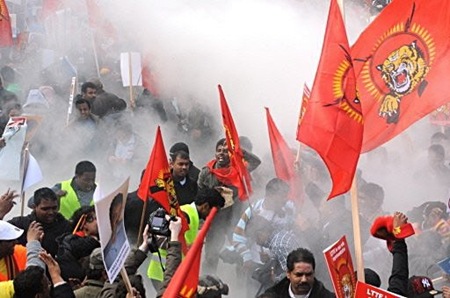
Tamil Protests [Google News]
[photo source]

SHARE:

Wednesday, 11 March 2009

Tibet: 50th Anniversary of failed uprising against Chinese

Link: Free Tibet [DaithaiC.blogspot.com]

Daithai C has written an excellent and comprehensive post about the history of Tibet and the oppression that the Tibetans have experienced under Chinese rule. Yesterday marked the 50th anniversary of the Tibetan uprising against Chinese forces that resulted in the exile of the Dalai Lama to India. The post includes excerpts from the UN General Assembly following the events in 1959 as well as the International Commission of Jurists 1959 report into whether a genocide had occurred in Tibet.

Excerpt:

"His Holiness,The Dalai Lama of Tibet
The Dalai Lama has launched a fierce attack on Chinese rule in his Tibetan homeland, saying his people had experienced "hell on Earth". Five decades of Chinese rule had caused "untold suffering", Tibet's exiled spiritual leader said, accusing Beijing of creating a climate of fear.
He also repeated his demand for Tibet's "legitimate and meaningful autonomy". His words came on the 50th anniversary of a failed uprising against Chinese troops which led to his exile. It is 50 years today that the Tibetans rose up against Chinese rule causing the Dalai Lama to flee his homeland and campaign peacefully for over 50 years for autonomy for Tibet.

With China’s (let us remind ourselves, still a repressive Communist dictatorship with no credible claim to democracy or the rule of law) attempts to rewrite history and continue to tell the “Big Lie” let us remind ourselves what actually happened in 1959 which was nine years after the Chinese Communists invaded Tibet in 1950"
- daithaic.blogspot.com

I must admit that until reading this post, I had not known about the International Commission of Jurists' findings. I find this passage taken from their website to be quite chilling:

Link: Tibet - New Report : "The Question of Tibet and the Rule of Law [ICJ.org]

"There is prima facie evidence that the Chinese Communists have by acts of genocide attempted to destroy the Tibetan nation and the Buddhist religion in Tibet, the International Commission of Jurists announced in a preliminary report "The Question of Tibet and The Rule of Law" published here today. There is evidence, the report states, that the Chinese have by killing Tibetans and by the forcible removal of Tibetan children committed acts contrary to the Genocide Convention of 1948. There is also evidence that these acts were intentionally directed towards the destruction of the Tibetan religion and the Tibetan nation" - ICJ.org

SHARE:

Sunday, 1 March 2009

Cambodia: An interview with Cambodia's Himmler

Link: Kang Khek Ieu: 'They all had to be eliminated' [The Independent]

This February 2008 article contains extracts of a 2006 interview with Kang Khek Ieu, the man known as "Duch". (His full name has also been romanised as Kaing Guek Eav among other versions).  This is the man currently on trial in Cambodia for his role in torturing between 15,000 and 17,000 people to death in the infamous S-21 prison in Phnom Penh. 

"Confessions were extracted by primitive torture: prisoners were strapped to iron beds, suspended upside down from ropes, threatened with drowning, tormented with knives and pincers, locked in tiny cells. Then, at night, they were taken by lorry to the outskirts of Phnom Penh and killed in the rice fields. The Khmer Rouge were obsessed with killing by night" - Valerio Pellizzari, Independent.co.uk

The article is currently available on PDF from the Cambodia Tribunal website, cambodiatribunal.org and is cited as "The Killing Fields confession".  He does confess to his crimes in the interview but his claim that he was merely a pawn and that they were holding his family hostage leaves me feeling dissatisfied.  That type of empty claim is not going to give people the peace and healing that they need. 

The problem of course, is that this is a genocide trial taking place over 30 years after the crimes.  People are rarely going to speak openly and honestly about their motives and immoral behaviour as they look to spend the rest of their natural lives in prison.  They just lie and say that they had no choice and hold on to the mistaken belief that this will save them from a life sentence.

I compare this to the Truth and Reconciliation Commissions in South Africa and Liberia.  There, people often spoke openly of their crimes in exchange for amnesty.  As a South African, I saw the healing effect that it had as people finally received the recognition that they deserved for the crimes committed against them and they finally found out the truth behind what happened to the countless people who "disappeared".

I'm not suggesting for one minute that TRC hearings replace genocide tribunals.  I just wonder if there isn't a place for these type of hearings in Rwanda, the former Yugoslavia and even Cambodia so that those people who led work camps, for example, can admit to their parts in the conflict and perhaps provide answers as to what actually happened to the countless numbers of people who disappeared.

I see that a press release from the South African Department of Justice TRC site stated that Archbishop Desmond Tutu was going to assist Cambodia in setting up a TRC.

Link:  Documenting the Truth [Khmer Institute]

This is a good article by the Khmer Institute regarding why such a commission may not work in Cambodia.  There are fears that a commission could cause instability and that in the end the proceeding may no be successful in achieving their goal:

"Since many Khmer Rouge soldiers defected in 1996 and integrated into Cambodian society, many Cambodian victims have had to live side by side with their tormentors. Although some may want retribution, it is also clear that they have shown tremendous tolerance. Many victims have, in fact, expressed a desire to forgive their tormentors and move on with their lives. Clearly, a Cambodian truth commission will face social and political controversy and difficulties in obtaining and documenting the truth. Clearly, not all victims and perpetrators will have an incentive or desire to testify. Nevertheless, it is also clear that any process dealing with the Khmer Rouge must seek to heal and educate Cambodian society, goals that tribunals alone may not be adequate in achieving" - Khmer Institute

It seems that my question has been answered then. The current Cambodia Tribunal, a joint effort between the Royal Government of Cambodia and the United Nations will hopefully achieve, as much as is possible, this goal of healing and educated Cambodian society and indeed the world.

SHARE:
© A Passion to Understand

This site uses cookies from Google to deliver its services - Click here for information.

Blogger Template Created by pipdig