Sunday, 14 June 2020

Survivors Speak: RLTM and the Role of the Media in the Tutsi Genocide

The media played a critical role in the Tutsi genocide in Rwanda in 1994. There is still debate about the nature of that role; while it is unlikely that the media played a direct role in influencing Hutus to kill, it certainly played a secondary role in inciting and prolonging the genocide.

Almost four years before the genocide began, the pro-Hutu, anti-Tutsi newspaper Kangura published the Hutu Ten Commandments which explicitly called for an end to inter-ethnic relationships and business partnerships between Tutsis and Hutus; an exclusion of Tutsis from public office,  the military and education sector; and an end to so-called Hutu ‘mercy’ on Tutsis.

The Rwandan radio station Radio Télévision Libre des Mille Collines (RTLM, translates as “Thousand Hills Free Radio and Television”) specifically targeted the younger Hutu generation, playing popular music from neighbouring countries and referring to Tutsis as ‘cockroaches’ during anti-Tutsi, pro-Hutu broadcasts. During the genocide, government forces used RTLM to promote violence, going so far as to broadcast specific instructions for carrying out the killings (including the names and whereabouts of Tutsis).

Link: ICTR ‘Media Case’: sentencing of Jean-Bosco Barayagwiza, Ferdinand Nahimana and Hassan Ngeze

The Hutu Ten Commandments were attributed to the editor of Kangura, Hassan Ngeze. In 2003, in a judgement pertaining to the ICTR ‘Media Case’, Ngeze was convicted of genocide and crimes against humanity along with RTLM co-founder Ferdinand Nahimana and RTLM executive Jean-Bosco Barayagwiza.


Genocide Survivors' Recollections of RTLM

Link: 'Music to kill to': Rwandan genocide survivors remember RTLM (Al Jazeera, June 2020)

RTLM office Rwanda
The office from which RTLM was broadcast during the genocide against the Tutsi [Source: Kigali Wire/Flickr]

84-year-old Félicien Kabuga was a former businessman in Rwanda and was arrested in Paris, France on 16 May in relation to his role as founder and financier of both RTLM and Kangura magazine.

"[In 2011] Kabuga was charged before the ICTR with genocide, complicity in genocide, direct and public incitement to commit genocide, attempt to commit genocide, conspiracy to commit genocide and crimes against humanity, committed in Rwanda between 6 April and 17 July 1994"

- Case File: Félicien Kabuga [IRMCT.org]

Following the arrest of Kabuga, Al Jazeera have published an excellent in-depth report on the recollections of three genocide survivors about RTLM. Read the full report by Mia Swart on Al Jazeera.

Claver Irakoze

"I remember RTLM broadcasting songs conveying hatred and demonising the Tutsi. The songs would openly call for our extermination. Political slogans were translated into song and young people were mobilised into youth movements. These youth movements were key to executing the genocide"

- 'Music to kill to': Rwandan genocide survivors remember RTLM [Al Jazeera, June 2020]

Honore Gatera

"Before April 1994, RTLM sent messages about how the Hutus must protect themselves against the "snakes" and the "cockroaches", meaning the Tutsis. There were already some killings taking place. People my family knew in another region of Rwanda were killed. "

- 'Music to kill to': Rwandan genocide survivors remember RTLM [Al Jazeera, June 2020]

Beatrice Uwera

"More than 200 people in my own family had been killed. In my mother's family, there were eight siblings. Only one survived. We had to begin again from zero. . "

- 'Music to kill to': Rwandan genocide survivors remember RTLM [Al Jazeera, June 2020]

SHARE:

Tuesday, 29 April 2014

Rwanda, 20 Years On: Healing the Scars of Genocide

This year marks the 20th anniversary of the genocide in Rwanda and while it is ever important to remember the genocide in order to learn from it and prevent such an event from happening again, it is also important that we focus on how we move forward after such an event. Last night I attended Peace Talks, an event hosted by International Alert at The Geological Society in London. The topic for discussion was Rwanda, 20 Years On: Healing the Scars of Genocide.

The event was chaired by Dan Smith, Secretary General of International Alert. You might remember that he chaired the event War, Peace and Faith: The Ambiguous Role of Religion in 21st Century Conflict that I attended last year. Dan began by saying that while much has rightly been said about the genocide in Rwanda, the focus of the evening was on healing the scars of the genocide, to focus on what we can do to move forward.

The Way Things Appeared 20 Years Ago

Dan began asking His Excellency Williams Nkurunziza, High Commissioner of Rwanda to the UK, about what he saw 20 years ago as the road that lay ahead. He replied that by the end of the genocide, out of 8 million Rwandans, up to 1 million were dead, 3 million displaced and out of the country and the remaining 4 million were traumatised.

The emphasis of the Rwandan government had to be in reversing the forces that made genocide possible in the first place. The Rwandan constitution now stresses that Rwanda belongs to all Rwandese, and the focus is on reconciliation and belonging.

Nkurunziza notes that attitudes take time to change but that Rwandans have shown a readiness to learn from mistakes, a willingness to forgive and an ability to move on.

The same question was posed of Gloriosa Bazigaga, Rwanda Country Manager for International Alert. While Nkurunziza had touched on the Gacaca courts, Bazigaga continued saying that the courts were the start: they highlighted the events of the past but healing was slow to begin because people feared speaking out in fear of punishment.

Starting in 2007, International Alert began their work in healing psychological wounds and helping economic recovery through micro finance and the teaching of skills. Specifically, the organisation works with former prisoners and combatants, survivors and young people and they provide dialogue groups, trauma counselling and micro-finance to corporations of five people consisting of both survivors and perpetrators.

The Issues Involved in Recovery

Dan then asked Dr Ian Palmer, professor of military psychiatry to discuss the issues involved in healing from the scars of genocide. Dr Palmer began by saying that he believes psychiatry (that is the treatment of psychiatric conditions primarily through the use of medication) has only a small role to play and that the focus must be on healing individuals. Healing cannot begin until individuals feel safe, both from death and from the elements. Dr Palmer stressed social support in terms of safety, schooling, structure and food.

On forgiveness and reconciliation, Dr Palmer said that Rwandans (along with other post-conflict societies) had shown incredible resilience but that reconciliation is a choice. If we do not forgive, we cannot move on and while punishment is important, justice is more important. He finished by saying that we cannot have justice without resilience, forgiveness and reconciliation.

I found Dr Palmer's thoughts especially interesting given that I did my post-grad in Psychology.

Burundi and the DRC: The Political Context of Rwanda

Next up, the Rt Hon Lord Jack McConnell of Glenscorrodale PC spoke in his capacity as Chair of the All-Party Parliamentary Group on the African Great Lakes Region. He began by saying that it is remarkable that Rwanda has achieved what they did but there remain two different but continuing issues.

The first is that the exodus of Rwandans had an undeniable effect on the DRC and contributed to the inability of the DRC to move forward. The difficulty is that the government of the DRC relies too heavily on this explanation for their all of progress and they do move forward or take action.

The second issue is the impact of the genocide on the international community. 1994 was a disgrace: the international community knew it was going to happen, knew when it was happening and even exacerbated the events. Changes have been made to the way the international community responds to crises but a consistent international response is difficult given the continuing difficulties in the region. The DRC, Burundi and Central African Republic remain volatile.

The Road Ahead: New Avenues or More of the Same?

This is an interesting issue and the crux of this question was whether we continue in the current path of reconciliation, construction and coming together or whether our focus needs to be slightly different in the future.

HE Nkurunziza began by saying the Rwandan government are pleased with the progress made so far and are optimistic about the future. Reconciliation has been a deliberate decision and it is possible because the leadership is driving it. We must ensure that people do no succumb to the temptation to exact revenge, he said and without committed leadership, we cannot heal a fractured society.

When pressed, HE Nkurunziza went on to say that the process is driven by the politics of coexistence and systems and institutions to ensure that all Rwandese are views equally under the eyes of the law. Rwanda chose a path of restorative justice applied by the people themselves.

Specifically, programmes are underway to put all orphans into family homes rather than group homes; equal opportunities legislation provide equal access to jobs and education; there is universal primary education with 98% of primary school children in school; equal access to healthcare; and work to elevate people above the poverty line.

Gloriosa Bazigaga responded to the same question by stating that in the past, the focus has been on the legacy of genocide and reconciliation is still needed because people heal progressively but not at the same pace.

Bazigaga raised the issues of youth unemployment and land issues and Nkurunziza confirmed that the focus of the government is on the growth of the SME sector instead of a reliance on agriculture. According to the goals of the Rwandan government's Vision 2020 [PDF] policies, due to limited land capacity, the country aims to switch to a knowledge based economy by 2020.

Dan then asked Dr Ian Palmer, based on his experience of being in Rwanda and Bosnia, whether he could compare the two countries and comment on the timescale of healing (given that Bosnia is volatile again). Dr Palmer remarked that we take a lot for granted in the UK in terms of the structures needed for healing. He stated that if you don't have that structure, you can't do the rest and he commented again on the need for whole system change. He stated that mental illness is a combination of predisposition, a person's upbringing, trauma and the current environment. If you don't heal society, you're waiting for unscrupulous people who will pick on vulnerable people and start the whole process over again. Safety, structure, systems and the environment are most important.

In Closing

Finally, Dan asked Jack McConnell to comment on a type of leadership that would be conducive to supporting Rwanda and other post-conflict societies. McConnell observed that we have a generation of political leaders with little history or passion and that there is a lack of strong leadership in the EU as a whole (with the possible exception of Germany). The difference between Bosnia and Rwanda, he said, was in the leadership but it is not really correct to draw comparisons between Rwanda and Bosnia (given what had previously been discussed on different paces and rates of change). It was perhaps most accurate to look at post-war Germany and the steps that were taken to suppress right-wing ideologies.

In closing, McConnell warned that we should not forget the facts and we should not let people minimise the genocides in Rwanda and Bosnia. We require education and witness participation so that change can be made but also to prevent it happening elsewhere. Dr Palmer closed by saying there is no perfect fix. We must be ever vigilant and aware of the risks and the cost of not getting it right. He stressed that we must not forget.

Gloriosa Bazigaga closed by saying that the work of International Alert in the communities should be a lesson for other institutions. The Catholic Church, for example, has not reflecting on the role of their priests in the genocide. Finally, HE Nkurunziza stated that we must get involved, that it is important to be an ambassador in the global campaign against genocide.

The debate was followed by a lively discussion on Apartheid and the possible application of the TRC model to Rwanda instead of the Gacaca courts and a comment on whether people should forgive and forget (as opposed to remembering what happened). The event was then following by drinks and canapés and an exhibition of the work of photojournalist Carole Allen Storey.

SHARE:

Sunday, 6 April 2014

This Day in History: 6 April 1994

Skull and Belongings of Genocide Victims - Genocide Memorial Center - Kigali - Rwanda

On this day in history on 6 April 1994, the plane carrying presidents Juvénal Habyarimana of Rwanda and Cyprien Ntaryamira of Burundi was shot down just outside Kigali airport in the Rwandan capital.

It was the catalyst that started the Rwandan genocide and over the next 100 days between April and July 1994, between 800,000 and 1.2 million Rwandans of Tutsi and moderate Hutu origin were murdered.

The assassination of the president might have triggered the genocide but in truth, this was a carefully planned, organised and systematic attempt to wipe out the Tutsi race.

As early as December 1990, 3 years before the start of the genocide, a racist manifesto known as the The Hutu Ten Commandments appeared in the anti-Tutsi newspaper Kangura in which Hutus were reminded of their inherent superiority to Tutsis and their responsibility to maintain racial purity.

Over the years, hostilities escalated as Tutsi were scapegoated, targeted and increasingly dehumanised. It was a disturbingly familiar turn of events that Dr Gregory Stanton of Genocide Watch now refers to as the Ten Stages of Genocide.

In the months leading up to the genocide, it became ever more clear that something was amiss. In what has become notorious as the Genocide Fax, on 11 January 1994 Lieutenant General Roméo Dallaire of the UN sent a facsimile to his superiors explicitly warning of the major stockpiling of weapons and the mobilisation of forces to exterminate the Tutsis. His concerns and those of other key individuals were ignored.

Once it began, the genocide continued unabated until Paul Kagame's RPF forces gained control of the country in mid-July 1994.

The world did not respond during the genocide in Rwanda in 1994 and today, despite being discussed by the UN Security Council on more than one occasion, we've not responded in Syria. This is the reason why, on the 20th anniversary of the genocide in Rwanda, it is more important than ever to understand, educate and discuss genocide, crimes against humanity, war crimes and mass murder in order to prevent them from happening in the future.

Click to read more about Rwanda or Genocide on this blog.

Image credit: “Skull and Belongings of Genocide Victims - Genocide Memorial Center - Kigali – Rwanda” by Adam Jones (source)

SHARE:

Thursday, 27 September 2012

Book Launch: Genocide Since 1945 by Philip Spencer

Tonight Philip Spencer talked at the Wiener Library in London about his book Genocide Since 1945. He gave an impassioned speech about what had made him become a scholar of genocide and why he wrote this book. He discussed Raphael Lemkin's struggle to comprehend why it was so difficult to bring the perpetrators of the Armenian genocide to justice, how this lead him to the naming and creation of the concept of genocide and how he lobbied the newly formed United Nations to make this act a crime under international law. Spencer noted how far we have come in such a short time from defining genocide to the International Criminal Tribunals and the establishment of the International Criminal Court.

What moved me the most about Spencer's talk was his focus on despair. I have often talked about my own despair, how the task of learning about genocide can seem so great, so unmanageable especially in the face of moral relativists, genocide deniers and others who seek to twist and rewrite history.

Spencer spoke of his own despair and the difficulty of drafting a book like this when the temptation is there to put it down as human nature and let the perpetrators get on with it.

He spoke of his obligation to the victims, those who can no longer speak for themselves or those who survived the vicious attacks. We need to speak up for them, to tell the world that it is not acceptable. We also need to speak up on behalf of the rescuers, those noble men and women who risk their lives to save others, who show that there is a choice and it is a crime to commit these acts. These are the people who show that there is hope for the future, and they are the ones who remain after the genocide to support the survivors and become their fellow citizens.

We need to continue learning about genocide causes and prevention in order to support and validate both victims and rescuers.

I spoke to Philip Spencer about Genocide Since 1945 and who his target market was with the novel. He explained that he had made the book as accessible as possible and it is certainly intended that his own university students would read it. The book contains an introduction to the concept of genocide and explains the differences between victims, perpetrators, bystanders and rescuers. Two full chapters are dedicated to case studies divided between the 'hidden' genocides of the Cold War era and those after. Each of the case studies carefully identifies victims and perpetrators with an important focus on intent. These chapters will be invaluable in understanding those genocides which have not formally been recognised or prosecuted.

Genocide Since 1945 is published by Routledge and available to purchase on www.routledge.com. For a limited time, you can use the discount code GEN45 to receive a discount of 20%.

SHARE:

Sunday, 8 April 2012

Film Review: Coexist Documentary by Amazo Productions (Rwanda)

Coexist logo coexistdocumentary.org

“When hate persists, how will you coexist?”

“The only alternative to coexistence is codestruction” – Jawaharlal Nehru, Indian Prime Minister

On Wednesday I attended a screening of the Adam Mazo / Amazo Productions documentary Coexist at the Wiener Library in London followed by a question and answer session with David Russell of the Survivors Fund (SURF). 

The reality in Rwanda today is that many of the survivors have no choice but to live amongst and interact with the perpetrators of the 1994 genocide.

On June 18, 2012, the Gacaca court process is due to end after hearing almost 2 million cases.  There was some good that came of these courts as the survivors were provided with an element of truth and a modicum of closure.  However, the prisons in Rwanda were overflowing and over the years (for example, in 2003 and 2005), President Paul Kagame sanctioned the mass release of confessed killers into the community.

In their relentless quest to move forwards and to not dwell in the past, the Rwandan government is hard-selling the idea of unity and reconciliation.  The history of the genocide is not taught in schools and people are encouraged to views themselves as Rwandans and no longer Hutus or Tutsis. 

Coexist documentary posterWhat becomes increasingly clear in the documentary is that people are saying what they think they are meant to say, that they are forced to follow the government’s policies and are made to deal with their pain and devastation behind closed doors.  It seems that a great deal of effort is put into assimilating the perpetrators back into the community with reconciliation workshops and other initiatives.

But what of the survivors?

There are three major themes in the documentary which were picked up in the discussion: reparations and compensation, rehumanisation, and coexistence. 

Reparations and Compensation

Given the reality of the overcrowded prisons and the logistics of sentencing each and every single perpetrator of the genocide, many individuals were simply released on time served.  Some were sentenced to community service or to work on public works with no direct benefit to the survivors. 

Even if an order was passed for reparations or compensation, the perpetrators are often indigent (as are the survivors), with no means to pay their debts and it is rare that reparation or compensation orders are enforced.

David Russell explained that as the Gacaca process draws to a close, SURF are now moving to gather data on how many orders still need to be enforced.  He explained that initially it was impossible to put a number on the sheer magnitude of loss during the genocide.  How do you quantify the loss of parents, children, a spouse? How do you apply numbers to the loss of property or to abuse, rape and trauma?  The government had to support the most vulnerable and now there are motions to focus on compensation once again.  From the SURF website:

“Over the past month in Rwanda, SURF in partnership with Redress, and in collaboration with IBUKA, has been working on a project exploring the rights to reparation (which includes compensation, restitution and rehabilitation) for survivors” – Compensation, SURF website, 6 April 2012

Rehumanisation

It is easy to focus on the challenges and shortcomings evident in present-day Rwanda but we must not lose sight of the human beings involved and their incredible achievements over the past years.

David Russell reminded us that everybody has their own experiences during a genocide and there are four main classes of people: victims, perpetrators, witnesses and rescuers.  The challenge is to rehumanise people so that they no longer see themselves in terms of these labels but come to define themselves as Rwandans again, as human beings.

Fifi Coexist

But many survivors are in an untenable situation.  Fifi talks of the abuse she suffered at the hands of relatives after the genocide, how she grew up alone and without a family.  For her and Agnes, the pain and suffering did not end in 1994 but continues to this day.  Agnes suffers with the fact that she was raped and the enduring legacy of those attacks.  Théophilla was the only member of her family to survive the genocide.  Domitilie’s husband became a judge with the Gacaca courts and was murdered as a result of his work there.  Still these women must continue to live amongst and meet the perpetrators and murders on a daily basis.

Part of the work that counsellors and victim support groups must undertake is to assist survivors with their reconciliation, recovery and search for meaning.  Despite their circumstances, these women have achieved great things in their lives with Agnes leading a team of women that caters for the reconciliation workshops, Théophilla counsels those with PTSD and Fifi is attending law school.

Coexistence

“We cannot have a land of victims and a land of perpetrators” – Fatuma Ndangiza, RPF government official

It is clear at this time, when the genocide trials are drawing to a close, that the real fight has only just begun.  Throughout the coexistdocumentary.org website, the following quote is displayed:

“If we ignore each other, the genocide could happen again”

This really resonates with me.  When I returned from Serbia in 2010, the overwhelming impression I got was that genocide, intolerance and conflict could erupt again.  It seemed to me that nothing was being done to ensure unity and reconciliation amongst the Balkan states, NATO was still identified as an unfair aggressor, and I was informed that the school curriculum still defended Serbian hostilities during the the war and later in Kosovo. 

Coexist doc

It impresses me that despite the hurdles raised in this film, a lot more is being done in the name of unity and reconciliation in Rwanda than in other former conflict zones and scenes of ethnic or racial intolerance.

What occurred to me during the screening and the following discussion is that there is a four point continuum from revenge to coexistence:

revenge – tolerance – reconciliation – coexistence

Those interviewed in the film stressed the need to forgive in order to move on.  This despite the fact that the killers often show no remorse, have not asked for forgiveness, and continue to taunt them during commemorations, asking if they have not cried enough.

There is simply no other option but to coexist and that is why the work of SURF in supporting survivors and gaining compensation is so important.

Coexist Trailer from Adam Mazo on Vimeo.

Coexist is a must-see documentary that I would recommend to both individuals interested in Rwanda and those with an interest in escalating ethnic or racial tensions across the globe.  You can purchase the documentary here or watch it in full here. 

SHARE:

Sunday, 19 February 2012

Book Review: I’m Not Leaving by Carl Wilkens

Carl Wilkens, Jean-Francois Gisimba, Freddy Mutanguha and James Smith

In 2011, I had the privilege of watching Carl Wilkens speak at the event "Rwanda: Strengthening Society Through Genocide Education” in London. It was a privilege not because Carl Wilkens was the only American to remain in Rwanda during the 1994 genocide and we got to hear about his experiences, but because his story was one of hope, inspiration and near-miracles in the face of incredible horror.

Carl Wilkens has written a book about his experiences in Kigali during the genocide and the decision he made to stay behind when most foreign nationals left. I’m Not Leaving is based on Wilkens’s recollections and almost 8 hours of cassette recordings that he made during that fateful time but he is keen to stress that this is not another book about genocide:

“While the stories written here happened during the genocide, this book is not really about genocide. It is more about the choices people made, actions people took, courage people showed, and sacrifices people gave in the face of genocide”.

In 1994, Carl Wilkens was director of the Adventist Development Relief Agency. On April 6, 1994, the presidential airplane was shot down as it prepared to land at Kigali airport, killing all on board including Presidents Juvénal Habyarimana and Cyprien Ntaryamira of Rwanda and Burundi respectively. The assassination was a catalyst that set off the genocide against local Tutsis and moderate Hutus.

I'm Not Leaving Carl Wilkens book coverIt was a catalyst, but not the cause. The genocide had been in preparation for months, if not years before, as lists were compiled and weapons stockpiled. In fact, it was on January 11, 1994 that the UN Force Commander in Rwanda, Canadian Lieutenant General Roméo Dallaire, warned his superiors of plans to exterminate Tutsis.

Carl Wilkens knew this and when his wife and three young children were evacuated on the morning of April 10, 1994, he made the decision to stay behind to ensure the safety of his Tutsi employees Anitha and Janvier. All of the foreign nationals were leaving Rwanda and the American embassy was closing for good. Not surprisingly, his decision to remain behind was not well received by his superiors at ADRA or the United States embassy and he had to stand up to both of them.

"I took one of Mindy's school notebooks, found a blank page, and wrote with a pencil: "I have refused the help of the United States government to leave Rwanda"

As an eyewitness account I’m Not Leaving gives a valuable insight into the situation in Kigali before and during the genocide. Wilkens reminds us that at the beginning of 1994, there were over a million refugees in Kigali due to the 1990-1993 Rwandan civil war and the October 1993 assassination of Burundi President Melchior Ndadaye. There was already a widespread humanitarian relief effort in Kigali at that time and Wilkens notes that their food stocks are what kept Kigali going during the genocide.

Wilkens also provides insight into the role of the UN peacekeeping soldiers that had been in Rwanda since August 1993. While acknowledging the work that they did do and the lives that they saved, Wilkens questions whether their presence gave Rwandans a false sense of security. He believes that their presence might have contributed to people not fleeing or protecting themselves in face of RTLM propaganda and hate speech.  

It seems incredible that there was so much inaction in the face of the genocide and that, as Wilkens notes in the final pages of the book, it was solely the actions of the Rwandan Patriotic Front that brought an end to the slaughter. This is especially notable as Wilkens transcribes a BBC report from April 24, 1994 (18 days after the start of the genocide) in which the term ‘genocide’ was already being used to describe the events in Rwanda.

It was in the second week of the genocide that Wilkens thought of recording his ideas and thoughts on a cassette recorder. He then dedicates the majority of the book to chronicle his incredible actions over the next three months. Nearly every day, Wilkens and other ADRA associates braved snipers and mortars to drive around the streets of Kigali bringing food and water to various orphanages around the city. He achieved this despite the ADRA headquarters being completely sacked.

"Soon you stop diving for cover each time you hear an explosion, realizing that you will never hear the one that kills you".  

There are times in I’m Not Leaving when my heart felt as though t might stop and the book is uncomfortable to read at times. This is an intimate account of service, faith and courage and I almost felt like a worthless bystander watching as people risked their lives to save others. Wilkens talks about real fear and I got that. I could feel it as I read the book and my chest began to tighten. 

In his ADRA vehicles and borrowed UN flak jacket, Wilkens achieved what no one else could achieve during the genocide. This man got into a neighbourhood like Nyamirambo to get food and water to two orphanages when the UN couldn't even get in. He talks about negotiating and pleading with genocidaires to save the life of Tutsis, how he got one Major Emmanuel to rescue 12 Tutsis. They were rescued as they knelt in prayer, with the killers standing with machetes raised above their heads, poised to strike.

He tells of the events at Gisimba orphanage where his intervention led to the rescue of hundreds of people as they were moved to the safety of Saint Michel church. He was then helped by government soldiers to pack up the orphans’ belongings and take them through to the church (you can read more about Carl Wilkens and Jean-Francois Gisimba talking about their recollections of that day here).

No matter how many lives were spared, Wilkens reminds us of the incredible loss of life:

"Such staggering losses, so enormous that it seems wrong for me to keep on writing without some sort of respectful pause". 

Indeed, there were times when I had to pause myself to respect the gravity of what I was reading. Since the end of the genocide, Carl Wilkens has dedicated his life to educating people about prejudice, genocide and entering the world of “the other”. I would really recommend that you check out his speaking schedule and take the time to see him speak when he is next in your town or city.  I’m Not Leaving was self-published and all proceeds go towards the educational efforts of his organisation WorldOutsideMyShoes.org (click to go straight to the purchase page). 

I’m Not Leaving is essential reading for anybody wanting to know more about the genocide in Rwanda.  If you are new to this topic, you might find it useful to read Jean Hatzfeld’s Life Laid Bare: The Survivors in Rwanda Speak, Roméo Dallaire's Shake Hands with the Devil: The Failure of Humanity in Rwanda or Philip Gourevitch's We Wish to Inform You That Tomorrow We Will be Killed With Our Families: Stories from Rwanda first to gain some insight into what happened during the 100 days of the genocide, how the genocide occurred, and the failure of the international community to stop it.

This is a self-published book without the benefit of professional editors or proof readers and as such, there are inevitable grammatical and spelling errors.  These are minor though and don’t detract from the unique and inspirational perspective provided by Wilkens in the book.

SHARE:

Saturday, 13 August 2011

Rwandan Genocide: The Hutu Ten Commandments

Tutsi Identity Card
Tutsi Identity Card [Source: Prevent Genocide International]

The Rwandan genocide began on 6 April 1994 when the plane carrying President Juvénal Habyarimana was shot down from the sky, killing all on board.  Over the course of the next 100 days, 800,000 Tutsis and moderate Hutus were murdered.  While the assassination of President Habyarimana was certainly a catalyst, it did not cause the genocide.

Owing to their systematic and intentional nature, genocides, by definition, are rarely caused by underlying factors, as such.  Rather, underlying factors are manipulated and exploited in the planning and preparation that goes into the act of genocide. (See: What is Genocide?).

In Rwanda, evidence shows that militia had been trained, machetes flown into the country and weapons had been stockpiled for several months before the genocide started.  Much has been made of the role of the media in inciting genocide in Rwanda, with singers, radio presenters and journalists all calling for the extermination of the Tutsi cockroaches. 

“The Hutu Ten Commandments” was a document that was published in the pro-Hutu, anti-Tutsi newspaper Kangura in December 1990, almost four years before the commencement of the genocide in Rwanda.  The document was published in Kinyarwandan, the official language of Rwanda, and has also been translated as “The Ten Commandments of the Bahutu”. 

Incitement to commit genocide is a crime punishable under article 3c of the Genocide Convention.  There were numerous convictions of genocide that related to media, propaganda and incitement to commit genocide.  The Hutu Ten Commandments were attributed to the editor of Kangura, Hassan Ngeze,  and in 2003, he was convicted of genocide and crimes against humanity by the ICTR.


The Hutu Ten Commandments

1. Every Hutu should know that a Tutsi woman, whoever she is, works for the interest of her Tutsi ethnic group. As a result, we shall consider a traitor any Hutu who

  • marries a Tutsi woman
  • befriends a Tutsi woman
  • employs a Tutsi woman as a secretary or a concubine.

2. Every Hutu should know that our Hutu daughters are more suitable and conscientious in their role as woman, wife and mother of the family. Are they not beautiful, good secretaries and more honest?

3. Hutu women, be vigilant and try to bring your husbands, brothers and sons back to reason.

4. Every Hutu should know that every Tutsi is dishonest in business. His only aim is the supremacy of his ethnic group. As a result, any Hutu who does the following is a traitor:

  • makes a partnership with Tutsi in business
  • invests his money or the government's money in a Tutsi enterprise
  • lends or borrows money from a Tutsi
  • gives favours to Tutsi in business (obtaining import licenses, bank loans, construction sites, public markets, etc.).

5. All strategic positions, political, administrative, economic, military and security should be entrusted only to Hutu.

6. The education sector (school pupils, students, teachers) must be majority Hutu.

7. The Rwandan Armed Forces should be exclusively Hutu. The experience of the October 1990 war has taught us a lesson. No member of the military shall marry a Tutsi.

8. The Hutu should stop having mercy on the Tutsi.

9. The Hutu, wherever they are, must have unity and solidarity and be concerned with the fate of their Hutu brothers.

  • The Hutu inside and outside Rwanda must constantly look for friends and allies for the Hutu cause, starting with their Hutu brothers.
  • They must constantly counteract Tutsi propaganda.
  • The Hutu must be firm and vigilant against their common Tutsi enemy.
10. The Social Revolution of 1959, the Referendum of 1961, and the Hutu Ideology, must be taught to every Hutu at every level. Every Hutu must spread this ideology widely. Any Hutu who persecutes his brother Hutu for having read, spread, and taught this ideology is a traitor.

Source: Wikipedia (reproduced under Creative Commons)

SHARE:

Saturday, 25 June 2011

Rwanda – Strengthening Society Through Genocide Education

On Thursday 16 June, the Aegis Trust hosted an event in London entitled “Rwanda – Strengthening Society Through Genocide Education”.  The purpose of the event was to celebrate 25 years of the Gisimba Memorial Centre Kigali, Rwanda and to share the incredible story of what happened at the orphanage during the Rwandan genocide in 1994.  

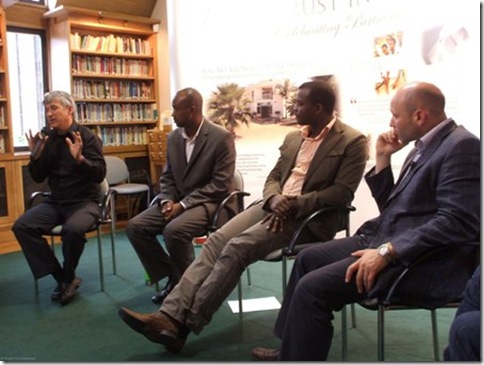
Aegis Trust founder James Smith facilitated the proceedings and was joined by Freddy Mutanguha (Director, Kigali Memorial Centre), Jean-Francois Gisimba (former Rwandan journalist and family member, Gisimba Memorial Association), and Carl Wilkens (American aid worker and witness to the genocide).

Carl Wilkens, Jean-Francois Gisimba, Freddy Mutanguha and James Smith

The evening began with Freddy Mutanguha sharing his story about the history of Rwanda and how the labels of Tutsi, Hutu and Twa were formalised and enforced by the Belgian colonialists.  He explained how the Tutsi were elevated by the colonialists above the Hutu and that the Tutsi monarchy was allowed to continue.  The king died in 1959 and the Hutus rose up against against the Tutsi monarchy.  Massacres of Tutsis began around that time and a Hutu government took over from the Belgian colonialists with independence in 1962.  In what was an incredibly powerful statement, Freddy Mutanguha stated simply that genocide was a failure of humanity.

Jean-Francois Gisimba and Carl Wilkens then told us about the incredible story of the Gisimba Orphanage and how they hid between 600 and 1,000 people during the Rwandan genocide.  The people at the orphanage were in clear and immediate danger of being murdered by Interahamwe militia when Carl used his influence and status as a foreign national to get the prime minister to save their lives.  The staff, children and hidden adults were escorted to San Michele church on 2 July 1994 by government forces and their lives were spared.

This was an incredibly emotional and touching talk and you can learn more about this incredible story at Defying Genocide.  Carl and Jean-Francois had not seen each other in the 17 years since the genocide and only met up in London recently.  What struck me the most is that Carl Wilkens still struggles today with the decision he made to leave the orphanage to try and get them help.  He stills struggles with the fact that he promised them he would return, knowing that they could well have all perished.

What I really wanted to capture from the evening was what the three guests had to share about the future and the topic for the evening, Strengthening Society Through Genocide Prevention.  I made the decision to transcribe what was said because I found each of the men to be really inspirational and wanted to try and capture that.

Carl Wilkens, Jean-Francois Gisimba, Freddy Mutanguha and James Smith


Freddy Mutanguha (Director, Kigali Memorial Centre)

On the Kigali Genocide Memorial Centre

We have 250,000 victims of genocide lying in mass graves.  It’s our place, it’s a home for many people; provided by Aegis Trust who contributed to run Kigali Genocide Memorial Centre helping the government and survivors to have a place of memory.  But there is more than memory of genocide, there is more than to talk about the past.  What about the future? The future of our country, the future of our children, the future of my two daughters (Now, I hope I will get one today).  What about the future? 

As I said, the genocide happened but many people, normal population, have been involved.  Neighbours / neighbours, people against their children, people who were against their family.  You cannot imagine how someone can kill his children because he think that the mother of his children is a Tutsi, or the mother can take decision to kill her children because her husband is a Tutsi. 

You cannot imagine this, there is a problem of trust between the children of perpetrators and the children of the survivors.  What we do as Aegis: we feel that we cannot stop by talking about the past.  We need to unite these children, they have to look forwards, to be the hope of the country.  They need to be responsible for the future and social cohesion is very, very important. 

That is how we thought about having an education programme.  How can we build from our past to build our future?  We started two years ago an educational programme at the centre.  First of all we had six students, three times a week coming to the centre.  It is a small number of children but they are very innocent, children.  The want to learn, they want  to listen to the stories but what they get from home is a disaster.  First of all we had the problem with what kind of message we can give to children, the same message which can be appreciated by children of the perpetrators and children of the survivors.  It is very difficult and very challenging to have these children, this message but we managed it. 

We feel that during genocide, people didn't think critically of what they are doing.  The mayor says you have to kill your neighbour and your neighbour’s a snake, is a cockroach and you believe him.  We, as humankind, we have a problem of not thinking critically.  Two months ago we were talking about the education programme at the centre, and I asked my wife, “Why do you like to use Omo [washing powder]", why do you like it?”  She didn’t know, she says, “nice soap”.  We use it but we don’t think about it.  We don’t think critically about why we like Omo and everybody likes it. 

So, why someone come to me and say I have to kill this one.  The children need to be taught to think critically.  This is part of our lesson we give to children.  They need to learn to be responsible, they need to think exactly what they are going to do but they need to make the right choice.  That is the future we’d like at this time.


Carl Wilkins (American aid worker and witness to the genocide)

In answer to the question: “What are we to learn from all of this if we are to prevent these sorts of atrocities from happening"?”

Any kind of crisis or things like this, it challenges us to re-evaluate who we are, what we’re about, what drives us, why are we even here? And I think that with the genocide that for us, Teresa and I, very much it has challenged us and it has changed our lives.  I travel now, speaking at schools and the two things I’m passionate about if you talk about education and you talk about re-examining our values and why we’re even on this planet, two tools that I hope to share with you tonight is the power of stories and the power of service. 

The day that they were moved [to San Michele church], they didn’t let them to bring anything with them.  I got to the church and they didn’t have blankets, they didn’t have cooking pots, anything.  And it was cold at night, we didn’t know how long the genocide was going to go on, we would have to feed the kids.  I asked the colonel for permission (thanked him profusely for moving the kids), “can I go collect the kids stuff, will you write me a letter authorising it?”  He did, I went back, it was empty, a lot of gunfire on the left.  I went around to the right, as I came round behind the orphanage: face to face with the militia leader and about twelve of his guys.  The same guys that were there to murder everybody a couple of days earlier. 

They were surprised to see me, I was terrified to see them. 

And then I remembered that letter.  I pulled the letter out of my pocket and I handed it to him, he read it and he said, “of course!  Your orphans need their things” and that was a shock.  And he turns around and he says to his guys (who actually, they’re looting the orphanage, they had the orphans’ stuff in their hands already), he says to them, “help the guy load his truck”. 

I go walking in the first dormitory with this new volunteer crew behind of me, “guys, would you put blankets on the floor, put stuff in the blankets, tie the corners”.  They help me, my truck is way too small, they help me find a bigger truck, the big truck has low sides.  I said, “listen”, to one of them, “would you take this table with me, we’ll stand the tables on end on each side, build the sides of the truck high so we can put stuff in”.  And as they’re lifting the table (they’re on one end, I’m on another end) they start to give their own ideas of how we could get more on the truck. 

They start showing initiative and it was finally when I was writing down these stories (that you can see on the table behind you there*) that it came to me: when we engage our mind and our muscles in acts of service, it changes the way we think.  It changes the way we think about ourselves, it changes the way we think about others.  This shift in our thinking from me-thinking to we-thinking, I think is hugely impacted by stories and service. 

Stories stick with us.  Stories connect us, stories are bridge builders.  And stories change the way we think, potentially and that changes the way we feel and that changes the way we act, which is where the service comes in.  So as you take off this evening, there is very many concrete things with Aegis and the work that they’re doing that you can partner with them but even more than Aegis is just our way of thinking, our way of living – are we into a me-focused living or a we-focused living. 

Everybody wants to be a we-person but don’t know how.  But it’s not complicated.  It is about learning the stories of the people who are different to us and after we learn the stories, we’re getting involved in acts of service.  And so for me, that’s education, it is stories and service.

* Carl Wilkens has written the book I’m Not Leaving and runs the organisation World Outside My Shoes.


Jean-Francois Gisimba (Gisimba Memorial Association)

On how they got from the orphanage to San Michele Church

That day, before Carl Wilkens left the orphanage, a group of seven or eight soldiers, gendarmerie, were sent to the orphanage and some of them spent the night there at the orphanage. Then, the following morning, they left.  What I saw is that, because I want to go into details but we don’t have much time, but what happened is that there was a first attempt to evacuate us from the orphanage - the United Nations soldiers came to the orphanage two or three times. 

But there is a soldier who came to the orphanage (I’m sorry to say that the person asked me not to mention his name; he is living in Europe and I went to thank him for what he did).  He came to the orphanage, he was a high ranked officer in the army.  He came to the orphanage with his three bodyguards and many militia in the army followed him.  Among them, one of the big killers in Nyamirambo and Kigali, Kiginye, I think you’ve heard about his name, he killed thousands of people and he killed also many people at the orphanage.

When he [the unnamed hero] came to the orphanage, he found me there and I just told him, “please, please don’t go inside the orphanage”, because then they will follow him inside the orphanage and know who is exactly inside.  And I was surprised to see that he just stopped.  And then these militia took a piece of map, I don’t know where they found it, and started telling him “this is the map we found with the cockroach, we found here at the orphanage, and this is the map of where the Hutu lives”.  Many lies.

With my 24 years, I could not see this was just… I said that we are willing to die but not in this way.  There is nothing like that.  Then the guy just [makes gesture of stamping on his toes, to give him a signal], he looked me in my eyes and he kicked me on my feet and I could see that this guy is not a killer.  I got the message and he told me “shut up!”.  I understood that he just wanted to show them that he is hard with me but at the same time I had got the message that this is not a killer. 

Then, he told them, “I did not ask you anything, I am asking this guy, you just get out”.  So they took some five steps and then he asks me, “young man, I’m with you.  Just be quiet, tell me exactly, but not loud.  Tell me exactly is happening here”.  I said, “we have hundreds of people here.  They’re in the roof, in the toilets, under the beds of kids but we are dying here.  This is what is happening”.  He said “okay” and then he started saying, “You! Cockroach!”, just like he is telling them  he is going to kill us.

The he told them, “you just leave these people under me.  We’ll find a solution for them.  But don’t come here and he who comes here before me, because I’m responsible now, he’ll have problems with me”.  So he was giving different messages and then he left.

So he tried another day and he did not succeed but then the day he took us, we just saw him coming at the orphanage with his twelve bodyguards.  Everyone with two or three guns.  Himself, he was having two guns, a Kalashnikov and one pistol.  He was no longer the soldier I saw coming, he was looking like a lion.  He was another person that day.

So he just came, he ordered another person, “we are taking everyone from here”.  So I thought, the guys going to kill us.  So he said, “I’m taking everyone, out!”.  So he gave me the guy who was the big killer to take him to the wards where the women were, hundreds of them, like 300 or 400, to tell him to take them out.  So what I did, I told that guy, “look, you’ve been given a chance to show that you are not bad, you are not going to kill people.  Just take them out and don’t touch anyone, then you’ll be making your name”. 

Then I came out to the soldiers, to the high ranked officer, I took him by the hand.  We went to the other side of the orphanage where there was a room that was before used as a dispensary.  There was five persons there who were somehow in danger more than others.  We were all in danger but these were more in danger.  One of them is a judge in the high court in Rwanda, Pio and his family.  He had been, in fact even before the genocide even started, he was in danger. 

At that time, many people were coming from the roof, it was chaos at the orphanage, from everyone running.  In fact, they had left buses 200 – 300 metres from the orphanage because bombs were landing just in front of the orphanage and the frontline was just in 300 metres.  Bombs, bullets were just like….

So I took the hand of the solider and we made the walk of about 100 metres to the room where these people were, six or seven of them.  And I told him “man, we are going maybe to die but these people are in your hands.  It will be a case between you and you God”.  Because we were two of us.  At the door, to give myself a kind of strength, I shouted “you open, you stupid!”  They opened the door and the person who opened the door fell down immediately.  That was the person who became a judge.  And this soldier said, “hey, Pio, you are still alive”, and he took him and he said, “man, you are not going to die, I am here today”. 

And so, when the militia saw this man, his wife, his sister-in-law, the wife of another high ranked person of the RPF, they just put their guns down and said “it is not possible, we did not do anything! How come these people are alive!”  So, the soldier told his bodyguards, “you just arm your guns.  He who tries to block us, you just shoot”.   He just give the order. 

And that’s why I always say, if all the soldiers could act like him, the genocide could not have happened. 

So, we were surrounded by his bodyguards, he took us.  No bomb came in those ten minutes.  He packed all of us, more than 600, in five buses and he took two soldiers for every bus and he went in his car with two or three body guards.  So we went in front, finding the roadblocks, when the militia started saying, “eh!”, it was very strange to see hundreds of Tutsis, in June! Anyway, even the Hutus we were all looking like Tutsi because of three months without eating.

Whenever we arrived at a roadblock he would just tell them, “you open, or we fire!” so they would just open and that’s how we went up to the San Michele and then they told us to go underground and sleep there.  And he came to me because my brother was not there during that week, he never came back.  I don’t know how what happened between but him and Carl Wilkens came to the San Michele and we found him there.  So the soldier came to me to tell me, “now I have done what I could.  I have also to save my life” and he disappeared.

I went to thank him in Europe in 2005.


It was an incredible evening and I could have easily sat listening to them speak for several more hours.  Freddy Mutanguha spoke about the need for critical thinking and responsibility, Carl Wilkens relayed his beliefs about stories and service, and Jean-Francois Gisimba’s told us about the difference one person can make and how if more people had acted like him, that could have prevented a genocide.

Despite everything that they went through in setting up the orphanage and in surviving the genocide, the Gisimba Memorial Centre Kigali, Rwanda is still struggling to put food on children’s plates. 

Please consider supporting the orphanage:

SHARE:

Saturday, 18 June 2011

Defying Genocide

The United States Holocaust Memorial Museum has a video channel at YouTube and it is an incredibly valuable resource.  Many of these videos can be seen as you walk around the genocide exhibit in the top levels of the museum in Washington DC. 

I had the honour of meeting Carl Wilkens and the brother of Damas Gisimba, Jean-Francois Gisimba this week and am presently writing up a report of that.  This video, in three parts, is especially important because it reminds us that people can make a difference.  They can stand up in the face of mass murder and mass madness.

"In every case of genocide through out history people have risked, even lost their lives to help others.  These individuals defy genocide”.

Visit the Gisimba Memorial Centre Kigali, Rwanda website.

T5K37ME3B2P3

SHARE:

Friday, 10 December 2010

Rwanda Genocide Testimony of Clare Muhinyuza

This is the testimony of Rwanda genocide survivor Clare Muhinyuza.  Clare was one of the first people interviewed by SURF: The Survivor's Fund.   Her story is absolutely heartbreaking and I found it to be a moving and powerful video.  Sadly, Clare eventually passed away from her injuries.  What an unbelievable tragedy.

SURF have a book entitled Survival Against The Odds which is a collection of survivors stories as well as a chronology of events.  If you click on the link above, it will take you to the page where you can obtain a copy.

SHARE:

Thursday, 23 September 2010

Book Review: A Time for Machetes: The Rwandan Genocide - The Killers Speak by Jean Hatzfeld

A Time for Machetes - The Rwandan Genocide - The Killers Speak by Jean Hatzfeld Following the genocide in Rwanda in 1994 which claimed the lives of 800,000 Tutsis and moderate Hutus, Jean Hatzfeld visited Rwanda and spoke to the survivors of the atrocities. Into the Quick of Life: The Rwandan Genocide - The Survivors Speak is a harrowing read which tells in the survivors’ own words the horrors of the genocide including surviving massacres in churches, hiding under dead bodies or spending days hiding in swamps as their former friends and neighbours scoured the area with machetes seeking to kill them.  You can read my detailed account of the book here: On Rwanda: my passion and the need to know.

In A Time for Machetes: The Rwandan Genocide - The Killers Speak , Hatzfeld returns to Rwanda and this time he speaks to the perpetrators of the genocide: ten men who are serving time in a  prison for their part in the genocide.  As a prolific reader of books relating to the Rwandan genocide, my expectations on picking up this book were quite specific.  What the perpetrators of the Rwandan genocide did was unthinkable, it defied words and stretched the bounds of the human imagination.  I hoped to gain some insight into what the killers had been thinking, what had motivated them and how they justified their own actions.  I expected to read that the men had been caught up in the frenzy and organisation of the time and that they were somewhat horrified by their actions today.  I expected the passage of time and life in prison to have inspired a remorseful attitude and an appreciation of the human cost and loss of life resulting from their actions.  I was disappointed.

There is no doubt that this is an excellent book and I have no hesitation giving it five stars and recommending that people read it.  Hatzfeld’s brave and tireless enquiry has given us an extremely rare insight into the mind of a genocidal killer.  The questions that he asks, the commentary and background information that he provides and the process he undergoes to gain the killers’ trust provides an invaluable resource that we simply have not had with other genocides.  In the end though, it seems that my expectation of remorse and reconciliation was beyond naive.

The chapters in the book detail the level of organisation of the killings including how gang members were initiated and how they were instructed on how to kill.  There are descriptions of how men were punished or not rewarded if they failed to kill and how there were called upon and dispatched each morning and fed and rewarded each evening.  The respondents discuss how they overcame initial hesitation with respect to the killings, how they began to dehumanise Tutsis in order to kill them and how they felt about rape and looting. 

“We no longer saw a human being when we turned up a Tutsi in the swamps.  I mean a person like us, sharing similar thoughts and feelings” - Pio

Danielle Nyirabazungu - memorial site guardian

Throughout reading the book, there is the continual and nagging feeling that something is missing.  In a sense, it is the complete lack of sincerity, humanity or accountability.  One killer speaks of how he magnanimously spared the life of a woman only to kill her days later once her usefulness had run its course.  The killers display an incredible sense of entitlement and a refusal to even hint or acknowledge of how wrong their actions were.  They simply feel no remorse and even manage to express anger and impatience at their victims.  If only they could get on with it and forgive them, then the killers could get their own lives back!

“I believe the consequences have been most unfortunate for us all.  The others have gathered in many dead.  But we, too, have met with perilous hardships in the camps and a wretched life in prison” – Fulgence

It is possible that this sense of brazen remorselessness has to do with way in which the questions were asked of the killers or the manner in which they were reported however, Hatzfeld had specifically set out to give the killers a voice, to put the inconceivable into words, so I would be less likely to believe that it is deliberate bias.  It is likely that much has been lost in translation between the original Kinyarwandan to French to English.  The fact remains that much of the text in the book is reported in the killers’ own words and that the ten respondents were part of an original gang that managed to stay together during their time in prison.  Quite simply, it is most likely that they simply did not feel remorse or the full impact of their actions as the genocidal discourse had remained intact during their time in prison and nothing had been done to separate the men or break down these beliefs.  Mention is made in the closing chapter of the books of the men being sent to a re-education camp at Bicumbi before the majority of them were released back into the community in May 2003 but the interviews in the book took place before this occurred.  Hatzfeld's final book in this trilogy, The Strategy Of Antelopes: Rwanda After the Genocide picks up where the killers have been released into the community and details their difficulty in settling back down in the communities and how their Tutsi neighbours must tolerate them.

Jean Hatzfeld
Jean Hatzfeld

I would certainly recommend this book but I would certainly not recommend that this be the only book that you read on the Rwandan genocide.  These are the top books that I would recommend on the Rwandan genocide (click on the links to go straight to Amazon.co.uk):

  1. Left to Tell: Discovering God Amidst the Rwandan Holocaust by Immaculee Ilibagiza
  2. An Ordinary Man: The True Story Behind Hotel Rwanda by Paul Rusesabagina
  3. Season of Blood: A Rwandan Journey by Fergal Keane
  4. Into the Quick of Life: The Rwandan Genocide - The Survivors Speak by Jean Hatzfeld
  5. The Bone Woman: A Forensic Anthropologist's Search for Truth in the Mass Graves of Rwanda, Bosnia, Croatia, and Kosovo by Clea Koff

Despite the difficulties presented with the subject matter, I would still give this book five out of five stars.

SHARE:

Saturday, 18 September 2010

Leaked United Nations report into Congo

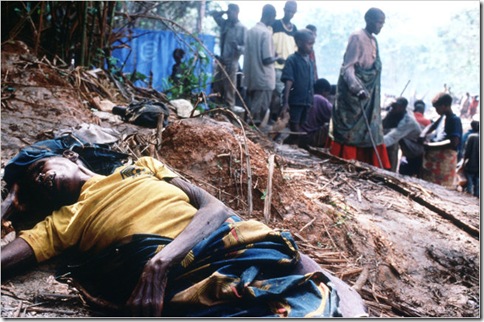
Rwandan refugees passed a body in a refugee camp in Congo in 1997.
Image © Roger Lemoyne/Liaison, via Getty Images

Three weeks ago, a United Nations mapping report “documenting the most serious violations of human rights and international humanitarian law committed within the territory of the Democratic Republic of the Congo between March 1993 and June 2003” was leaked to the press.  The purpose of the report is a mapping exercise to detail over 600 cases of serious atrocities that occurred in the DRC during the ten year period and it includes of attacks against Tutsi and Banyamulenge civilians and Hutu refugees.  This is a massive 508 page document that gives harrowing detail of rapes, murders, torture and war crimes committed against both civilian and militia targets. 

Unfortunately, the appalling and shocking nature of the crimes has become overshadowed in the political storm that has resulted since then.  Quite simply, the report could possibly implicate the Rwandan government in an act of genocide against Hutu refugees that fled to what was then Zaire after the 1994 genocide.  Civilians made up of men, women and children were not separated from the Interahamwe militia in refugee camps and the report contains allegations that Rwandan soldiers were indiscriminate and unrelenting in their attempts to pursue the former militias.  The New York Times reported in the article U.N. Congo Report Offers New View on Genocide that the massacres were systematic and that insufficient effort was made to protect (or even exclude) civilians from the attacks.  The New York Times then reported that the U.N. Delays Release of Report on Possible Congo Genocide and that Rwanda were so angry about the report that they were threatening to pull peacekeeping troops out of Darfur.

On his blog Congo Siasa, Jason Stearns reminds us that:

“The report's intention is to call for accountability for the mass atrocities committed during ten years of conflict in the Congo, not to single out Rwanda for "acts of genocide." Indeed, Angolan, Burundian, Ugandan, Chadian and Congolese officials are also cited for war crimes in the report. While the systematic massacre of Rwandan Hutu refugees stands out as one of the worst crimes committed during the war and deserves to be highlighted, the press should have put the report in context and highlighted its call for a tribunal and a truth and reconciliation commission” - Thoughts on the UN mapping report (Congo Siasa, August 28, 2010)

The most interesting portions of the United Nations document are commentary on why the Truth and reconciliation commission failed and the insight into the nature of sexual violence in the area.  I have uploaded the full document which you can either read online or download (5.79mb). 


The above mentioned report refers to the specific period from 1993 to 2003.  What it does not cover is the ongoing violence against women and children in the area.  It is reported that starting in July 2010, rebels forces took over an area in eastern Congo and up to 242 women were raped.  The New York Times article Rape Victims in Congo Raid Now More Than 240 details how Congolese and Rwandan rebels groups took over villages in the Walikale region of North Kivu “assaulting their victims in groups of two to six”. 

The Rwandan forces involved are members of the Hutu power rebel group Democratic Forces for the Liberation of Rwanda (DFLR).  The group is also known as FDLR after their French name Forces démocratiques de libération du Rwanda.  This group is opposed to Tutsi rule and influence in the region and is made up of many former Interahamwe members. 

As usual, there are reports of United Nations inaction.  They were aware of the attacks since 30 July and that nothing was done to prevent the numbers of victims rising to over 242 by early September.

SHARE:

Thursday, 18 March 2010

Book review: Left To Tell by Immaculée Ilibagiza

Left to tellThis is the book that started it all for me again.  I had always known at the back of my mind that sooner or later I was going to have to face up to my horror and read up about the Rwandan genocide.  Once I picked up this book in late 2007, it started a process of discovery for me and culminated in me forming this blog.

There have been several books written on the genocide by people from all walks of life.  Sociologists, journalists, a United Nations general and a hotel operator have all written excellent and compelling books but this book was written by a normal, everyday woman.  Immaculée Ilibagiza was a student in 1994, just like me, and she had gone home for the April holidays, just like I used to do.  The difference is that Immaculée is Tutsi.

Left to Tell is the story of how her entire family was killed in the genocide and how she was hidden in the bathroom of a local pastor along with seven other women for 91 days.  There were days on end when the pastor could not secret away food to them as he had not even told his family that he was hiding the women and they suffered from starvation, dehydration and the wasting of their limbs.  They could not stand, exercise or even stretch their legs.

Immaculée is a devout Catholic and in this book she talks of the miracles that occurred and how her faith carried her through the most trying period of her life.  I’m not a religious person but I found this book to be absolutely inspiring and incredible. 

I would recommend this book to anyone who would like to see what happened in the genocide through the eyes of a survivor.  This is an excellent introduction to anyone wishing to know more about the events but who does not feel ready to ready one of the more technical or complex books.  Just make sure that you have a box of tissues handy because this book is absolutely touching.

Immaculée has written two more books since this one and maintains a blog too in which she speaks of her faith and the journey she has take since 1994.  The blog is simply called Immaculée.

SHARE:

Monday, 15 February 2010

Interview: Kate Malarkey - FXB

Back in January, I posted about the organisation FXB International.  Nico from FXB contacted me via Twitter to thank me for my post and I jumped at the chance to ask him for further information.  Well, it is slightly under a month since we first made contact but Kate from FXB has kindly agreed to answer a couple of questions for me.  I'd like to thank Kate for taking the time to write such wonderful replies to my questions below.  The photos in the post have been kindly provided by Kate and are from her recent trip to Rwanda.  

FXB Rwanda 1

Where did you visit in Rwanda?  What were you doing there?

I was unfortunately only able to visit Rwanda for a few short days, but during my time there I visited our FXB-Village sites and met with beneficiary families who are enrolled in our programs.  FXB has Village sites throughout Rwanda (as in many countries throughout the world).  In particular, I visited some of our sites in Gitarama, located about an hour’s drive from Kigali.

What I was most interested in finding out about was your three year Village model and the types of things taught and how progress is managed.  I really like the idea of sustainability.  So many times in the past we heard about loans and aid and this is the best idea I have heard so far.  So anything you can tell me would be appreciated.

The FXB Village program is our signature three-year program designed to provide sustainable help to children and families hardest hit by poverty and AIDS.  Each FXB-Village is a network of 80 to 100 households within a wider community, households which are most often comprised of widows caring for children, orphan-headed households, or orphaned children taken in by extended family.  FXB field staff work, including social workers and nurse counselors, work with  local leaders, and community members to identify the households most in need.  Once enrolled in the program, families are given life-saving tools and resources, including access to healthcare, HIV testing and prevention information, Antiretroviral treatment for HIV, and emergency food support.  FXB covers the tuition, uniform, and supplies fees for all school aged children, and all young adults have the opportunity to enroll in vocational training. 

Once a family is healthy and has regained their strength, the head of household receives a small grant to start a microenterprise, and FXB trains them on basic management, opening a savings account, and other relevant skills.  These microenterprises range from animal rearing and vegetable harvesting, to basket weaving and jewelry making, and provides the family with a sustainable way to generate income.  As the business grows and generates profits, FXB incrementally withdraws financial support and households slowly take over responsibility for growing portions of their expenses.  By the end of the three years, families are fully supporting themselves, have built savings accounts, and are armed with the tools and skills necessary to continue living above the poverty line and meet their basic needs for the long term.  Our model promotes self-sufficiency and provides sustainable solutions to the root causes of poverty.

An external evaluation of FXB-Villages was conducted and it was found that 86% of families continue to live above the poverty line and can provide for all their basic needs, even years after the program has been completed.  The Villages have been cited by UNICEF and UNAIDS as a best practice in supporting AIDS-affected children.

FXB currently has Village programs in Rwanda, Uganda, Burundi, the Democratic Republic of the Congo, China, Thailand, and India, and is hoping to expand the Villages to Colombia, South Africa, and Myanmar, where we have operated other programs for years.

FXB Rwanda 2

Which is the newest country that FXB has become involved in?  Can you tell us a bit more about what it is like and what you are focusing on first there?

We have just started a new Village program in the Democratic Republic of the Congo (DRC) in Goma.  Our activities in the DRC focus on providing direct and comprehensive support to children and families hardest hit by poverty and AIDS.  As one of the largest countries in Africa, the DRC is home to nearly 65 million people, 71% of whom live below the poverty line.  One million adults and children currently live with HIV/AIDS, and it is estimated that 1,000 people die each day from war-related causes including disease, violence, and hunger.

FXB has previous experience working in post-conflict settings.  We felt our skills and resources could be of great assistance in the DRC.  Families were selected in July, and Village activities began in October 2009.  Although still early in the program, we are very excited by the progress the families have made and look forward to expanding our programs in the country.

I am also very happy to report that we have recently expanded our Village model to Colombia.  FXB has been present in Colombia since 1992, running the FXB House in Barranquilla.  The FXB House provides comprehensive medical and social support to children affected by HIV, as well as their families, including day-care, medical treatment, psychosocial counseling, and nutritional support.  The FXB House also works with a variety of local partners on a larger scale program focused on the Prevention of Mother-to-Child Transmission of HIV.  Based on the success the FXB House has achieved over the past 18 years and our strong community presence, expanding our work to include the implementation of FXB-Villages is a logical step and an effective way to reaching even more vulnerable children and families.  The first FXB-Village in Colombia began in January 2010, and we plan to continue securing funding to build additional Villages to benefit even more children in the region.

How did you come to be involved in FXB and what is the the role that you play?

I came on to FXB’s office in New York City, FXB USA, as a part-time intern while studying for my Master’s degree. It was a wonderful learning opportunity, and it fit well with my interests in international development, HIV, and children. 

Over the past two years my position has grown, and I am now a full time staff member.  I manage individual giving for the US office and FXB Global Partners, our newest program that seeks to engage companies, associations, and individuals in a fundraising partnership with a FXB-Village in a country of their choice. We have recently launched this program and are actively seeking interested parties.

FXB Rwanda 3

Do you have advice on what young people can study if they would like to become involved in international agencies such as yourselves?

This sector is huge and there are a variety of paths one can take including fundraising, finance, marketing, program development, and program management.  Some people prefer to be on the ground and work directly in the field, while others have a more administrative role and work behind the scenes to create new programs, engage supporters, or ensure there is enough funding to keep the programs in operation.  There really is something for everyone, it’s just a matter of deciding where your interests fit best.

My academic background is in International Relations and Non-Profit Management, but I think for the most part experience and passion trump a degree.  Volunteering and internship opportunities are an excellent way to get involved, test out the water, and gain experience working in the sector.  You may not be doing the most glamorous work, but it is hands-down the best way to gain knowledge, develop skills, and make contacts with people to help build your professional network.  I know many people (including myself) who have parlayed short-term volunteer or internship experiences into staff positions.

Another way to prepare oneself for this area of work is to stay up to date on global issues and topic areas that relate to your goals.  There is always a wealth of information on the internet, and as your site demonstrates, a host of books, publications etc. that are really valuable and can help build your understanding of global issues.  On a more practical note, regardless of the position you eventually seek it is important to have strong written and communication skills.  It is up to staff to communicate the mission, vision, and programs to the public, and so agencies are always looking for people who can clearly address these topics and promote their organization effectively.

Do you have any advice on what older people can do if they'd like to become involved.  What skills are organisations such as yours looking for, both on a full time and volunteer basis (I'm not saying that you have positions available, just that people often don't realise they have something to offer).  Many people don't have resources other than their time and perhaps a blog site - how can they get involved?

I think you have hit the nail on the head when you say that people often don’t realize they have something to offer.  There is ALWAYS something you can offer, it’s just a matter of identifying how your skills can be utilized.  Luckily, most non-profit organizations, both focused nationally and internationally, are always in need of assistance in one form or another.  If people want to go beyond just donating money, there are still many ways in which they can contribute their skills to help the organization further along in their mission.  This can involve reaching out to friends (in person or thorough a blog) to promote an organization and spread the word about their work.  Individuals can also create small fundraising events or campaigns, something as simple as collecting spare change at work or holding a car wash, to raise funds to support a program.  Organizations really benefit from public recognition, and supporters of all ages are invaluable at helping to publicize their work in their own social circles and social media/blogs.

For individuals who want to contribute their skills in a more structured way, it is best to reach out to the organization directly and simply express an interest in helping out.   Whether lending your legal expertise pro bono, offering your web design knowledge, or stuffing envelopes with mailings, volunteers can make a big impact on an organization by doing small things.  Regardless of your background, the most valuable thing you can bring to the table is a passion for helping and a willingness to assist in whatever tasks may be most needed at the time.


From dealing with the organisation this month it is clear that they are a group of passionate, dedicated individuals and I think their idea of a three-year programme for sustainable development is fantastic.  I hope this will help those of you who want to get involved.


You can visit the FXB website if you would like to get involved or donate money or you can follow them on Twitter too.

Website: www.fxb.org
Twitter: @fxbusa

SHARE:
© A Passion to Understand

This site uses cookies from Google to deliver its services - Click here for information.

Blogger Template Created by pipdig