Wednesday, 25 January 2012

Interview With Dr Ajaz Khan of Lendwithcare.org

It is one of the great paradoxes of the developing world. Those individuals in most need of banking services and credit are the most likely to lack sufficient collateral to support it.  In the past decade, there has been increasing focus on microfinance as a tool to alleviate poverty and sustain business models.

Microfinance is not charity.  There is an increasing perception that charity perpetuates poverty whereas it is believed that microfinance can enable an individual to build on their skills and provide a sustainable method of improvement.

AAKhan photoLendwithcare.org recently launched in the United Kingdom.  It is an initiative from Care International UK in association with The Co-operative.  We speak to Dr. Ajaz Khan, CARE’s Microfinance Advisor, about microfinance, Lendwithcare.org and what you can do to get involved.

You lived and worked in Bosnia-Herzegovina between 2000 and 2006. Could you please tell us about the work that you did there? What motivated you to make the move to BiH?

Although I spent most of my time in Bosnia & Herzegovina, I was also working in Kosovo from 2002 onwards. Initially, much of the work involved the physical reconstruction of homes, schools, health facilities and water supply systems, that is the infrastructure that had been damaged or destroyed during the conflicts. However, after the reconstruction phase most of my work revolved around creating employment and income earning opportunities. My particular area of expertise is microfinance and I helped to create two microfinance institutions, one in each country that provided thousands of loans to microentrepreneurs, mainly women, to develop their businesses.

Prior to working in the Balkans I had spent around nine years working in Latin America, largely with small scale farmers, and was looking for a new challenge. I had during the 1990s followed the Balkans conflicts very closely. There was a particular resonance for Muslims such as myself who had been born and brought up in Europe – at the back of our minds there was always a feeling that if this could happen in Eastern Europe could it happen in Western Europe as well? I was grateful when the opportunity arose for me to work in the Balkans and make a small difference to improving the lives of those affected by the conflicts. I left the Balkans to go on to work in Pakistan following the Kashmir Earthquake and then Sudan.
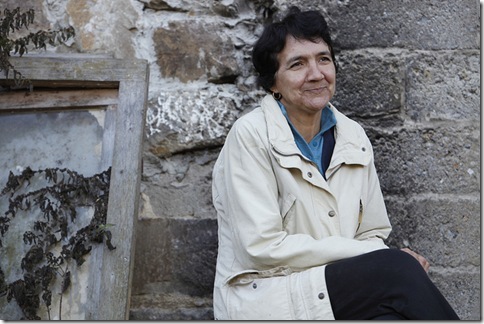
SrebrenicaPhoto credit: CARE/Jon Spaull

Microfinance is a relatively new concept but one that uniquely puts members of the public in a position where they can achieve a great social good. It is different from and more sustainable than giving charity. Could you please describe microfinance in simple terms?

Microfinance is the provision of financial services to those who traditionally have been socially or economically excluded from the formal financial sector. Microfinance includes a number of different financial services such as savings, remittances and insurance but has become synonymous with the provision of small loans or microcredit. The concept of microfinance has in fact been around for a long time but it is really only in the last 30-40 years that it has started to be seen by the international community as an effective tool in alleviating poverty amongst the working poor.

Improving access to financial services allows poor and low-income people to finance income-generating activities, build assets, stabilise consumption and protect against risks. It is in this regard that microfinance can be seen as a dignified and sustainable approach to the fight against poverty.

Lend With Care logo

Can you tell us a bit about Lendwithcare.org?

Lendwithcare.org is a micro-lending initiative from CARE International UK and in association with The co-operative. Lendwithcare allows people in the UK to lend from as little as £15 to an entrepreneur in the developing world. We work with local MFIs (microfinance institutions) from a number of developing countries to provide small loans to entrepreneurs working to lift themselves, and their families, out of poverty. By providing a platform through which entrepreneurs seeking microloans can be linked to people in the developed world who can provide capital, Lendwithcare not only enables low-income and poor families from around the world to work their way out of poverty but also gives lenders the satisfaction of seeing the direct impact their money can have on the lives of those they are helping. The money that is lent through Lendwithcare.org goes directly, and interest free, to the MFIs who administer the loans locally and once the entrepreneur starts repaying their loan this money goes back to the lenders who supported the loan request, where they can decide to re-lend their money to another entrepreneur or withdraw it.

Which countries does Lendwithcare.org currently operate in? Why were those countries chosen?

Lendwithcare currently works in five countries. It began in Togo and Benin in West Africa and then expanded to the Philippines, Cambodia and since late 2011 Bosnia & Herzegovina. There are several reasons why we selected these particular countries. Firstly, they are all countries where CARE has worked in the past in the field of microfinance - indeed some of the MFIs we now work with were established and developed by CARE in the past, although all are now independent entities so they are somewhat of a known quantity to us. Secondly, we feel we have identified the ‘right’ MFI partners, that is organisations that have a strong social development mission. There are also other factors which we need to consider such as the ease of transferring funds back and forth and whether we can develop links with the fair trade supply chains of our sponsor The co-operative.

Yawa Dotse, 49, grains food stall,  ApaktamE, Togo. Care International trip 13/02/11 to 16/02/11
Photo credit: CARE/Emilie Bailey

Is there a plan to expand into further countries this year?

Yes, from February 2012 we hope to include Ecuador and we are also currently exploring the feasibility of working with MFIs in South Africa, Indonesia and Pakistan.

Do you have any statistics on the numbers of individuals that Lendwithcare.org has assisted in the past?

Since Lendwithcare’s launch in September 2010, 1,249 entrepreneurs have been fully funded and just under half a million pounds lent. December 2011 has been our most successful month with over £109,000 being lent and 229 entrepreneurs fully funded.

Is there a single case or success story that stands out for you amongst the people that Lendwithcare.org has assisted?

Yes, a recent one actually from Bosnia & Herzegovina. Mrs Djerdji Merdjanovic and her husband both lost their jobs as the company where they were working ceased to operate after the Bosnian War. They decided to start raising livestock, growing vegetables and raising and selling earthworms to specialist fishing shops in the capital Sarajevo. Djerdji applied for a loan to buy a second hand van and was featured on Lendwithcare. One of our lenders who incidentally manages a business called Worms Direct UK and is a major supplier of worms for fishing bait saw her story. Because the particular type of worm she raises is quite rare he contacted us to see whether it is possible for Djerdji or indeed other suppliers in Bosnia and Herzegovina to export and sell the worms through his company in the UK.

What are the biggest hurdles that entrepreneurs face and what can be learned from mistakes made in the past?

Lack of affordable, accessible and timely capital is certainly one of the major hurdles that small businessmen and women the world over face. We feel that Lendwithcare, in a very small way, is helping microentrepreneurs overcome this hurdle. However, lack of markets, physical infrastructure such as roads and crop storage facilities, information, technical assistance and support and women’s mobility are all hurdles and their importance varies from one context to the next.

If you could give a message to prospective lenders out there, ones that might be hesitant or apprehensive about lending money through your organisation, what would that message be?

Not only can you help someone but you can also see where your money goes, we do not take anything from your loan to cover our costs, and you invariably get your money back!

I believe that borrowers are in fact charged interest on their loans. Is this consistent with Islamic finance or are special arrangements made for those borrowers (for example, those within BiH)?

Although Lendwithcare provides interest free capital to our MFI partners, the MFIs do charge interest (or other fees in the case of Shari’ah compliant institutions) to entrepreneurs. However, we do check to ensure that their interest rates are ‘reasonable and fair’ according to the local context.

If they are to survive then MFIs must of course cover their operational costs. And the costs associated with providing very small loans, on occasions supported with training and other services, to often geographically isolated borrowers, especially when they visit them at their homes to disburse loans and also collect repayments, can be considerable. Indeed if they wish to grow and develop MFIs will need to make a profit.

However, while there is an obvious need to ensure financial security for themselves so that they can continue operations, they are rarely under pressure from shareholders so do not need nor desire to make ‘excessive’ profits. What the interest free capital allows the MFIs to do is extend their operations and lend to poorer clients than they might otherwise, or to move into more remote areas - this has been the case with our MFI partner in Togo for example which is now lending in more isolated rural areas.  In other cases, such as the Philippines and Bosnia & Herzegovina the MFIs have actually passed on the benefits of receiving interest free capital from Lendwithcare to their clients through much lower interest rates. At present we do not have any Shari’ah compliant MFI partners, but this is likely to change during 2012 with potential partners in both Indonesia and Pakistan.

Care International trip to Cambodia with Deborah Meaden 14/03/11 to 20/03/11
Photo credit: CARE/Emilie Bailey

There are other microfinance organisations out there. What differentiates Lendwithcare.org from those others and who is your target market?

There are a number of government bodies, NGOs and development agencies working in the field of microfinance. However, Lendwithcare.org is the first person-to-person platform to be backed by a leading international aid and development organisation. Moreover, Lendwithcare is able to combine CARE International’s decades of expertise and innovation in the field of microfinance with this revolutionary initiative to provide the highest quality products and services to the working poor.

Do you have advice on what young people can study if they would like to become involved in international agencies such as yourselves?

I think more important than what they study is that they must have a passion to work in international development. It is useful though to have formal qualifications in technical subjects such as agriculture, health, and engineering as the first job is often at the grassroots level working directly in the field. Also, foreign languages are always useful.

Apart from becoming a lender, what can people do to support your organisation?

Since 100% of the loans made through Lendwithcare go to the entrepreneurs we have very little marketing budget and therefore need to find a way of telling people about Lendwithcare.org through word of mouth. We encourage all of our lenders to talk about Lendwithcare with friends and family and if they use Facebook or Twitter to visit and like our Facebook page www.facebook.com/lendwithcare or tweet using our @lendwithcare address.

As an organisation, CARE International UK has a number of ‘How you can help’ options, which can be found on our website http://www.careinternational.org.uk/how-you-can-help and regular Challenge activities that raise funds and awareness through enjoyable and often exhilarating events. In March this year for example, the CARE team are challenging people to walk 10,000 steps a day for one week as part of their Walk in her Shoes campaign for more information.


Thank you very much to Dr Khan for taking the time to speak to me and to answer my questions. I feel like I have a much wider appreciation and understanding of microfinance and feel confident in becoming involved in this great initiative..

SHARE:

Wednesday, 21 December 2011

Srebrenica: Rebuilding Lives With Microfinance

Alastair Stewart OBE is an English journalist and newscaster.  He recently retuned from a trip to Srebrenica, Bosnia-Herzegovina which he visited in his capacity as an Ambassador for CARE International UK. 

During his time in Srebrenica, he visited several micro-entrepreneurs who are improving their lives with small loans organised through the microfinance company, lendwithcare.org.  Watch the video below to see the moving account of how people are rebuilding their lives with microloans and what you can do to help this Christmas.

What is microfinance?

lendwithcare.org is an initiative from Care International UK in association with The Co-operative.  The website operates through the principle of microfinance, which is essentially the delivering of credit and financial services to individuals who are too poor to be serviced by regular banks. 

Lendwithcare.org microloans from CARE International - Banner Ad

In his 2004 paper Microcredit: Sound Business or Development Instrument, Gert van Maanen noted that “banks are for people with money, not for people without”, that the people who need credit most are those without the sufficient collateral to support it.  Microfinance is not charity.  Charity perpetuates poverty whereas microfinance can enable an individual to build on their skills and deliver them from poverty.

So how does it work?

It all begins when the entrepreneur has an idea.  The microfinance institution knows that they have to act quickly to ease the burden of poverty and ensure the success of the project.  Therefore, if the idea is good, the loan is granted.  The entrepreneur is then assisted in setting up a lendwithcare.org profile and members of the public can then lend their support to the project by making a contribution in increments of £15 or more.

This money can then go back to the microfinance institution to repay the initial loan and free the institution to back another project.  The entrepreneur is then able to grow their business and eventually repay the loan. 

There is always a risk with microfinance and you may not receive all of your money back from the entrepreneur. Despite the delays and setbacks, most microloans are repaid in full and on time, a sure indication that this system works.


Read about Alastair Stewart's experiences on his blog Bosnia and Microfinance. This short film shown above was shot & edited by Jon Spaull.

SHARE:

Wednesday, 9 March 2011

The “Join the Revolution” Campaign

In the four years since I moved to England, I have witnessed the country go from a powerful, prosperous country to one with widespread recession, unemployment and economic hardship. It seems crazy that the very banks that caused the worldwide economic downturn and had to be bailed out by tax-payer money are just about the only entities that managed to award bonuses to their staff last year.

It is no surprise then that I’ve added “corporate and social responsibility” to my list of requirements in a company when job-seeking these days.  What is surprising to me is how many employment agents ask me “why?”  I would have thought it was obvious.  Not only do I want to make a difference in the world but I want to work for a company I can believe in!

It is for this reason that I have found the latest campaign by The Co-operative interesting.

A co-operative is a business that is owned by its members, with profits being reinvested back into the community.  The Co-operative was started in 1844 by the Rochdale Pioneers and it currently has six million members across sectors such as food, banking and funerals.  While The Co-op (as it is known in the UK) is a well known brand here, it is their vision and involvement globally that caught my eye.

The Plan

The Co-operative has an eight part plan focusing on environment, democratic control, communities, responsible retailing, ethical finance, co-operatives, global poverty and young people.  By supporting thousands of initiatives every year, both globally and locally, The Co-operative aims to inspire people to get involved and to make a difference in their world.

You don’t have to work for The Co-operative or even part with money if you are unable to but the Join the Revolution website gives you various ways on how to get involved.

The schemes

These are just three of the current schemes that The Co-operative is backing:

Urban Bees

It is no secret that honeybee populations in urban areas are dwindling and The Co-operative have already invested £500,000 into Plan Bee, their own bee protection and education programme.  Now they are helping bee-lovers Brian McCallum and Alison Benjamin to run training courses, talks and conduct other work in order to save the urban bee population.

Baywind Energy Co-operative

Baywind Energy Co-operative is the UK’s first community owned wind farm.  Starting in 1998 with a loan from The Co-operative Bank, the wind farm now generates around 10,000MWh of electricity a year which is enough to power around 30,000 homes.

Fairtrade in Kenya

Through their Enterprise Hub, The Co-operative actively promotes the development of co-operative businesses around the globe. They invest £7 million a year in some of the world’s poorest countries to support initiatives that will benefit farmers, their families and the entire community.

In Kenya, for example, they have worked with The Co-operative College and The Co-operative Food, to help over 10,000 smallholder tea farmers to organise into co-operatives.

This has increased their negotiating power and provided access to markets previously closed to them. It has also helped them to achieve Fairtrade certification, so they can supply tea for our ‘99’ Fairtrade tea blend. All of which means they will now get a fair return for their crop.

I think multi-media and multi-layered campaigns such as these are a great way to encourage people to become more involved in the world around them and to develop social awareness and ethical consumerism.  You can visit the Co-operative website for more information on how to get involved or you can find them on Facebook too.

Do you know of any other companies that have complex social awareness and corporate responsibilities programs like this?


Sponsored Post

SHARE:

Monday, 22 March 2010

Guest Post: Fight Donor Fatigue with Click. Buy. Help.

I’m not going to give too much of an introduction to this guest post from Dave as I believe he says it all.  I’ve followed his excellent blog The Ultimate Blogging Toolkit for some time now and when I found out about his new venture, I asked for more information.  I think this is an excellent way to deal with donor fatigue and I hope you enjoy the read.

 CBH Badge

To kick off this guest post, I would first like to thank Emm for the opportunity.  She asked if I would be interested in writing this guest post based on a recent comment I made on her other blog, Emm in London (Running for Autism).  I am honored to have this opportunity to share the work I am doing to help non-profit organizations and hope you find the information useful.  I also hope you will see that my passion for helping others aligns well with Emm's passion for understanding critical world events, as her blog is so aptly named.

First, I would like to take this opportunity to share some background on me. It should provide a basis for why I started Click. Buy. Help. and help you understand my motivation.

I just retired from eight years on my local School Board.  The final two years were as Board Chair and the two years prior to that, Vice Chair. During that time, I had opportunities to act as the Board Liaison to our Education Foundation.  I have served on the Board of Directors of a summer camp for children and still volunteer there from time to time.  My professional responsibilities as a Corporate Communications Manager include charitable outreach and civic affairs.  I have always fantasized over winning the lottery because I believe the real fun would be in giving a large part of the winnings away to others.  Without a winning lottery ticket in sight, my next best avenue for helping others is Click. Buy. Help.

Before we get to this post's topic about fighting donor fatigue, a description of my site and how it works would be in order.

Recently, I started a web site at www.ClickBuyHelp.org devoted to helping non-profit organizations.  Click. Buy. Help. establishes affiliate relationships with online retailers and earns commissions for sending traffic - and sales - to their sites.  From the commissions I earn from those sales, I make donations to the organizations with which I partner.

I intend to help organizations with marketing materials to assist them in two ways: 1) in the normal promotion and operation of their organization, and 2) to help them encourage their supporters to begin their online buying from the organization's page on Click. Buy. Help.  I also plan to add a wide variety of online retailers from which supporters can choose.  For now, I have started with Amazon and Endless, which by themselves cover a wide area.

Here's how it works


How it Works

An organization first registers on Click. Buy. Help. and I create their own page on my site.  The organizaton promotes that page to their supporters. When the organization's supporters buy products online, as they normally would from say, Amazon.com, they simply start from the organization's page on Click. Buy. Help.  Clicking through from there allows the retailer to track who sent them the traffic and I earn a commission on their purchase. Then I make a donation to the organization.

The most significant benefit from partnering with Click. Buy. Help is the new revenue stream generated for the non-profit organization.  Loyal supporters are NOT asked to donate any additional funds, but they are asked to simply start their regular online purchasing from the organization's page.  One important note: for my financial model to work, I must obtain a tax deduction for my contribution.  As a result, I am only able to contribute to U.S.-based organizations who have valid non-profit status with the I.R.S. (Internal Revenue Service) as a 501(c)(3) organization.  However, the other resources posted on my site may benefit any humanitarian organization, regardless of where it may be based.

This brings me (finally) to the topic of this post - donor fatigue.  The site, Donor Fatigue, defines donor fatigue as, "a general weariness and diminished public response to requests for aid to needy people or donations to charitable causes."  In my opinion, a very appropriate definition.  Simply, the more times one exercises one's arm, the more fatigued it gets.

The worldwide financial crisis was a significant factor in slowing, and subsequently holding back the global economy from growing.  Only recently has the U.S. begun seeing some dim glimmers of hope.  As the economy contracted, so did the philanthropic gifts made to needy organizations. However, in spite of the economic challenges, the earthquake in Haiti on January 12 saw record-setting donations through the American Red Cross. Donors can text "HAITI" to 90999 to donate $10.  The campaign has been very successful due to its simplicity - your donation just appears on your phone bill.

On the heels of the Haitian disaster was the earthquake in Chile on February 27.  The American Red Cross and many other humanitarian organizations around the world continue to plead for support, but as you can imagine, donors are beginning to tire.  They are continuing with their texting campaign. Supporters can direct a $10 donation to Chilean support by texting "CHILE" to 90999.

The American Red Cross can be reached at http://newsroom.redcross.org/.

There is plenty of rhetoric in the media about the ever-growing "donor fatigue" syndrome.  As the climate and socio-political temperatures both heat up (yes, I believe the world is warming), strife in all parts of the world continues to grow and the need for assistance with it.  Donors' fatigue also continues to grow as the requests for financial assistance from humanitarian organizations continues unabated.

Click. Buy. Help. is positioned as an alternative to asking supporters to "dig deeper."

One of the many challenges non-profit organizations face is in growing its revenue.  Similar to the basic rule of investing, organizations must also diversify.  They must grow not only the number of donors, but also the type of donors.  The thinking is that when the economy deals a blow to one group, maybe another is doing better.  But donors are only one revenue source. Ultimately, it is the revenue sources that must be diversified.  Click. Buy. Help. simply offers a new, additional, and more diversified source of revenue.

If you are a regular reader of Emm's A Passion to Understand, you are of like mind - you care passionately about what goes on around you, you strive to understand everything you can about the issues of the day, and by default, how your passion can help others.  The fortunate part of that equation is your selfless desire to help another human being.  Unfortunately, those who need our help outnumber us immensely.  That imbalance simply challenges all of us to "work smarter" (since we're already working pretty hard to help others!)

Stop by Click. Buy. Help. and weigh in on some of the techniques I share to help non-profit organizations improve their operations.  Your perspectives will add value and would be appreciated.

Again, many thanks to Emm for this opportunity.  But more importantly, many thanks to anyone reading this post.  If you are, you are among those of us who are outnumbered!

Best regards,

David Wiederrich
Click. Buy. Help.
"Helping non-profit organizations earn commissions through your online purchases"


www.ClickBuyHelp.org


David Wiederrich  

David Wiederrich lives in Gresham, Oregon in the United States.  He is the author of the following blogs:

Click. Buy. Help. is a site devoted to helping non-profit organizations through the commissions earned from online purchases.

The Ultimate Blogging Toolkit  provides blogging and marketing resources for the average blogger and business.

Energication  is a site devoted to supporting the growth of renewable energy education in our schools.

The New Blogged Word  is just a fun, irreverent, and sometimes random look at life.

SHARE:

Monday, 15 February 2010

Interview: Kate Malarkey - FXB

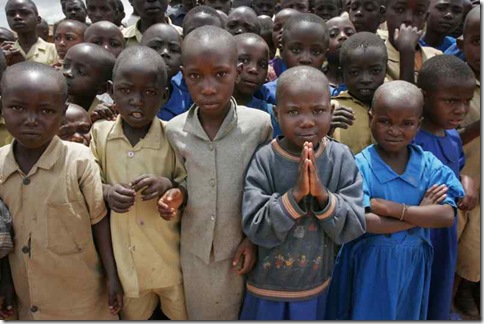
Back in January, I posted about the organisation FXB International.  Nico from FXB contacted me via Twitter to thank me for my post and I jumped at the chance to ask him for further information.  Well, it is slightly under a month since we first made contact but Kate from FXB has kindly agreed to answer a couple of questions for me.  I'd like to thank Kate for taking the time to write such wonderful replies to my questions below.  The photos in the post have been kindly provided by Kate and are from her recent trip to Rwanda.  

FXB Rwanda 1

Where did you visit in Rwanda?  What were you doing there?

I was unfortunately only able to visit Rwanda for a few short days, but during my time there I visited our FXB-Village sites and met with beneficiary families who are enrolled in our programs.  FXB has Village sites throughout Rwanda (as in many countries throughout the world).  In particular, I visited some of our sites in Gitarama, located about an hour’s drive from Kigali.

What I was most interested in finding out about was your three year Village model and the types of things taught and how progress is managed.  I really like the idea of sustainability.  So many times in the past we heard about loans and aid and this is the best idea I have heard so far.  So anything you can tell me would be appreciated.

The FXB Village program is our signature three-year program designed to provide sustainable help to children and families hardest hit by poverty and AIDS.  Each FXB-Village is a network of 80 to 100 households within a wider community, households which are most often comprised of widows caring for children, orphan-headed households, or orphaned children taken in by extended family.  FXB field staff work, including social workers and nurse counselors, work with  local leaders, and community members to identify the households most in need.  Once enrolled in the program, families are given life-saving tools and resources, including access to healthcare, HIV testing and prevention information, Antiretroviral treatment for HIV, and emergency food support.  FXB covers the tuition, uniform, and supplies fees for all school aged children, and all young adults have the opportunity to enroll in vocational training. 

Once a family is healthy and has regained their strength, the head of household receives a small grant to start a microenterprise, and FXB trains them on basic management, opening a savings account, and other relevant skills.  These microenterprises range from animal rearing and vegetable harvesting, to basket weaving and jewelry making, and provides the family with a sustainable way to generate income.  As the business grows and generates profits, FXB incrementally withdraws financial support and households slowly take over responsibility for growing portions of their expenses.  By the end of the three years, families are fully supporting themselves, have built savings accounts, and are armed with the tools and skills necessary to continue living above the poverty line and meet their basic needs for the long term.  Our model promotes self-sufficiency and provides sustainable solutions to the root causes of poverty.

An external evaluation of FXB-Villages was conducted and it was found that 86% of families continue to live above the poverty line and can provide for all their basic needs, even years after the program has been completed.  The Villages have been cited by UNICEF and UNAIDS as a best practice in supporting AIDS-affected children.

FXB currently has Village programs in Rwanda, Uganda, Burundi, the Democratic Republic of the Congo, China, Thailand, and India, and is hoping to expand the Villages to Colombia, South Africa, and Myanmar, where we have operated other programs for years.

FXB Rwanda 2

Which is the newest country that FXB has become involved in?  Can you tell us a bit more about what it is like and what you are focusing on first there?

We have just started a new Village program in the Democratic Republic of the Congo (DRC) in Goma.  Our activities in the DRC focus on providing direct and comprehensive support to children and families hardest hit by poverty and AIDS.  As one of the largest countries in Africa, the DRC is home to nearly 65 million people, 71% of whom live below the poverty line.  One million adults and children currently live with HIV/AIDS, and it is estimated that 1,000 people die each day from war-related causes including disease, violence, and hunger.

FXB has previous experience working in post-conflict settings.  We felt our skills and resources could be of great assistance in the DRC.  Families were selected in July, and Village activities began in October 2009.  Although still early in the program, we are very excited by the progress the families have made and look forward to expanding our programs in the country.

I am also very happy to report that we have recently expanded our Village model to Colombia.  FXB has been present in Colombia since 1992, running the FXB House in Barranquilla.  The FXB House provides comprehensive medical and social support to children affected by HIV, as well as their families, including day-care, medical treatment, psychosocial counseling, and nutritional support.  The FXB House also works with a variety of local partners on a larger scale program focused on the Prevention of Mother-to-Child Transmission of HIV.  Based on the success the FXB House has achieved over the past 18 years and our strong community presence, expanding our work to include the implementation of FXB-Villages is a logical step and an effective way to reaching even more vulnerable children and families.  The first FXB-Village in Colombia began in January 2010, and we plan to continue securing funding to build additional Villages to benefit even more children in the region.

How did you come to be involved in FXB and what is the the role that you play?

I came on to FXB’s office in New York City, FXB USA, as a part-time intern while studying for my Master’s degree. It was a wonderful learning opportunity, and it fit well with my interests in international development, HIV, and children. 

Over the past two years my position has grown, and I am now a full time staff member.  I manage individual giving for the US office and FXB Global Partners, our newest program that seeks to engage companies, associations, and individuals in a fundraising partnership with a FXB-Village in a country of their choice. We have recently launched this program and are actively seeking interested parties.

FXB Rwanda 3

Do you have advice on what young people can study if they would like to become involved in international agencies such as yourselves?

This sector is huge and there are a variety of paths one can take including fundraising, finance, marketing, program development, and program management.  Some people prefer to be on the ground and work directly in the field, while others have a more administrative role and work behind the scenes to create new programs, engage supporters, or ensure there is enough funding to keep the programs in operation.  There really is something for everyone, it’s just a matter of deciding where your interests fit best.

My academic background is in International Relations and Non-Profit Management, but I think for the most part experience and passion trump a degree.  Volunteering and internship opportunities are an excellent way to get involved, test out the water, and gain experience working in the sector.  You may not be doing the most glamorous work, but it is hands-down the best way to gain knowledge, develop skills, and make contacts with people to help build your professional network.  I know many people (including myself) who have parlayed short-term volunteer or internship experiences into staff positions.

Another way to prepare oneself for this area of work is to stay up to date on global issues and topic areas that relate to your goals.  There is always a wealth of information on the internet, and as your site demonstrates, a host of books, publications etc. that are really valuable and can help build your understanding of global issues.  On a more practical note, regardless of the position you eventually seek it is important to have strong written and communication skills.  It is up to staff to communicate the mission, vision, and programs to the public, and so agencies are always looking for people who can clearly address these topics and promote their organization effectively.

Do you have any advice on what older people can do if they'd like to become involved.  What skills are organisations such as yours looking for, both on a full time and volunteer basis (I'm not saying that you have positions available, just that people often don't realise they have something to offer).  Many people don't have resources other than their time and perhaps a blog site - how can they get involved?

I think you have hit the nail on the head when you say that people often don’t realize they have something to offer.  There is ALWAYS something you can offer, it’s just a matter of identifying how your skills can be utilized.  Luckily, most non-profit organizations, both focused nationally and internationally, are always in need of assistance in one form or another.  If people want to go beyond just donating money, there are still many ways in which they can contribute their skills to help the organization further along in their mission.  This can involve reaching out to friends (in person or thorough a blog) to promote an organization and spread the word about their work.  Individuals can also create small fundraising events or campaigns, something as simple as collecting spare change at work or holding a car wash, to raise funds to support a program.  Organizations really benefit from public recognition, and supporters of all ages are invaluable at helping to publicize their work in their own social circles and social media/blogs.

For individuals who want to contribute their skills in a more structured way, it is best to reach out to the organization directly and simply express an interest in helping out.   Whether lending your legal expertise pro bono, offering your web design knowledge, or stuffing envelopes with mailings, volunteers can make a big impact on an organization by doing small things.  Regardless of your background, the most valuable thing you can bring to the table is a passion for helping and a willingness to assist in whatever tasks may be most needed at the time.


From dealing with the organisation this month it is clear that they are a group of passionate, dedicated individuals and I think their idea of a three-year programme for sustainable development is fantastic.  I hope this will help those of you who want to get involved.


You can visit the FXB website if you would like to get involved or donate money or you can follow them on Twitter too.

Website: www.fxb.org
Twitter: @fxbusa

SHARE:

Thursday, 28 January 2010

Invisible Children: Legacy Tour

It is at times like this that I wish (more than usual) that I lived in the US. 

They are no longer children but they are no longer invisible: former child soldiers, abductees, street children and orphans will be touring the US from February 17, 2010 and May 7, 2010 sharing their experiences and inspiration to audiences around the country.

Visit the Invisible Children website to learn more or download the PDF file of their proposed Spring 2010 Tour Routes and Dates.

SHARE:

Sunday, 17 January 2010

UK Organisations Aiding Haiti

I feel I need to apologise for my slow response to the Haitian crisis.  I’ve been rather like a hare caught in the beam of a car’s headlights as I’ve watched the true extent of the horror unfold. 

Much of the blogosphere is alive with ways that you can assist the appeal if you are living in the United States but what can we do here in the United Kingdom?

iTunes

iTunes Red Cross appeal

I learned from the blogger over at Not From Around Here of the brilliant and easy iTunes initiative.  From within iTunes you can simply go to the iTunes Store and donate anywhere from £5 to £100.


TripAdvisor list

I think TripAdvisor deserves kudos and special mention for sending UK residents a special list detailing where they can donate money locally.  I assume they did a tailored list for each country and I think that is great.  Here is the list:

UNICEF - www.unicef.org.uk

ActionAid - www.actionaid.org.uk

British Red Cross - www.redcross.org.uk

Oxfam - www.oxfam.org.uk

World Vision - www.worldvision.org.uk

Save the Children UK - www.savethechildren.org.uk

Action Against Hunger -  www.actionagainsthunger.org.uk

Disaster Emergency Committee (DEC) - www.dec.org.uk

Merlin  - www.merlin.org.uk

Salvation Army  - www.salvationarmy.org.uk


South African appeal

The Sowetan newspaper has details of the Salvation Army Southern African region appeal.


US Appeal

Naturally, most people in the blogosphere are not in the UK so in the US you can text 90999 to donate $10 to the American Red Cross or click below to go to the Whitehouse Appeal:

Help for Haiti: Learn What You Can Do


If you don’t live in the UK, South Africa or the US, perhaps you can draw up a list for your own country?  If you don’t have your own blog, I would be happy to post it here.

SHARE:

Monday, 11 January 2010

National Human Trafficking Awareness Day

Slavery Still Exists

Today is National Human Trafficking Awareness Day in the United States.  many people worldwide, like myself, have chosen to draw awareness to this day as slavery and human trafficking is a worldwide problem.

In my travels today, I have come across a great many links that I would like to share with you.

1) Blog: Stop Child Slavery

Link: Make someone aware of human trafficking today

I don’t think Jeff’s efforts have been anaemic.  I think he has an amazing and important blog and recommend that everybody spend some time going through his articles and learning about the spectre of child slavery worldwide.  Jeff is among the growing number of people who makes me want to be a better blogger and activist.

2) Organisation: Polaris Project Action Center

The Polaris website states that slavery is the second largest and fastest growing criminal industry in the world.  They remind us that it is happening in our midst and give information on human trafficking and modern-day slavery and they also advise on how to make a direct impact in the lives of victims and survivors.

One of the greatest featured of their website is a Recommended Reading List on the topics of slavery and human trafficking.  I can’t wait to get my hands on some of those books!

3) Twitter list: Demi Moore’s ‘End Slavery’ list

The more I hear about how Ashton Kutcher and Demi Moore work to raise awareness about important issues, the more respect I have for them.  I respect all celebrities who take part in social awareness projects an pursuits.

Click on the wonderful sites in Demi Moore’s list and spend the afternoon learning about slavery and reading up on the various topics and issues.

4) Twitter list: Missus Emm’s ‘activism’ list

You can also subscribe to my ever-expanding list of Twitter users promoting activism.  If you’d like to suggest links to me, simply reply to @missus_emm.

5) Organisation: End Slavery Now

The website for End Slavery Now has a very simple format telling people how they can Learn - Tell - Report – Act.

6) Article: 40 Ideas for Action

Change.org is a fantastic website and Amanda Kloer is an amazing writer. 

40 Ideas for Action on National Human Trafficking Awareness Day: From Facebook to Legislation is a must read article. 

7) My personal tip: Don’t buy pirated DVDs.

If I had to think of one change that any normal person could make it would be to stop buying pirated DVDs. 

The Guardian ran a piece last year titled: Fifth of Britons unknowingly aid child trafficking and the British anti-pirating body F.A.C.T. has also drawn links between human trafficking, the drug trade and pirated DVDs on its news page.  Never, ever, ever buy pirated DVDs and report the crime to the police.  Who knows, you may free that vendor from forced labour too.

SHARE:

Friday, 8 January 2010

FXB International

FXB Rwanda
Image source: FXB.org

François-Xavier Bagnoud was a helicopter pilot who was involved in several rescue operations and who dedicated his life to providing assistance to others.  He was only 24 when he died during a mission to Mali in 1986 and his mother set up FXB in his name in 1989.

Their aim is to deliver sustainable results for children affected by poverty and aids.  They do this by advocating for their needs and basic human rights and by providing direct support for the communities and people that care for them.

They invest in families and as you will see from the video below, they provide a three-year training programme to assist caregivers in becoming self-sufficient so that they may care for their children.


The video's above are narrated by Susan Saradon. If you visit her Look To The Stars page, you can see that Susan does a lot of charity work. I think that is fantastic.

FXB support us

If you would like to support FXB, you can click on the image above.  You can make once-off or recurring donations or you can help to publicise their efforts.

SHARE:
© A Passion to Understand

This site uses cookies from Google to deliver its services - Click here for information.

Blogger Template Created by pipdig