Saturday, 30 January 2021

Unspeakable: The Tulsa Race Massacre by Carole Boston Weatherford and Floyd Cooper | Book Review

Greenwood District, Tulsa, Oklahoma was once home to a thriving African American community. On May 31st and June 1st 1921, a mob of armed white Tulsans attacked the community, killing as many as 300 African Americans and displacing 8,000 more. 2021 will mark the 100th anniversary of what became known as the Tulsa Race Massacre, the history of which was suppressed for seventy-five years.

Unspeakable The Tulsa Race Massacre by Carole Boston Weatherford and Floyd Cooper | Book Review

Unspeakable: The Tulsa Race Massacre is a picture book by author Carole Boston Weatherford and illustrator Floyd Cooper. It's short at 32 pages but aims to help young readers understand these terrible events so that "we can move toward a better future for all". It's aimed at the 8-12 years age group.

Reading Unspeakable: The Tulsa Race Massacre was physically painful. In the beginning, the book describes the thriving community of Greenwood District and the high street that became known as the "Black Wall Street". The descriptions of culture, fashion and community reminded me so much of what I've read about Sophiatown and District Six in South Africa, communities with vibrant cultures that were similarly razed to the ground.

Weatherford has done a fine job of simplifying the events for young readers, but presenting sufficient detail to draw older readers into healthy debate and discussion. It would be a good platform to stimulate further research and self-study too. The author's and illustrator's notes were particularly interesting, detailing their personal reasons for being involved in this work. Of particular note is the author's comment that the event was not even taught in Oklahoma schools until the twenty-first century.

Unspeakable The Tulsa Race Massacre by Carole Boston Weatherford and Floyd Cooper | Book Review

The illustrations by Floyd Cooper are exquisite, showcasing the fashions and vibrancy of Greenwood District, and ultimately the violence and devastation. The illustrations do a great job of bringing the events and people to life, ensuring that the reader relates to them and to the injustice of the events.

Unspeakable: The Tulsa Race Massacre is published by Carolrhoda Books, an imprint of Lerner Publishing Group

I would wholeheartedly recommend this book and am pleased to note that it's being released in both the US and UK (and presumably around the world).

An advance, electronic copy of this book was provided by Netgalley for the purposes of this review.

SHARE:

Tuesday, 9 June 2020

CST Research Briefing on Jack Renshaw

CST report of Jack Renshaw

The news broke today that four members of banned far-right terrorist group National Action were convicted and sentenced to between 18 months and five-and-a-half years in prison. Typically, news reports dedicate very little time to what National Action represented and the crimes its members committed, focusing instead on the sensational aspects of the case.

"National Action, founded in 2013, was outlawed in 2016 after it celebrated the murder of Labour MP Jo Cox"

- National Action: 'Miss Hitler' hopeful among four jailed [BBC News]

It is vital that the public are made aware of the greater extent of this group's anti-Semitic leanings and their explicit calls for genocide and violence against Jews.

Link: CST.org.uk

CST is Community Security Trust, a charity that protects British Jews from antisemitism and related threats. In response to today's news, CST have shared their briefing on Jack Renshaw, the student activist and would-be terrorist who was imprisoned in 2019.

The briefing is comprehensive and eye opening, tracking Jack's far right activity from his membership of BNP Youth at age fifteen to his trial for planning to murder a policewoman and a Labour MP. Over sixteen pages the briefing details the violent rhetoric that permeates Britain’s far right, giving far more detail than news reports can usually dedicate.

Download the report at the CST website: 'White Jihad': Jack Renshaw's journey from a far right student to would-be terrorist

SHARE:

Wednesday, 16 December 2015

#ZumaMustFall, White Privilege and the South African Spring

The 16th of December is a public holiday in South Africa. It used to be a racist Apartheid holiday marking the Day of the Vow when Afrikaners swore to God that they would forever commemorate it if He allowed them victory over the Zulus at the Battle of Blood River in 1838.

Today the 16th of December is the Day of Reconciliation, a day dedicated to healing South Africa's fractured past. Or to sitting in the sun and drinking in the hot African summer. 

Today, the 16th of December was marked by protests around the country for the #ZumaMustFall movement. It was a day that made me proud to be South African and which I thought might finally be the start of South Africa's Spring. I don't expect the crime to suddenly end but I do live in hope of an end to the poverty and corruption (which I see linked). More on that later. 

There was a very good article in the RDM today.


This is an interesting article. In many ways he is right - we expats have all had awkward moments when we've had to explain to other South Africans that we don't share their racist views. You will not believe the racism amongst South African expats and the white middle classes. Or maybe you will. 

 And he's not wrong when he observes that "[i]n focusing singly on Zuma, white South Africans expediently ignore the role of unsurpassed privilege — and their refusal to relinquish those alienable components of it — in explicitly marginalising black South Africans". 

The problem is that he is ignoring that Zuma is hugely flawed, that he laughs in the faces of his corruption. And he is ignoring that something is seriously wrong in a country that hasn't begun to tackle abject poverty twenty years after the installation of 'democracy'. Compare Britain in 1965 and South Africa in 2015 and tell me again that it's impossible to put a roof over people's heads in the aftermath of devastation. 


Mzimhlophe Hostel, Front Door
Every day South Africans of all colours land up on the streets but a vast majority of black South Africans still live in shanty towns and slums with no running water, no sanitation and communal washing facilities (if they are lucky). In December 2014, I visited Mzimhlophe Hostel in Soweto where some of the worst violence took place in the 1990s. After all this time there was no running water or sewerage and one set of latrines and washing facilities for every six to eight families. There were also no plans to improve the lives of the residents there.

In October, a friend of mine died, leaving his wife and child in utter poverty. They have nothing now that the breadwinner has gone and there is no safety net, no social security and nothing to stop them landing up on the streets. There are so many South Africans in need that there is simply no charity that will take on their case. That falls to their friends and employers. 

Compare this to a R246b upgrade on the President's private residence. Move beyond the corruption, nepotism and cronyism to the wealthy elite who drive past homeless people in cars worth more than they will earn in a lifetime. Heck, some of those cars are worth more than I'll earn in a lifetime. 
Mzimhlophe Hostel Soweto
There is something very rotten in South Africa, a seemingly insurmountable discrepancy between rich and poor and I don't see anything being done about that. 

Apartheid caused what is happening in South Africa today but South Africa today is sustaining that legacy. 

So is the #ZumaMustFall movement solely the domain of white privilege and racism? Today I didn't witness my fear-mongering, often racist Facebook pals at the #ZumaMustFall marches, but the most liberal, forward-thinking and genuine of people. I know that smacks of "not all whites" but the truth is that South Africa cannot be free until all South Africans are free and if the movement does smack of privilege then it needs to move beyond that. 

Three years ago, I was reading The Battle for the Arab Spring by Lin Noueihed and Alex Warren and I was blown away by the similarities by the situation in Egypt prior to the Spring and that in South Africa. Massive youth unemployment and poverty were paired with massive state corruption, embezzlement, cronyism, nepotism and gerrymandering. I remember remarking to myself that the only factor that set Egypt apart from South Africa was that the latter had not moved electoral borders. Yet. 

Is the time right for a South African Spring? Yes, I think it is. I think that a massively popular movement needs to be played out across social media and in the streets and that South Africans need to demand housing, education, jobs, adequate healthcare and poverty alleviation. Those were the basic promises of the ANC in 1994 after all. It's one thing to support a party that liberated the country but if the ruling party has lost their way then the population needs to guide it back on track. 
SHARE:

Friday, 24 July 2015

From Lynchings to Police Brutality: The Words of W.C. Handy ResonateToday

I'm reading a book called Hear My Sad Story: The True Tales That Inspired "Stagolee", "John Henry" and Other Traditional American Folk Songs.

In the book, author Richard Polenberg describes the effect of a particularly brutal lynching on American composer W.C. Handy and his subsequent decision to leave the South.

Handy reported his reaction, a mixture of horror, anger and depression: "All the savor had gone out of life. For the moment only a sensation of ashes in the mouth remained." - Richard Polenberg, Hear My Sad Story: The True Tales That Inspired "Stagolee", "John Henry" and Other Traditional American Folk Songs

In a later incident, recounted by Polenberg in the book, Handy recalled appealing to a law enforcement authority for protection, whereby he was scoffed at and his attacker was assisted instead.

Handy moved to New York in 1918, almost a century ago, but I'm struck by the significance of these events today and the similarities to the Sandra Bland case. Black and brown people in America, the UK and around the world are still being subjected to racial violence; they continue to witness these attacks on fellow citizens (through the medium of film and social media, if not in person); and they continue to suffer a form of post-traumatic stress due to the relentless nature of these attacks.

Just as Handy described his devastation, so people today are overcome by the pervasive, racist and violent attacks in our society today.

Hear My Sad Story: The True Tales That Inspired "Stagolee", "John Henry" and Other Traditional American Folk Songs is published by Cornell University Press and will be released in November 2015.

SHARE:

Wednesday, 27 February 2013

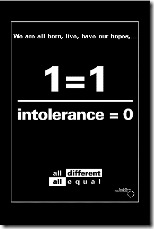
On Tolerance and Racism

I've tried for the longest time to get my head around the overt racism and race relations in the UK. I find that people will often say the most offensive things to me, mistakenly assuming that because I am South African I will be racist too. My opinion has always been that it is not that people in the UK have become less racist, more tolerant or accepting of others, but that they've learned to hide their views better.

In this article on institutional racism in the police force, Adam Elliott-Cooper seems to make a similar point.

"The ‘unlearning’ of racism and other forms of discrimination is still rather like a primary school teacher instructing a group of pre-adolescents not to swear. The teacher tells the children which words are unacceptable, and that they may be punished if they do not comply. Equality training generally focuses on learning which words relating to race, ethnicity, gender, physical ability or sexual orientation are/are not offensive to the apparently over-sensitive social group(s) to which they relate." - The Voice, "Anti-Racism Has Been Reduced To Politically Correct Exercise"

It seems to me that in light of this, campaigns such as the one to wipe out racism in sports are always going to miss the mark. Don't get me wrong, I think they are fantastic and necessary. However, the lesson people seem to be learning is to tolerate people of other races (or genders or other minorities) until they fall out of line, in which case they are open to abuse. And that abuse almost always takes the form of heightening and focusing on their race, gender or other assumed defining factors.

At the heart of this is the arrogance in thinking that whiteness is the norm, in casting people as "other" and assuming some fictional right to pass such judgements. Surely it is time to abandon the idea of tolerance?

I don't know what the answer is but I have observed something that was present in South Africa but seems to be missing in the UK. I don't know whether it is political correctness, but in my circles in South Africa, we celebrated each others cultures. I worked with Muslims, Hindis, Tamils, Jews, Catholics and Baptists as well as members of the ZCC and NGK. My colleagues spoke Xhosa, Zulu, Tswana, English and Afrikaans. We absolutely learned and appreciated religious holidays, cultures, customs in births, deaths, marriages and naming of children. More than anything, this taught me respect and understanding, appreciation and consideration for others.

While I wish this were infinitely more eloquent, my rather long-winded point is that we learned acceptance and an appreciation of other people's race, religion, creed and culture. While that will never erase the power and class differentials in South Africa, while it can never come close to closing the gap created by Apartheid, it seems to me to be a far better starting point than tolerance and implicit transience of that tolerance.

SHARE:

Saturday, 18 August 2012

South Africa: Where Life Is Cheap and Death Even More So

One of the top search terms on this blog is “crime in South Africa”, followed by “personal stories of crime in South Africa”.  I don’t know why people are searching those terms, but in my mind there are two main categories of searchers:

1.  Those wanting to visit South Africa and wanting to know if the horror stories are really true.

2.  Those who are still living in South Africa and have begun to wonder if there isn’t something wrong with this picture.

I once belonged to the latter category of people.  I knew many people who were raped, murdered, gang-raped, robbed, burgled, held up at gun point or hijacked.  I was held up at gunpoint in a bank robbery, my home was broken into while I was at home and my dog saved my life, I was attacked in my car. 

Life is cheap in South Africa and death is even more so.  I finally comprehended just how extreme the situation is there following a dinner party two years ago.  We were 7 women having dinner in a flat in London.  I was pressed to talk about the crime in South Africa and as always, I hesitated.  Talking about it leaves me feeling raw and vulnerable and it always, without fail, ushers in nightmares, panic attacks and generalised anxiety in the weeks following it.

But on that evening, I felt safe amongst 6 other women and I talked.  At one point, one of the women left the table and soon after made her excuses and left.  It turns out that my story filled her with such terror that she felt quite traumatised.  In her world, she didn’t know anyone who had died from unnatural causes, no victims of violent crime, barely any victims of crime at all.  Sure, she reads the newspapers, listens to the news.  But her inner circle had never been touched by violence, crime and inhumanity and that is entirely possible in countries other than South Africa. 

All of this has been in the forefront of my mind for the past ten days.  I want to talk about it and raise awareness because I believe that every South African, regardless of age, race, gender, sexual orientation, religion or class has the right to safety, security and dignity.  Four opinion pieces caught my attention over the past 10 days.

“Take your Women’s Day and shove it” [Helen Moffett, 8 August 2012, Books Live]

Helen discussed the parades and money spent on Women’s Day celebrations in South Africa and the laughing stock they had become in the face of a situation where women are raped, murdered, beaten and violated each and every day in South Africa.

Helen was a little bit angry and in light of the situation, I have to ask why we aren’t all more than a little bit angry:

Our rape stats are a global disgrace (Goddess, how many times do I have to FUCKING say this, the WORST in the world for a country not at war – the scale is unimaginable, the suffering ditto), black lesbians have “carve me up and smash my brains in” signs stamped on their backs, rural women and children live in relentless, grinding misery and poverty HUGELY exacerbated by patriarchal strictures, which are of course absolutely sacred (and the fact that the Traditional Courts Bill, which would render these women even more helpless and wretched, is actually allowed to pollute national airtime is a bloody disgrace)

[Read more about South Africa’s Women’s Day]

“Women don't deserve a day” [David Moseley, 14 August 2012, News 24]

Last weekend, violent protests erupted in Lonmin mine and David Moseley remarked that: “There is always something terrible happening in South Africa”.

He referenced Helen’s post and then went on to talk about his greatest fear, that someone he knows and loves will be raped.  It is a valid concern in South Africa where “women are getting raped (almost every 17 seconds in South Africa)” and “a survey … conducted amongst 1 500 Soweto school children … discovered that a quarter of all boys said that "jackrolling" (their lingo for gang rape) was "fun"”.

He closes by saying that:

Women don't deserve a day at all.

They deserve every day, every week, every month, every year. They deserve our undying attention. They deserve a country where they can live without fear.

They deserve life.

It can be really frustrating speaking to South Africans sometimes as their need to defend their country and all of its faults battles with their need to talk about the horrors that they face.  Ultimately it seems that they fail to grasp one small point.  Each South African has a fundamental human right to live safe from physical, bodily, emotional or psychological harm.  Especially where it is being dished out to them in such an aggressive, continuous and gratuitous manner.  While the government wraps itself up in corruption, nepotism, cronyism and negligence, the citizens of South Africa are dying.

“Where is the Outrage?” [Camilla Bath, 16 August 2012, Eye Witness New]

On Thursday morning, Camilla Bath EWN Deputy Editor in Johannesburg asked the following question:

Have we become so insensitive in Gauteng, in South Africa, that we all but disregard the unspeakable violence that’s unfolding on our own doorstep? Are we too callous to care, too inundated with tragedy and violence on a daily basis to truly take stock of what’s happening around us? Have our ideas of what qualifies as shocking been warped to such an extent that we no longer see people being burnt and hacked to death as utterly unacceptable and appalling?

Her words are especially chilling and especially relevant in light of the tragic events that took place at Lonmin mine just hours later.  Bath spoke of the disturbing violence taking place at the mine and the murders of miners, police officers and security guards and yet she wondered why this was not even reaching South Africa’s newspapers.  The sad fact is that South Africans are so jaded, so used to violence and crime that I found more reporting on the violence in Lonmin on international news sites than on South African sites.

Bath concluded by stating that, “This type of brutality is never deserving of anything other than outrage and disgust. Why the violence really started and who is really behind it are, for now, irrelevant. Right now, it simply needs to be stopped”. 

It was stopped, in the most violent, traumatic manner.  By the end of the day, 34 miners had been shot dead by police in what the police vehemently deny constitutes a massacre.

“Dear black person” [Ferial Haffajee, 16 August 2012, News 24]

It seems strange to close this piece on crime with mention of an opinion piece on politics, poverty and racism.  But it is very important and absolutely relevant in the South African context.

South Africa has one of the highest GINI coefficients worldwide which means that the gap between richest and poorest is wider than any other country, including Brazil.  The government is absolutely corrupt and citizens suffer without electricity, water, education, healthcare and housing.  There was some progress in the 1990s towards housing, jobs, education and healthcare but in the second decade of the 21st century we see a country torn apart by poverty, corruption, inequality and racism. 

It is clear that South Africa is a country on the brink and in the midst of all of this chaos, police opened fire on striking miners, killing 34 human beings.  I’d like to say that it feels like a return to the Apartheid era but back then we lived in a police state under a permanent State of Emergency.  I’m not going to even try predict the effect of adding state-sanctioned extreme violence to the mix of lawlessness and chaos but I can guess that it can’t be good.  How much more has to go wrong in South Africa before a true leader steps in and cleans up both on the streets and in the government?

SHARE:

Tuesday, 9 August 2011

This Day in History: 9 August 1956

1948: The National Party Victory

South Africa, 1948: the United Party (led by incumbent Prime Minister Jan Smuts) and the Herenigde Nasionale Party (Reunited National Party) (led by DF Malan), competed against each other in the national elections.  This was an election where only white South Africans could vote, and realising that many of the electorate felt threatened by black political and economic aspirations, Malan promised a system of grand Apartheid if he was victorious.

The HNP was victorious and when they came into power in 1948, they implemented Apartheid.  The HNP was eventually renamed the National Party and thus, the same party was in power from 1948 to 1994, when the African National Congress took power in the first democratic elections in South Africa that featured universal franchise.

Apartheid Whites Only
Source

1950: The Group Areas Act

One of the first acts to be enacted following the implementation of Apartheid was the 1950 Group Areas Act.  The Group Areas Act divided up urban areas and assigned different racial groups to different residential and business areas. This meant that the black, white, Indian and coloured populations could not live together or own businesses in the same areas.  The 1913 Native’s Land Act had already ruled that only white people could become landowners in South Africa.

1952: The Pass Laws

The 1923 Native Urban Areas Act had made it compulsory for black men in cities to carry passes on them.  Any man found without a pass would be arrested and sent to a rural areas.  In 1952, the Native Laws Amendment Act and the Natives (Abolition of Passes and Coordination of Documents) Act were enacted to assist in policing the 1950 Group Areas Act.  The Native Laws Amendment Act required that no black South African could remain in an urban areas for longer than 72 without the necessary documentation.  The Natives (Abolition of Passes and Coordination of Documents) Act required that all black South African men over the age of 16 had to carry a single reference book.  It also noted that women would be required to carry such reference books at some time in the future.

Dompas
Source

The Injustice of the Dompas

The reference book (enduringly referred to as the dompas in Afrikaans) would stipulate where and for how long a person could remain and it included photographs, fingerprints and employer details.  It was a horrifically limiting document because black South Africans were subject to persecution if they were found to be outside of their stipulated area.  That meant that a man could not visit his brother who was working in the next neighbourhood, for instance.  If he lost his job, his right to remain in an urban area could be rescinded by any government employee and he could be made to return to rural areas immediately. 

Blacks in urban areas were often forced to leave their families behind in rural areas.  The consequence of this is that they could be subject to arrest, punishment and persecution if they were discovered to be travelling to or from those rural areas too.  Basically, each time a black person wanted to move within the country, they had to seek permission and that permission was recorded in their pass book.

Life in the Homelands

In the decades leading up to the 1950s, the majority of black South Africans in urban areas had been men.  They were often migrant workers, employed on mines and in factories and women were often left behind to look after the family.  The problem with the rural areas (and Homelands) allocated to black people is that they were specifically chosen on the basis of their dry, arid and unsustainable nature.  The very worst pockets of land in South Africa were allocated to rural black populations. 

A combination of factors lead to more and more women moving to urban areas in the early days of Apartheid.  Some scenarios include the death of income earners in precarious conditions in mines and factories; neglect from partners who took up with mistresses in town; and severe poverty caused by the high cost of living in urban areas, the inability to send enough money home, and the inability to sustain families in the arid conditions of the Homelands and rural areas.  Women were also permitted to join their spouses in urban areas if he had been born in that area or had laboured continuously in an area for over ten years.

(Incidentally, many of these factors continue today and many children are brought up in rural areas by grandparents and the extended family as poverty and economic needs continues to drive families apart).

1955: Plan to Issue Pass Books to Women

In response to the growing number of black women in urban areas, the government announced in September 1955 that all black women would be issued reference books with effect from January 1956.

9 August 1956
15BAHA-Women's-March-4
©Baileys Archives [Source]

The protest on 9 August 1956 was not the first protest against the Pass Laws and it was one action among one of the most colourful and successful liberation struggles in history.

What was outstanding about this protest is that it surprised many parties, the government and liberation movement included and it showed that women were active, organised and militant.


On 9 August 1956, 20,000 women marched to the Union Buildings in Pretoria in protest of the pass laws and the roll out of reference books for women.  The march was organised by the Federation of South African Women in conjunction with the ANC Women’s League and was attended by such great women as Helen Joseph and Albertina Sisulu.

Women came from all over the country to attend the protest, from as far afield as Durban and Cape Town, and black, white, coloured and Indian women attended the march.

The crowd left bundles of petitions filled with 100,000 signatures at Prime Minister JG Strijdom’s doors as he was not at the Union Buildings that day. 

In a masterpiece of peaceful protest, the women stood for a full half an hours’ silence, many with children on their backs, as they protested the assault on their freedom and integrity that the pass laws represented.

9 August 1994

Apartheid ended in 1994 when the African National Congress came to power.  Since 9 August 1994, the day has been commemorated as National Women’s Day in South Africa.  It is a public holiday and that is why South Africans celebrate women’s day on a different day to the rest of the international community.

SHARE:

Monday, 7 March 2011

Video: PWEI – “Ich Bin Ein Auslander”

I don’t usually post music videos on this blog but yesterday’s post on Islamophobia got me thinking.  Once upon a time, I thought it could never happen again.  It was the early 1990s and we’d learned about the Holocaust, Vietnam and Apartheid in school and thought it was all behind us. 

In 1994, Pop Will Eat Itself released “Ich Bin Ein Auslander”.  I thought it was ever so clever and loved the song but I certainly never thought the lyrics would come to actually mean anything.

The Rwanda genocide took place between 6 April and early-July 1994.

The Srebrenica genocide took place in July 1995.


Pop Will Eat Itself - “Ich Bin Ein Auslander”
Dos Dedos Mis Amigos (1994)

Listen to the victim, abused by the system
The basis is racist, you know that we must face this.
"It can't happen here". Oh yeah?
"Take a look around at the cities and the towns."

See them hunting, creeping, sneaking
Breeding fear and loathing with the lies they're speaking
The knife, the gun, broken bottle, petrol bomb
There is no future when the past soon come.

And when they come to ethnically cleanse me
Will you speak out? Will you defend me?
Or laugh through a glass eye as they rape our lives
Trampled underfoot by the right on the rise

[CHORUS]
"You call us..."....Ich Bin Ein Auslander (x4)

Welcome to a state where the politics of hate
Shout loud in the crowd "Watch them beat us all down"
There's a rising tide in the rivers of blood
But if the answer isn't violence, neither is your silence

If they come to ethnically cleanse me
Will you speak out? Will you defend me?
Freedom of expression doesn't make it alright
Trampled underfoot by the rise of the right

[CHORUS]
Ich Bin Ein Auslander. (x8)

SHARE:

Tuesday, 8 February 2011

New Reports on Racism and Intolerance in Europe

Passport_en-3The European Commission against Racism and Intolerance (ECRI) has  today released five new reports on racism and intolerance in Europe.  The reports document the fight against racism, racial discrimination, xenophobia, anti-Semitism, and intolerance and concentrate on five countries in Europe: Armenia, Bosnia and Herzegovina, Monaco, Spain and Turkey.

In most cases, the reports cover visits to the countries in March and April 2010 and take into account developments up to June 2010. The exception in Turkey which was visited in October 2009, taking account developments up to March 2010. 

The ECRI is the Council of Europe’s independent human rights monitoring body and is comprised of one expert member from each of the Council’s member states.  The CoE works towards European integration but is distinct from the European Union.  This accounts for the interesting spread of contact visits between EU-members states (Spain), candidate states (Turkey) and other European states (Armenia, and Herzegovina and Monaco).

It is within the remit of the ECRI to take such action as is necessary to combat violence, discrimination and prejudice against people or groups on the basis of race, colour, language, religion, nationality, national origin or ethnic origin.

The reports were announced today in five press releases:

Report on Armenia
Report on Bosnia and Herzegovina
Report on Monaco
Report on Spain
Report on Turkey

Image © ECRI [source]

SHARE:

Monday, 5 April 2010

How To Tell People They Sound Racist

I need to take this to heart. I have a very old friend who I am going to need to part ways with because she is a racist and I find what she says horribly offensive.  She is one of my oldest friends but I just can’t abide by the poisonous filth that spews from her mouth anymore.

SHARE:
© A Passion to Understand

This site uses cookies from Google to deliver its services - Click here for information.

Blogger Template Created by pipdig