Sunday, 1 January 2017

Book Review: Islam and Democracy After the Arab Spring by John Esposito, Tamara Sonn & John Voll

Islam and Democracy - John Esposito

In the aftermath of the Arab Spring and the descent into war in Syria, one question that arises time and again is this: is Islam compatible with democracy? It is a question that John Esposito, Tamara Sonn and John Voll promise to answer in their book Islam and Democracy After the Arab Spring. 

It is difficult to review a book and to rate it when it clearly doesn't do what it promises to do on the cover and while this book has a lot to do with Islam and democracy, it has little to do with the Arab Spring (with the exception of the final two chapters). One of the questions that most interests me is the events leading up to the Arab Spring, some of which I attempted to explore in the series Before the Spring. 

Events such as the Iraq war and the Second Intifada were pivotal in the development of a shared Arab consciousness that transcended national borders as was the rise of Al Jazeera and social media. 

In focusing on countries such as Pakistan, Turkey, Iran and Senegal, I was hoping that Islam and Democracy After the Arab Spring would continue in a similar vein - picking up those similarities and exploring whether those countries were also ripe for a Spring-like uprising. Or at least exploring similar factors in the various countries that so emboldened the Arab Spring protestors to take action and topple governments. 

Islam and Democracy After the Arab SpringIt doesn't quite manage that but what this book does do is take an in-depth look at the rise of Islamic governments in seven countries and how issues such as equality, democratic participation and the economy were shaped by world events and the relationship of each country to outside forces. 

The book includes a fascinating profile of Iran and the lasting impacts of US interference, such as in the 1953 coup. Likewise, the chapter on Turkey provides an insight into current political events and gives some background to Erdogan's political motives. 

As a series of essays on the rise of Islamic governments, it would have been more accurate had the book been titled A Political History of Islam in the 20th Century. Judging it on that basis, it's quite interesting and the difference in writing styles between the various authors keeps it so. 

As a resource further exploring the roots and enduring consequences of the Arab Spring, there are better volumes, such as Lin Noueihed and Alex Warren's The Battle for the Arab Spring.

SHARE:

Tuesday, 11 December 2012

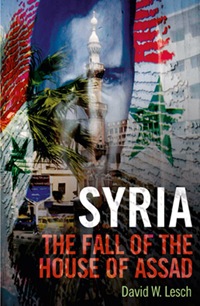
Book Review: Syria: The Fall of the House of Assad by David W. Lesch

David Lesch - Syria - The Fall of the House of Assad - bannerWhen Bashar al-Assad became president of Syria upon his father's death in 2000, many people had high hopes for this young man who gave up his passion for ophthalmology to lead his country. Many expected al-Assad to embark on a series of reforms and lead Syria to a more progressive future.

A decade later and the oppressive and powerful Syrian security-military apparatus reacted with increasing brutality to the Syrian uprisings that were part of the region-wide Arab Spring. Almost two years later and the country remains in the grip of a devastating civil war.

What went wrong in Syria, the country that once held the highest hopes of progression and reform in the region? Author David W. Lesch enjoyed exclusive access to Assad as a leading Middle East scholar and consultant between 2004 and 2009 and in Syria: The Fall of the House of Assad, Lesch goes into detail about the rise and fall of the house of Assad.

Syria: The Fall of the House of Assad is by turns quite fascinating. It begins with a discussion of al-Assad's first years in office, the Damascus Spring and the increasing international pressure following 9/11 and the assassination of former Prime Minister of Lebanon, Rafic Hariri.

David Lesch - Syria - The Fall of the House of Assad - coverWith its secularism and the overwhelmingly positive perceptions of Syrians of Bashar al-Assad and his wife Asma, many thought that Syria would be immune to the effects of the Arab Spring. The next portion of the book discusses why many in the Syrian government, military and Assad's inner circle thought that Syria was different, including Assad himself. This is followed by a breakdown of precisely why Syria was no different to the rest of the countries in the region and the reasons behind the escalating protests.

The following two chapters are dedicated to the Syrian response to the uprisings compared to the mounting opposition and popular action that took place amid reports of increasing atrocities.

Of particular interest was the next section of the book dealing with the the often confounding international response. Lesch goes into some detail regarding the divisions within and between the member states in both the United Nations and the Arab League and their evolving affiliations to Syria during this time.

As the book draws to a close at the end of the summer of this year, what is particularly startling is that the government and president of Syria continue to give the same empty promises of reform and cooperation as they did two years ago.

Syria: The Fall of the House of Assad is an important book with valuable information covering both the background and current situation in Syria. The book does not go into much detail on the individual atrocities and massacres, other than to mention them and the consequences thereof, and the focus is on the background to the decisions made by key local, regional and international players.

It can be a little difficult to follow at times and the author does tend to jump back and forward in time, but I appreciate the layout of the book into clearly defined sections over the benefits that a strict chronological analysis would have brought.

I certainly recommend Syria: The Fall of the House of Assad to anyone interested in understanding the situation in Syria and would recommend it to academics and interested parties alike. Lesch makes a good attempt to present the book so that it will be accessible to non-academic readers.

Syria: The Fall of the House of Assad is available to purchase at  Amazon.co.uk and Amazon.com.

SHARE:

Wednesday, 29 August 2012

Before the Spring: Invasion of Iraq and Iraq War (2003-2011)

This is the second in a series on A Decade of Conflict Leading up to the Arab Spring.

The United States invasion of Iraq took place between 19 March and 1 May 2003.  It was presented to the American public and the world at large as an action that would rid the world against terrorism, protect against Saddam Hussein’s weapons of mass destruction, and liberate the people of Iraq. 

The invasion was seen to be successful because it resulted in the toppling of Saddam Hussein’s Ba’ath Party government in just 21 days and allowed the subsequent occupation of Iraq.  It was the first action in what was to become the Iraq War which officially lasted until 18 December 2011.

The difficulty is that Iraq held no weapons of mass destruction, was not in any way involved in the 9/11 terrorist attacks on America (which was the galvanising force behind American support for the invasion), and left the people of Iraq traumatised and devastated after being subjected to nearly a decade of brutal force.

Army Sgt stands guard near burning oil well in Rumaylah Oil Fields in Southern IraqArmy Sgt stands guard near burning oil well in Rumaylah Oil Fields [Wikicommons]

It is likely that the invasion of Iraq, a sovereign state, by United States forces was illegal and then Secretary-General of the United Nations, Kofi Annan, said as much in 2004.  Far from freeing the Iraqi population, the war resulted in the death of at least 100,000 Iraqi citizens (with some estimates rising to 1 million civilian deaths, see Casualties of the Iraq War).

A heavy bombing campaign lead to the wide scale destruction of infrastructure and services in Iraq, leaving the population without water, electricity, sewerage systems and hospitals.  The bombs dropped on Iraq were laced with depleted uranium resulting in a lasting radioactive contamination that will likely remain for generations.  There has been a sharp increase in childhood leukaemia, cancer and infant mortality in highly bombarded regions in Iraq.

The war in Iraq resulted in a humanitarian crisis of massive proportions that has spilled over into neighbouring countries. 

“UNHCR estimates that more than 4.7 million Iraqis have fled their homes, many in dire need of humanitarian care. Of these, more than 2.7 million Iraqis are displaced internally, while more than 2 million have escaped to neighboring states.” - UNHCR, "Iraq Refugee Emergency"

Malnutrition and disease outbreaks are widespread in a population with a disproportionate amount of widows and orphans.

Finally, much was made of the positive effect that the war would have on the liberation of women in Iraq.  In their book What Kind of Liberation? Women and the Occupation of Iraq, Nadje Al-Ali and Nicola Pratt discuss the challenges facing the women of Iraq.  They have noted an increase in neo-conservatism and the rise of violence against women, oppression and honour killings.  Women and young girls are often forced into prostitution or become victims of sex trafficking and exploitation.  Despite the rise of women-headed households, Iraqi women face great obstacles in becoming employed or gaining an education.

More so than ever before, every step of the Iraq War was subject to media scrutiny with many news outlets employing permanent correspondents and embedded reporters in key Iraqi locations.  While news outlets struggled to remain neutral amid accusations of propaganda and censorship, Al-Jazeera was noted for being one of the few news outlets to portray Iraqi casualties and present to audiences a view of the devastation in Iraq.

As with the Second Intifada, the people in neighbouring Arab countries received these broadcasts and took to the streets in protest against the Iraqi War.  The sentiment was increasingly anti-USA, anti-United Kingdom and anti-Israel with protests in Syria, Tehran, Cairo and later Baghdad and Basra in Iraq itself. 

Once again, in the context of rising distrust and conflict following the 9/11 attacks, increasing reports of discrimination and Islamophobia, and war in both Israel and Iraq, Arab speaking people began to feel solidarity to one another and an identification with the Palestinian and Iraqi causes.

Further reading:

SHARE:

Wednesday, 15 August 2012

Before the Spring: The Second Intifada (2000 – 2005)

This is the first in a series on A Decade of Conflict Leading up to the Arab Spring.

Also known as the Al-Aqsa Intifada. 

The Second Intifada was a period of unrest and conflict between Israeli armed forces and Palestinian citizens.  It took place in the occupied Palestinian territories in Israel, starting on 28 September 2000 and lasting until 2004/2005.  It began in the context of the failure of the Oslo Accords, an attempt for peace negotiated between Israeli and Palestinian leaders.

Violence and protests erupted when Ariel Sharon, then an Israeli opposition party leader, entered the Temple Mount / Al-Haram Al-Sharif area (a disputed area which has significant religious importance to both Jews and Muslims) and stated that "the Temple Mount is in our hands and will remain in our hands. It is the holiest site in Judaism and it is the right of every Jew to visit the Temple Mount".  This was seen as extreme provocation and the grounds for years of conflict and unrest.

The-Second-Intifada Palestinian protestors during the Second Intifada [Gallo/Getty]

Depending on which source you consult, the Israelis and the Palestinians are painted as the primary aggressors, with both sides using questionable tactics. For example, the overview section on Wikipedia notes the Palestinians’ use of suicide bombings, rocket and mortar attacks, lynchings, kidnappings shootings, stabbings, stonings and assassinations.  The Israelis are simply painted as imposing checkpoints and curfews (see: “Second Intifada: Overview”). 

Both sides refer to events such as the Muhammad al-Durrah murder (caught on camera by a French cameraman), the Ramallah lynching, the murder of Israeli teenager Ofir Rahum, and the battle of Jenin to further support their position.

Perhaps the figures speak for themselves?  In the Introduction section of the same article, Wikipedia cites B’Tselem statistics of a final death count of up to 5,500 Palestinians, 1,100 Israelis and 64 foreigners.

In the first few days of the clashes in September 2000, Israelis responded to stone throwing, riots and demonstrations with both live fire and rubber bullets and the death toll rose from 7 Palestinians in the first day to 47 after five days.  Amos Malka, then head of Israeli military intelligence, is famous for stating that 1,300,000 bullets were fired by Israeli soldiers in that first month alone.

“By the end of the year, at least 275 Palestinians had been killed and thousands had been wounded, along with 19 members of the Israeli security forces and five Israeli civilians, according to the Israeli human rights group B'Tselem.

Palestinian stone-throwers were met with Israeli snipers; gunmen, with helicopter gunships and tanks. What began as a popular protest movement quickly began to look like a war…

… Demonstrations were being met with overwhelming force by Israel and it made popular protest impossible.” - Al-Jazeera, "Remembering the Second Intifada"

After a year, Palestinians took to suicide bombings and sniper attacks.  The attacks were said to have a significant psychological effect on both Israeli military and civilians.  By the end of 2004, there had been 135 attacks and more than 500 casualties but nowhere near how many Palestinians were being killed by Israeli armed aggression.

“Israel's campaign to suppress the uprising took a heavy toll on ordinary Palestinians.

After four years, at least 2,859 Palestinians had been killed and tens of thousands injured. Israel destroyed more than 3,700 Palestinian homes and placed more than 7,300 Palestinians in Israeli prisons according to B'Tselem.

Significantly, the Palestinian leadership was also decimated by a concerted campaign of assassination.” - Al-Jazeera, "Remembering the Second Intifada"

Indeed, there were 273 assassinations of Palestinian leaders by Israeli undercover units, the most notorious being the July 2002 bombing of a compound that killed Salah Shehade, commander of the Izz ad-Din al-Qassam Brigades along with 15 other people including Shehade’s wife and his nine children. 

The bombing was thought to be so barbaric that it inspired the “Pilot’s Letter”, a signed declaration by several Israeli air force pilots that they would not conduct bombing campaigns over Palestinian occupied territory.  However noble, the letter was roundly damned by the Israeli military with several pilots being fired in both military and civilian sectors and more being forced to retract their signature.

The Second Intifada was a long and protracted period of conflict in which the primary casualties were civilians.  Israeli forces were indiscriminate in their reprisals against suspected terrorists while Palestinian attacks specifically targeted civilian populations. 

It is important to understand how these events were viewed by people in the Middle East and the role these sentiments played in the Arab Spring.

Intense media coverage by Al-Jazeera inspired Arabs and lead to solidarity protests across the Arab world. The protestors identified with and supported the Palestinian cause and they were disappointed in their own leaders for not using their influence with the USA to assist against perceived Israeli brutality. Protests, attacks and flag burning occurred in Lebanon, Tunisia, Egypt and Syria.

Further reading:

SHARE:

Saturday, 11 August 2012

A Decade of Conflict Leading Up to the Arab Spring

Syrian rebellionSyrian anti-regime protesters gather in al-Assy square  [HO / Shaam News Network]

When analysing the events that led up to the Arab Spring, commentators are keen to point out that the uprisings did not occur in a vacuum but were the culmination of a series of events over the past decade, if not longer.  In the book The Battle for the Arab Spring: Revolution, Counter-Revolution and the Making of a New Era authors Lin Noueihed and Alex Warren state that, “Far from being a sudden awakening, the Arab Spring capped a decade of protest, political action and media criticism that had laid the ground for more open political systems”.

One significant factor influencing the sentiment of Arabs during the Arab Spring was that this had been a decade of war in the Middle East.  It was also a decade of increasing access to news, information and diverse opinions corresponding with the launch of the Al-Jazeera news network in 1996, followed by 24 hour broadcasting in 1999.  While Al-Jazeera aimed to provide objective and balanced reporting, a sense of "Arabness" began to prevail as audiences across the Arab countries  were exposed to world events and could see the conflict and change in the region.

With this exposure came solidarity and a perceived divide between the Arab world and their supporters, and the United States, Israel, United Kingdom and their supporters. 

There is a great deal to say about the role of media in the Arab Spring but that will not be the focus of this series.  Over the next couple of weeks I will focus on the decade of conflict that led up to and influenced sentiments in the Arab Spring.  This four-part series will focus on the following four conflicts:

SHARE:
© A Passion to Understand

This site uses cookies from Google to deliver its services - Click here for information.

Blogger Template Created by pipdig